

6 to 12 Months or After Visible Wear: When Women Replace Their Bras
Replace a bra the moment it stops giving reliable support, not on a fixed date in your calendar. For most women that lands somewhere in a typical six to twelve month timeframe, but the real trigger is what’s happening to the band, the underwire, and the cups, plus how many times you’ve actually worn it. Rotate a few bras and look after them properly, and you’ll stretch that window considerably further.
TL;DR:
- Regularly inspect your bra for signs of support loss, such as a riding-up band, broken underwire, or frayed fabric, to determine when replacement is necessary.
- Underwire and everyday bras typically last between six months to a year with proper care, while sports and nursing bras tend to wear out faster, often within six months.
- Maintaining good habits like hand-washing, avoiding tumble drying, and rotating bras can extend their lifespan, but heat exposure is the biggest factor in early failure.
- Replacing your bra promptly after significant body changes or signs of wear can prevent posture issues and skin irritation caused by worn-out elastic and fabric.
- Using proper sizing and checking support regularly help avoid unnecessary replacement and ensure your new bras last longer and support better.
Table of Contents
- When to replace bras: signs your bra is worn out
- How often to replace bras: timelines by wear and type
- Why delaying bra replacement costs you more than money
- How to make a bra last longer
- When body changes mean it’s time for new bras
- Lingerie Seduction’s recommendations for replacing worn bras
- A simple routine that actually works
- Ready to replace your worn-out bras?
- Sources
- FAQ
When to replace bras: signs your bra is worn out
Forget the calendar for a moment and check the bra itself. These are the physical signs that tell you it’s done its job and needs retiring.
- The band rides up your back, even fastened on the tightest hook. This is the clearest sign your bra has lost its structural support.
- The underwire pokes, twists or digs in anywhere it didn’t before.
- Cups wrinkle, gape or let you overflow, meaning the shape no longer matches your body.
- Straps slip constantly or feel limp, no matter how tight you pull them.
- Fabric pills, thins, frays, or the colour has visibly faded, especially at the seams and underarm area.
- Seams are splitting, wires are exposed, or hooks and clasps are broken or bent.
Any single one of these on its own is worth watching. Two or more together, and the bra is past its expiry date.
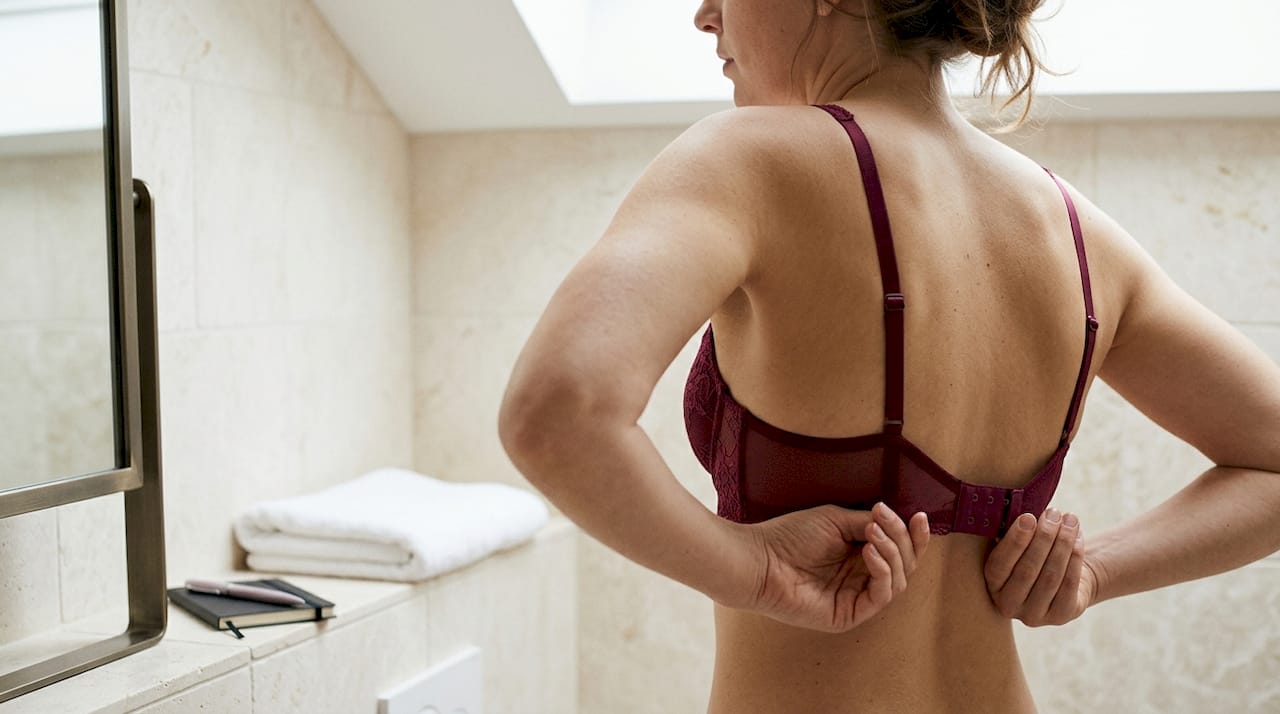
Pro Tip: Do the “hook test” once a month: fasten on the loosest hook and check if the band still sits firm and level around your ribcage. If it’s already loose there, the elastic is gone for good.
How often to replace bras: timelines by wear and type
A guideline of about six to twelve months is a useful starting point, but wear-count tells the real story. A bra worn twice a week and washed gently will outlast one worn daily and thrown in the dryer, even if both are the same age.
- Everyday underwire and t-shirt bras typically last between half a year and a year with regular wear and proper care, per common expert guidance on replacement.
- Sports bras wear out faster, often within about half a year, because sweat, stretching, and frequent washing break down elastane quicker.
- Nursing bras face similar pressure from daily wear and constant laundering, so check them for stretch and support more frequently than everyday styles.
- Strapless bras and special-occasion pieces worn only occasionally can last well beyond a year, since infrequent wear means less elastic fatigue.
- Bralettes, being lighter on structure to begin with, tend to show wrinkling and stretch sooner than underwire styles.
Owning three or more bras in rotation gives the elastic time to recover between wears, which meaningfully extends how long each one lasts compared with wearing the same one day after day.
Why delaying bra replacement costs you more than money
A bra that’s lost its structure doesn’t just look tired, it changes how you feel all day. Reduced support puts more strain on your shoulders, neck, and back, and that can contribute to poor posture over time, according to reporting on bra longevity. Worn-out fabric and padding also lose their ability to wick moisture, and fraying elastic or exposed wire can irritate skin that’s rubbed against it all day. Beyond comfort, a tired bra simply won’t shape your outfit the way it should. Clothes that used to sit well start looking off, for no reason you can immediately place, until you realise it’s the bra underneath letting you down.
How to make a bra last longer
Good care habits routinely add months, sometimes years, to a bra’s working life. The biggest culprit for early failure isn’t age. It’s heat.
- Hand-wash where you can, or use a gentle cycle inside a lingerie bag with a mild detergent.
- Never put bras in the tumble dryer. High heat breaks down the foam and elastane fibres that give a bra its shape, a point backed by Cleveland Clinic’s guidance on washing bras.
- Reshape the cups by hand and lay flat to dry, away from direct heat or sunlight.
- Rotate through at least three everyday bras so each one gets proper recovery time between wears.
- Start a new bra on the loosest hook, then move inward as the band naturally stretches with wear. If you’re already on the tightest hook and it’s still loose, that’s your sign the support is gone.
- Store bras flat or with cups nested, never folded or balled into a drawer, which crushes the shape over time.
Pro Tip: Wash bras after two to three wears rather than every single time. It’s a reasonable middle ground between hygiene and preserving the elastic, per Good Housekeeping’s advice on bra care. For a full walkthrough, Lingerie Seduction’s guide to washing lingerie properly covers detergent choice and drying technique in more detail.
When body changes mean it’s time for new bras
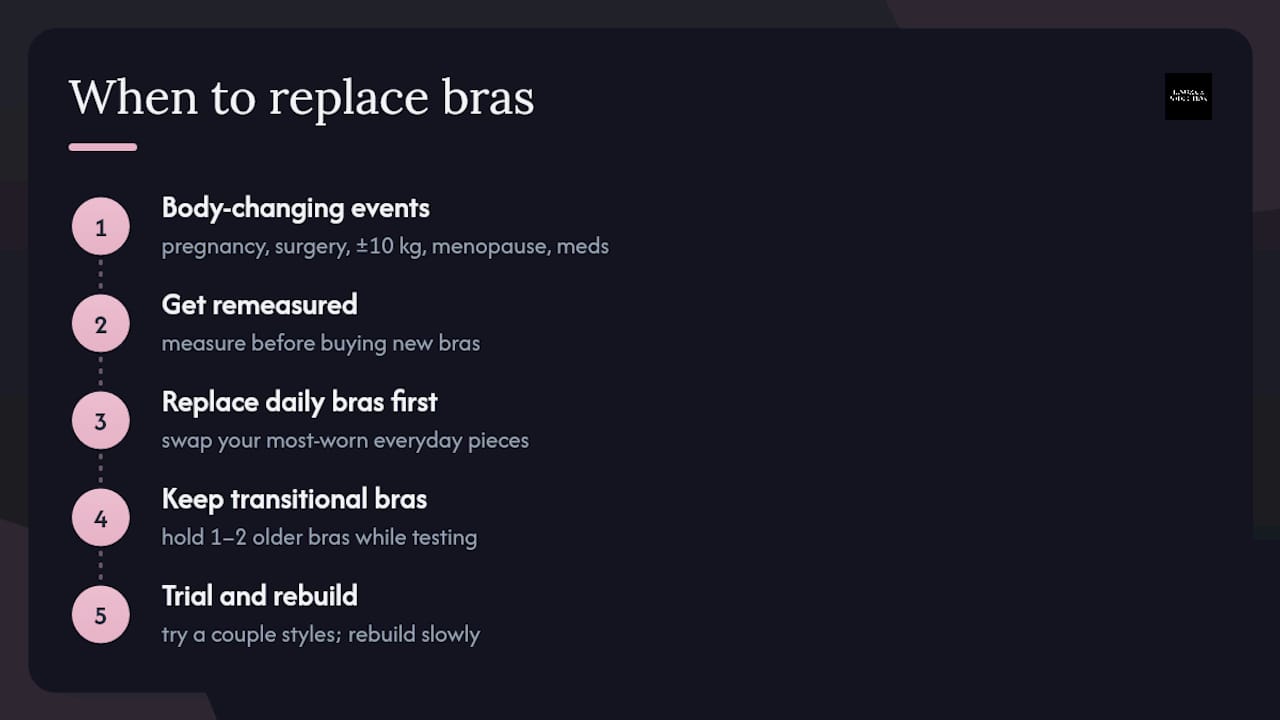
Some life events make bra replacement urgent regardless of how new your current bras are. Pregnancy, breastfeeding, surgery, a weight change of 10kg or more, menopause, and certain medications can all shift your shape enough that your existing size no longer fits properly. When that happens, get remeasured before buying anything new. Replace your most-worn everyday bras first, and keep one or two older pieces as transitional wear while you test new sizes. Trial a couple of styles rather than committing to a full wardrobe overhaul straight away, especially with easy returns available, and rebuild your rotation gradually as you confirm what actually fits.
Lingerie Seduction’s recommendations for replacing worn bras
Once you’ve confirmed it’s time to retire a bra, the next decision is what replaces it, and that depends on what the old one was doing for you. Lingerie Seduction’s types of bra guide breaks down which construction suits which body and occasion, while the quality indicators page explains what to check before buying, so you’re not repeating the same short lifespan with your next purchase.
- For everyday support with genuine structure, look at underwire styles with reinforced bands and adjustable straps.
- For special occasions where you want the fit to work as hard as the design, a piece with garter detailing and a supportive cup gives you both.
- For confidence-led evenings, softer, more revealing silhouettes suit better than anything built purely for daily support.
Shipping offers and returns policies can make it easier to size correctly the first time, without the risk of getting stuck with the wrong fit.
A simple routine that actually works
My own rotation is four bras: two everyday, one sports bra, one special-occasion piece. I hand-wash twice a week, air-dry everything flat, and remeasure once a year whether or not I think my size has changed. It sounds basic because it is. Fit this unglamorous but underrated, and everything you wear over the top of it looks and feels better for it.
— Lingerie Seduction
Ready to replace your worn-out bras?
Once you’ve spotted the signs, the next step is choosing a replacement that actually earns its keep. The Luxe Black Floral Lace Underwire Bra, Gstring & Garter Set is built for the everyday wear-and-support balance most women are replacing right now, with underwire structure and a reinforced band designed to outlast a tired favourite.

If you’re stocking up for a special occasion rather than the daily grind, the Open Cup Cage Bra & Garter Panty Set and the Luxe Black Lace Strappy Crotchless Bodysuit Teddy both deliver on fit and fabric without compromising on the moment they’re made for. Shipping offers and returns policies aim to support customers if the size needs adjusting. Browse the current range at Lingerie Seduction and start replacing what’s worn out with something that actually fits.
Sources
For more detail on the guidance behind this article, see Today’s expert advice on replacement timing, Wirecutter’s case for rotating bras, and Cleveland Clinic’s washing guidance. For nursing-specific advice, My Wren’s guide to nursing bras is worth a look, alongside Lingerie Seduction’s own care best practices.
- How often should you replace bras? — Today
- Sorry, you really can’t wear your favourite bra every single day — Wirecutter
- How often do you really need to wash your bras? — Cleveland Clinic
- Your bra has an expiry date — Good Housekeeping
FAQ
How often should a bra be replaced?
Most everyday bras need replacing every 6 to 12 months, depending on how often you wear them and how well you care for them, though sports and nursing bras usually wear out sooner.
What is the three bra rule?
It’s the idea that rotating through at least three bras, rather than wearing one daily, gives the elastic time to recover between wears and meaningfully extends each bra’s lifespan.
How do you tell if you need new bras?
Check for a band that rides up on the tightest hook, underwire that pokes or shifts, cups that gape or wrinkle, slipping straps, and any visible fraying or fading in the fabric.
Is it okay to wear the same bra for a week?
Wearing the same bra every day without a break speeds up elastic breakdown, so it’s better to alternate between at least two or three bras and wash after two to three wears rather than daily.


