

Bralette vs bra differences: what to wear and when
Choose a bralette for comfort and low-impact days. Choose a bra for structured support, shaping, and higher-impact activity. That is the core bralette vs bra difference in one sentence.
- Bralette suits you if: you have a small-to-medium cup size, prefer a natural silhouette, or need all-day comfort for lounging, casual outings, or light activity.
- Bra suits you if: you have a medium-to-large cup size, want defined shaping, or need reliable support for work, formalwear, or exercise.
Fit overrides everything. The right size and shape for your body matters more than whether the label says “bra” or “bralette.”
Table of Contents
- What is a bra and how does it support you?
- What is a bralette and who benefits from wearing one?
- How do bralettes and bras compare side by side?
- When should you wear a bra vs a bralette?
- How to choose the right fit: checklist and measurement steps
- Expert fitting tips from Lingerie Seduction
- Key takeaways
- The case for trying both
- Structured and soft-cup options at Lingerie Seduction
- FAQ
What is a bra and how does it support you?
A bra is a structured undergarment built to support, shape, and lift the bust. Its construction is what sets it apart from softer alternatives. Understanding the parts helps you spot when one is working for you and when it is not.
Key construction elements:
- Underwire: A curved wire sewn into the base of each cup that lifts and separates. It anchors the bra against the ribcage and keeps breast tissue inside the cup.
- Cups: Can be seamed (multiple fabric panels stitched together for a rounded shape) or moulded (heat-pressed foam for a smooth finish). Seamed cups tend to give more projection; moulded cups suit a T-shirt silhouette.
- Band: The horizontal strip around the ribcage. A correctly fitting band is the primary support structure — it carries roughly 80% of the bra’s load.
- Straps: Adjust tension to keep cups in place, but they are secondary to band support.
- Closures: Most bras use a hook-and-eye at the back; some use front closures for ease.
Common bra types and their best uses:
| Type | Best for |
|---|---|
| Underwire | Everyday support, shaping, medium-to-large cups |
| Wireless | Comfort-focused days, sensitive skin, lighter support |
| Sports | Low, medium, or high-impact exercise |
| Padded / T-shirt | Smooth silhouette under fitted tops |
| Plunge | Low-cut necklines, deep V styles |
| Strapless | Off-shoulder and strapless outfits |
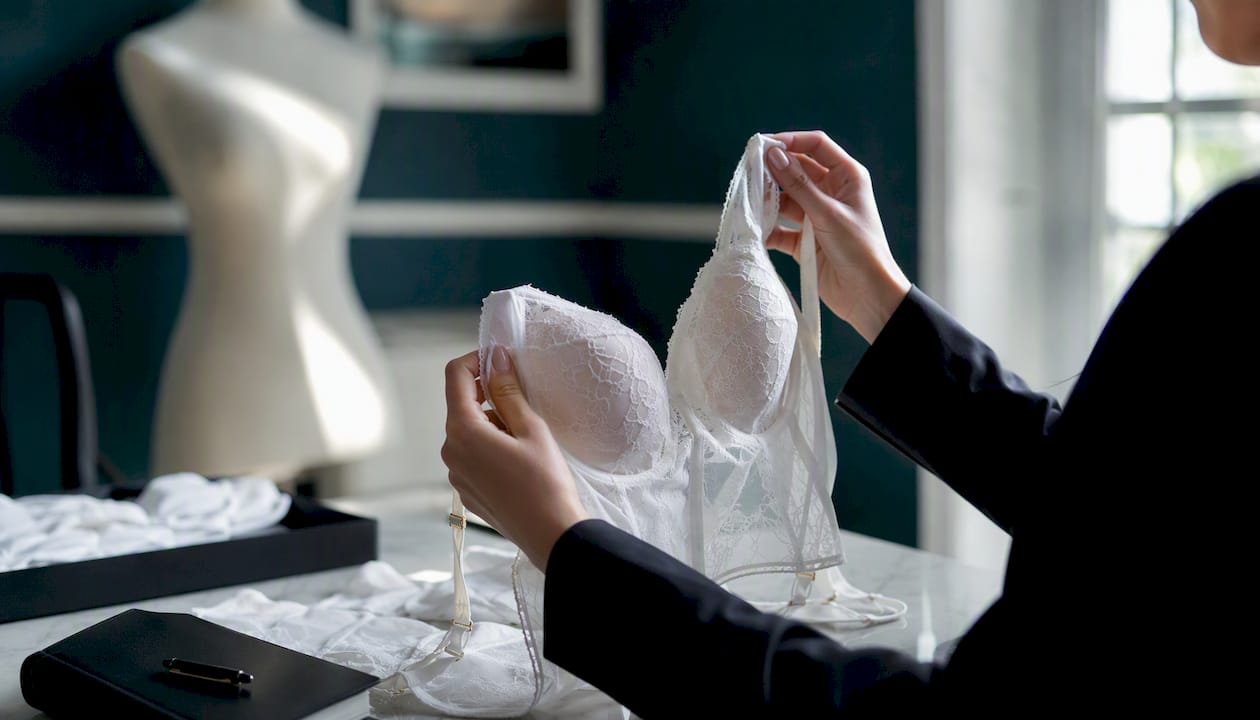
Pro Tip: Check that the underwire sits flat against your ribcage, not on breast tissue. If the wire digs into the side of your breast or the band rides up at the back, the band size is likely too large.
What is a bralette and who benefits from wearing one?
A bralette is a wire-free, softly constructed top that sits somewhere between a crop top and a traditional bra. Bralettes tend to have little to no padding and a gentler structure, which makes them more comfortable but less supportive for larger busts.
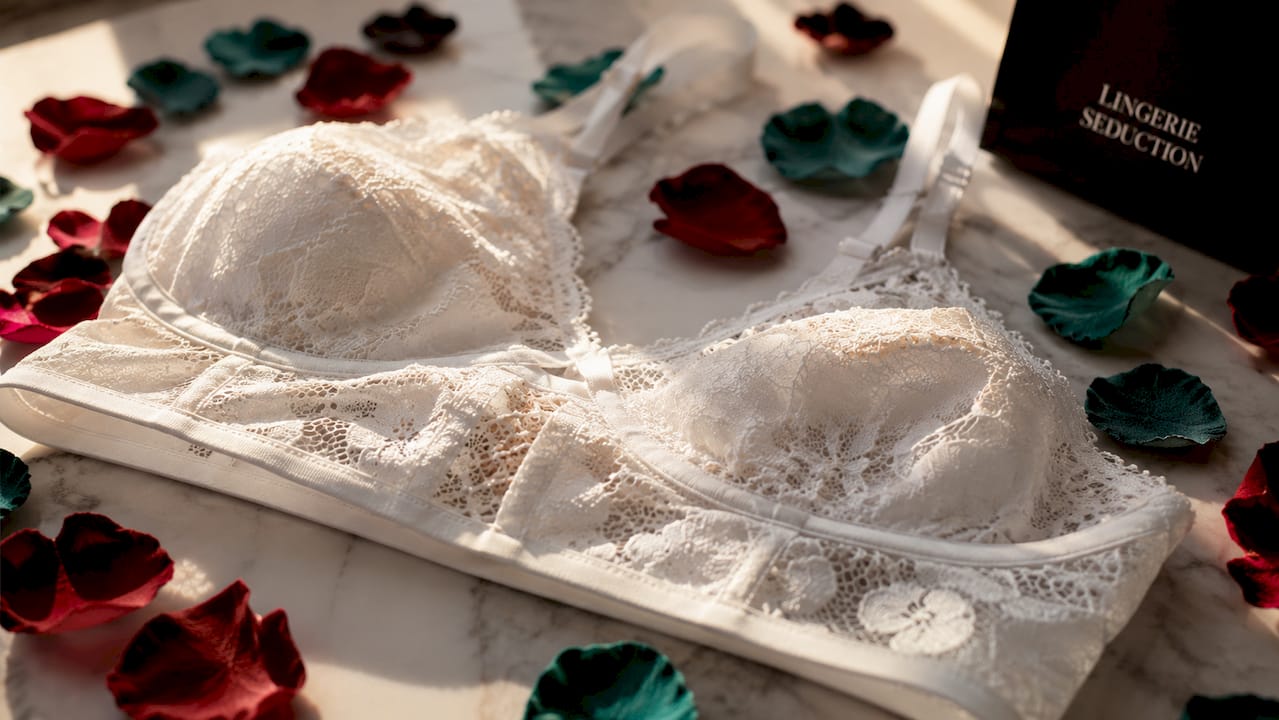
Construction differs from a bra in several ways. Bralettes use stretch fabrics such as lace, jersey, or microfibre. Seams are minimal or absent. The band is softer and less rigid. Many styles pull on over the head; others use a simple hook closure at the back. Racerback and halter variations redistribute strap tension across the shoulders, which can feel more secure during light movement.
Sizing is also different. Bralettes use clothing sizes (XS, S, M, L, XL) rather than the band-and-cup system. This makes them easier to size at a glance but less precise for fit.
Who benefits most from bralettes:
- Wearers with an A–C cup who want comfort without underwire pressure.
- Anyone on a low-impact day: working from home, running errands, or relaxing.
- Adolescents wearing a first bra, where a soft introduction to support makes sense.
- Those who prefer a natural, unlifted silhouette.
- Wearers with skin sensitivities or post-surgery comfort needs.
Some bralette designs do offer more support. Styles with seamed cups, a firmer elasticated band, or a three-part cup construction can suit a D cup and above. If you are between clothing sizes, size up in a bralette — the stretch fabric will accommodate, and a too-tight band defeats the comfort advantage.
How do bralettes and bras compare side by side?
The table below maps the key dimensions so you can match features to your needs quickly.
| Dimension | Bra | Bralette |
|---|---|---|
| Support level | Medium to high | Low to medium |
| Structure | Underwire, seamed or moulded cups, firm band | Wire-free, minimal seams, soft band |
| Padding & shaping | Lined, padded, or push-up options common | Unlined or lightly lined; minimal shaping |
| Sizing system | Band + cup (e.g. 10B, 12D) | Clothing size (XS–XL) |
| Comfort & pressure | Can create pressure at underwire and band | Minimal pressure points; gentler all-day wear |
| Best activity level | Low to high impact; formalwear | Low impact; casual, loungewear, light layering |
| Materials | Cotton, microfibre, lace, foam | Lace, jersey, microfibre, stretch fabrics |
| Appearance & layering | Hidden under clothing; shapes silhouette | Often visible; worn as outerwear or under sheer tops |
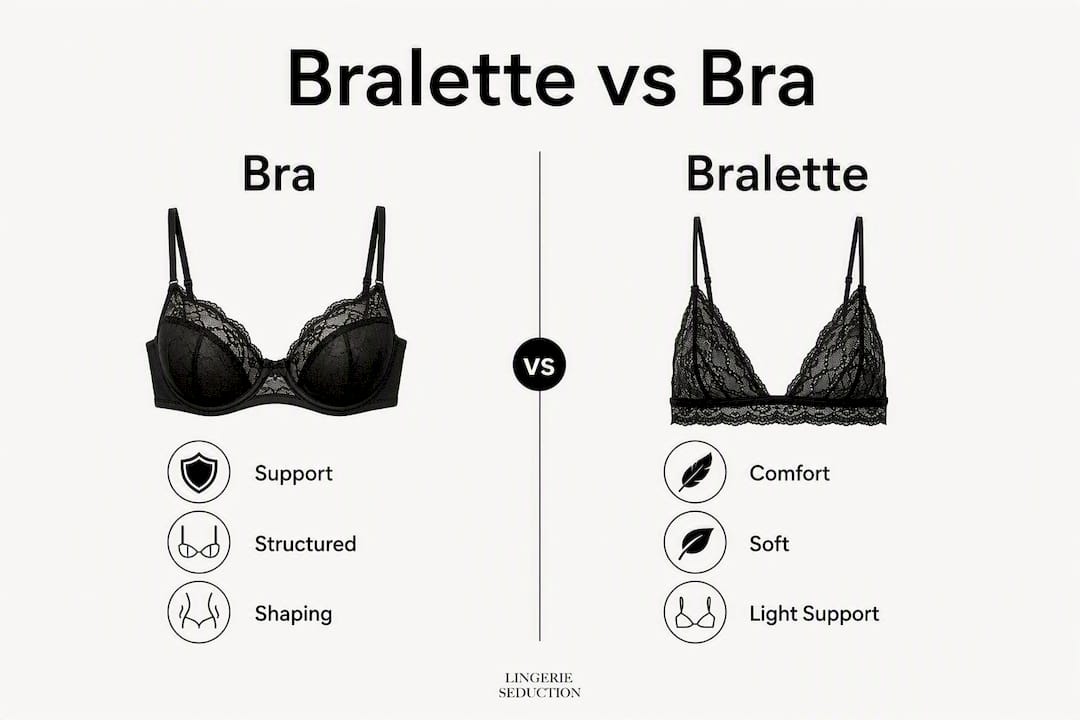
The most decision-relevant contrasts come down to three points. First, if you need defined shaping or reliable support for a full day on your feet, a structured bra is the practical choice. Second, if comfort and minimal pressure are the priority and your cup size is smaller, a bralette delivers. Third, for bridal or formalwear, the bridal underwire vs wireless bra comparison often comes down to how long you will be wearing it — wires can dig in over a long reception.
Pro Tip: Hybrid options narrow the gap. Wireless and soft-cup designs with 3-part cups can give shape without underwire, making them a practical middle ground for D cups and above who want comfort without sacrificing structure.
When should you wear a bra vs a bralette?
The right choice depends on your activity, outfit, and how long you will be wearing it.
Wear a bra when:
- Going to work in structured or fitted clothing where shaping matters.
- Attending a formal event, wedding, or occasion that calls for a defined silhouette.
- Exercising — a sports bra is non-negotiable for medium or high-impact activity.
- Wearing a plunge, strapless, or backless outfit that needs a specific bra style to stay hidden.
- You have a larger cup size and need weight distribution across a full day.
Wear a bralette when:
- Working from home, running errands, or spending a casual day out.
- Wearing a sheer top, open-back style, or relaxed knit where the bralette is meant to show.
- Sleeping, if you prefer some coverage overnight.
- Layering under a loose blazer or oversized shirt where structure is not needed.
- You want to style it as outerwear with high-waisted trousers or a skirt.
Layering and outfit pairing tips:
- Under sheer fabrics, a lace bralette adds coverage while staying intentional rather than accidental.
- If show-through is a concern, choose a bralette in a colour that matches your skin tone, or add nipple covers underneath.
- Pick the bra by the outfit first if you need an invisible result — a plunge bra under a deep-V dress, a strapless under an off-shoulder top.
- Wearing a bra under a bralette is not standard practice. The bralette is the undergarment. If you need more support than a bralette provides, switch to a bra instead.
How to choose the right fit: checklist and measurement steps
Getting the size right matters more than the style. A poorly fitting bra or bralette causes discomfort regardless of construction.
Fit checklist (run through this in a fitting room or at home):
- Band: Should sit parallel to the floor, snug but not tight. You should fit two fingers underneath, no more.
- Cup containment: All breast tissue sits inside the cup. No spillage over the top or sides, no gaping fabric.
- Strap tension: Straps stay up without digging in. You should fit one finger under each strap.
- Centre gore: The fabric panel between the cups should lie flat against your sternum. If it lifts away, the cup size is too small.
- Band parallel to floor: Check in a mirror from the side. A band that rides up at the back means the band is too large.
Measurement steps:
- Measure your underbust (directly under the bust, snug but not tight) for your band size.
- Measure your fullest bust point, standing naturally.
- Subtract the underbust measurement from the bust measurement. Each centimetre of difference corresponds to a cup size in Australian sizing.
- Use a home measurement guide to convert those numbers to a band/cup size or a bralette clothing size.
Common mistakes to avoid:
- Wearing the wrong sister size, using a non-parallel band, or ignoring body shape changes over time are the most frequent fit errors.
- A band that feels comfortable on the tightest hook is already too loose — start on the loosest hook so you can tighten as the elastic stretches.
- Cups that gap at the top usually mean the cup is too large or the style does not suit your breast shape.
Pro Tip: Re-measure after significant weight changes, pregnancy, or breastfeeding. Bra size shifts more often than most people expect, and wearing the wrong size after a body change is one of the most common sources of discomfort.
Expert fitting tips from Lingerie Seduction
Lingerie Seduction curates its collection with fit as the starting point. The range spans everyday bra sets through to bridal pieces, with inclusive sizing and policies built around confident purchasing: free shipping on orders over $100, hassle-free returns, and discreet packaging.
Practical fitting pointers from the Lingerie Seduction team:
- Choose seamed cups when you want more projection and shape from a bralette. A seamed construction lifts and separates without underwire.
- Prefer moulded cups for a smooth, seamless finish under fitted tops or jersey fabrics.
- Band fit is the priority. Most fit problems trace back to the band, not the cup. If something feels off, check the band first.
- Try a wireless soft-cup bra if you find underwire uncomfortable but need more support than a standard bralette offers. Modern three-part cup constructions can deliver shape without wire.
- Re-fit regularly. Body shape changes with age, weight fluctuation, and hormonal shifts. A bra that fitted well two years ago may not fit the same way now.
Lingerie Seduction’s fit guide for sexy lingerie covers band and bust checks in detail, and the lingerie sizing mistakes guide walks through the most common errors with quick fixes.
Key takeaways
Bralettes suit comfort and low-impact days; structured bras suit shaping, support, and formal or active wear — and fit is the deciding factor regardless of which style you choose.
| Point | Details |
|---|---|
| Bralette vs bra core difference | Bralettes are wire-free and comfort-focused; bras are structured for support and shaping. |
| Band fit comes first | The band carries most of the support load — get this right before adjusting cup or style. |
| Sizing systems differ | Bras use band and cup sizing; bralettes use clothing sizes (XS–XL), so measure before buying. |
| Match style to activity | Use a bra for formal, active, or high-support needs; use a bralette for casual, low-impact, or layered looks. |
| Lingerie Seduction | Browse structured underwire and soft-cup options, including bridal pieces, with free shipping over $100 and hassle-free returns. |
The case for trying both
The conventional advice is to pick one or the other based on cup size. That framing is too narrow. Cup size is one input, not the whole decision. A woman with a D cup can wear a well-constructed supportive bralette for a low-key day and switch to an underwire set for a formal event. A woman with an A cup might prefer a structured T-shirt bra for work and a lace bralette for everything else.
What actually matters is matching the garment to the moment. Comfort and structure are not opposites. The best lingerie wardrobe has both, sized correctly, chosen by occasion. The mistake most people make is buying one style and forcing it to do everything. A bralette worn to a long formal event will feel uncomfortable by hour three. An underwire bra worn all day at home when you do not need the structure is unnecessary pressure.
Start with accurate measurements. Know your band and cup size. Know your clothing size for bralettes. Then buy for the specific use-case, not for a general “everyday” category that does not really exist.
Structured and soft-cup options at Lingerie Seduction
Lingerie Seduction stocks both ends of the spectrum, from structured underwire pieces to soft-cup options, all available with free shipping on orders over $100, hassle-free returns, and discreet packaging.
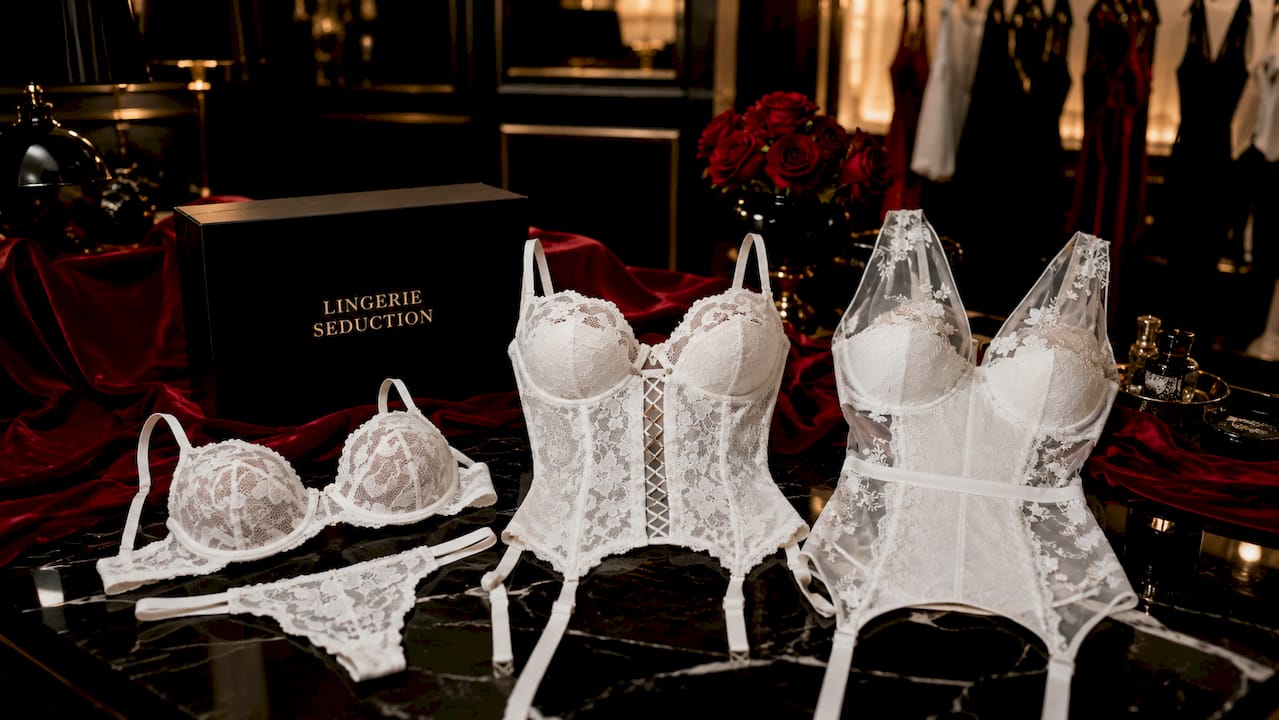
For bridal and formalwear, the Romantic Underwire Lace White Bridal Corset delivers full underwire support with a lace finish built for a long day. The Delicate Underwire Lace White Bridal Corset is a lighter alternative that still provides structured shaping without the bulk. For everyday wear, the White Lace Underwire Bra & Lace Panty Set pairs a classic underwire bra with a matching panty for a polished, coordinated look.
Browse the full range at Lingerie Seduction and use the on-site fit guides to confirm your size before you order.
FAQ
Why wear a bralette instead of a bra?
Bralettes minimise pressure points and are more comfortable for low-impact days. They suit smaller cup sizes and casual or relaxed settings where structured support is not needed.
What is the 3-bra rule?
The 3-bra rule is a practical wardrobe guideline: own one everyday bra for regular wear, one sports or active bra for exercise, and one special-occasion bra for formal or dressed-up outfits. It covers most situations without overstocking.
Are you supposed to wear a bra under a bralette?
No. A bralette is the undergarment. If you need more support than a bralette provides, wear a bra instead of layering both.
Do bralettes hide nipples?
It depends on the construction. Unlined lace bralettes offer minimal coverage. A bralette with a lightly padded or lined cup provides more concealment. If coverage is a priority, choose a lined style or add nipple covers underneath.
How should you care for bras and bralettes to make them last?
Hand wash in cool water with a gentle detergent, or use a lingerie bag on a delicate machine cycle. Lay flat or hang to dry — never tumble dry, as heat breaks down elastic and foam. Rotate between at least two bras so each has time to recover its shape between wears.
Tags: bralette, bra, bra vs bralette, bralette benefits, bralette styles, underwire bra, wireless bra, bridal lingerie, lingerie fit, how to choose a bra, bralette sizing, comfort lingerie, Australian lingerie


