

Stop Sizing Down: 3 Strapless Bra Fit Checks That Prevent Slipping
A strapless bra fits correctly when the band sits level all round, feels noticeably firmer than your everyday bra, and holds through movement without help from straps. Sister-sizing (down a band, up a cup) is the standard first test, backed by a short walk-and-raise-arms check. If you’re full busted or your ribcage runs narrow, no amount of resizing beats a longline or heavily boned strapless style built for the job.
TL;DR:
- A proper strapless bra must sit level around the body and feel firmer than a regular bra, providing support without shifting during movement.
- Sister-sizing (down one band size, up one cup size) is typically recommended, but if slipping persists, a longline or structured style may be necessary.
- Construction features like silicone grip strips, wide wings, boning, and longline design are key to preventing slipping and maintaining support.
- Fit checks include assessing band levelness, survivability of arm movement, and complete containment of breast tissue without gaping or spillage.
- Hand washing, proper storage, and monitoring grip strip condition extend the lifespan and effectiveness of a strapless bra’s support.
Table of Contents
- What does a good strapless bra fit actually feel like?
- Should you size up or down for a strapless bra?
- Which construction features actually stop a strapless bra slipping?
- How do you put on and test a strapless bra before you wear it out?
- Why does my strapless bra keep sliding down?
- How Lingerie Seduction approaches strapless fit
- How do you measure yourself accurately for a strapless bra?
- Should you try strapless bras in-store or order online?
- What fabric and materials matter most in a strapless bra?
- How do you care for a strapless bra so it keeps its grip?
- A fitter’s quick checklist from the shop floor
- Find the strapless style that matches how you move
- Sources
- FAQ
What does a good strapless bra fit actually feel like?
Forget “does it fit” and ask “does it stay”. A strapless bra’s band carries all the load your straps normally share, so the checks are different from a regular bra fitting.
Band level and tension. The band should sit horizontal, front and back, not riding up at the back. It needs to feel firmer than your usual bra band, tight enough that you can only just slide two fingers under it standing still. Fasten a new bra on the loosest hook and test tightness there first. If it’s already firm on the loosest setting, you’ve got room to tighten as the elastic relaxes over time.
Cup containment. Breast tissue shouldn’t spill over the top or gape away from the cup fabric. The underwire needs to sit at the root of the breast, in the crease, not riding up onto tissue or floating off your ribcage.
Wings and boning. Side wings that are too narrow let the bra rotate and roll as you move. Boning along the sides stops that twist, which is why cheaper strapless styles without it tend to fail within an hour.
Before committing to a purchase, check that the band sits level, feels firmer than your regular bra but not painfully tight, there is no spillage or gaping at the cup edge, the underwire sits in the breast root, and the bra stays put without shifting or slipping during movement tests like raising arms overhead and bending.
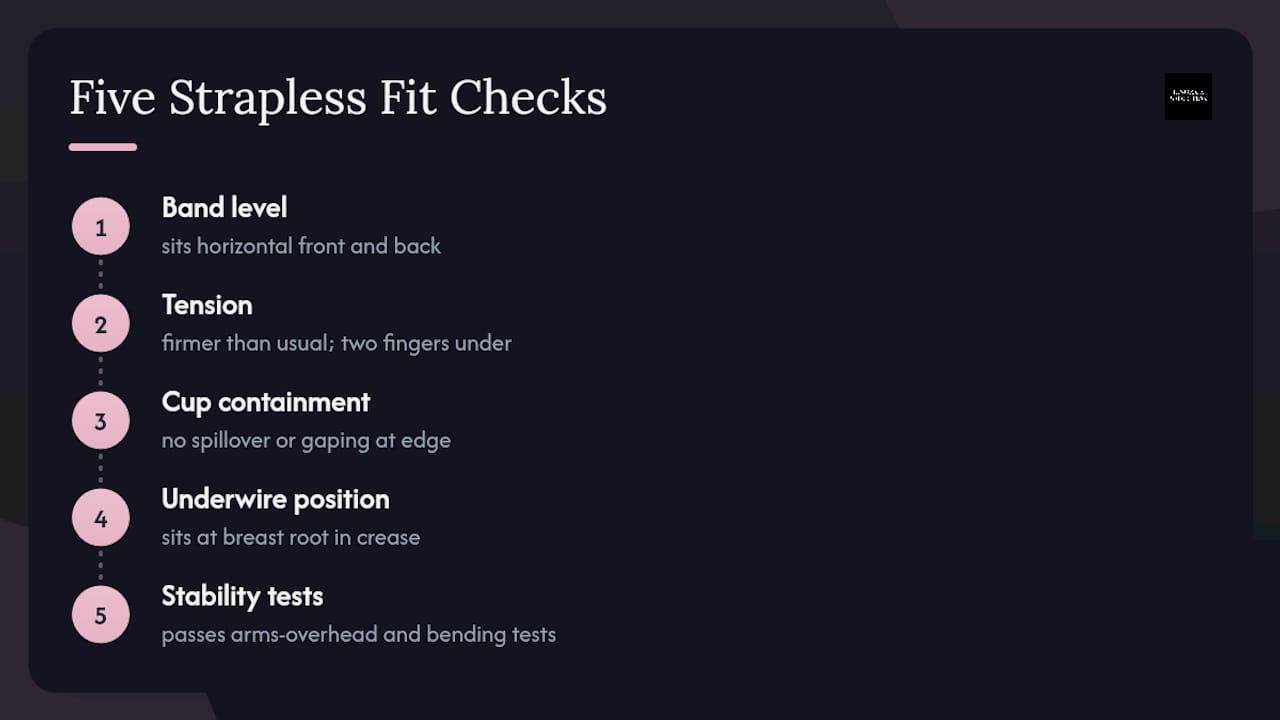
If a bra fails the arms-overhead test in the fitting room, it will fail on the dance floor. That single check saves more return trips than any other.
Should you size up or down for a strapless bra?
Sister-sizing is the standard starting point: drop one band size and go up one cup size from your regular fit to maintain volume while increasing band firmness.
That said, sister-sizing isn’t automatic. Follow this order:
- Try the sister size first if you have a low risk of slipping (narrow ribcage, firm tissue, shorter torso) and want a quick test before buying.
- Stop and reassess if you feel rib pain, red marks, or “quad boob” where flesh bulges above and below the cup edge. That’s a sign the smaller band is compressing rather than supporting.
- Switch to a more structured style instead of chasing a smaller size if sizing down two or three times still leaves you slipping. Structure, not tightness, is the missing ingredient at that point.
A stability-first sizing calculator models slip risk against tissue behaviour and movement level rather than band size alone, which is a more useful way to think about it than reflexively going down a size every time a bra slips. Sometimes the band is right and the construction is wrong.
Which construction features actually stop a strapless bra slipping?
Most strapless failures come down to construction, not your body shape. A handful of features consistently separate the bras that stay put from the ones that don’t.
- Silicone grip strips lining the top and bottom edges of the band create friction against skin. They need to stay clean. Body oil and lotion residue reduce grip fast, so wipe them with a damp cloth after a few wears.
- Wide wings and multiple hooks. Three or more hook columns and wings that extend well past the side seam distribute pressure across more skin, which matters more as cup volume increases.
- Side boning and reinforced underwire channels stop the band twisting under load, especially with any kind of bounce or reach.
- Longline construction extends the band down toward the waist, adding anchoring surface that a short-line strapless bra simply doesn’t have.
Silicone grip, boning and wider bands are the features to check for on the hang tag or product description before you buy, not just the cup size on the label.
Pro Tip: Stretch the band gently between your hands before buying. If it snaps back slowly or feels slack rather than springy, the elastic is already fatigued, even on a “new” bra sitting on a shop shelf.
Adhesive or stick-on cups have their place for backless necklines, but they’re a different category. They solve exposure, not support, so don’t expect them to replace a proper band-and-boning strapless bra for anything with real bounce or weight.
How do you put on and test a strapless bra before you wear it out?
A few minutes at home saves an evening of hitching your bra up in a bathroom.
- Fasten on the tightest hook if the bra is new. New elastic has the most stretch left in it, so starting tight buys you months before you run out of adjustment room.
- Lean forward, let tissue fall into the cups, then stand and scoop. This “scoop and swoop” motion pulls tissue in from the sides and centre rather than leaving it flattened against your chest wall.
- Run the movement test. Raise both arms overhead, bend forward, sit down, stand up, and take a few brisk steps. Fit specialists treat this as the real test of whether a strapless bra works, not how it looks standing still in a mirror.
- Wear it for the length of your actual event before deciding it’s fine. A bra that holds shortly can slide after extended wear once body heat softens elastic and grip.
Pro Tip: Keep a strip of fashion tape and a clean makeup wipe in your bag for events. The wipe restores silicone grip if it’s picked up lotion during the day; the tape is a backstop, not a substitute for a bra that fits properly to begin with.
Why does my strapless bra keep sliding down?
Work through causes in this order before you assume you need a smaller size.
- Sliding down or rotating: check grip strip condition and wing width first. Worn-out elastic (visible looseness, slow snap-back) is often the real culprit, not band size.
- Gapping at the top of the cup: try a different cup shape (balconette instead of full cup) or drop half a cup size. The band might be right even when the cup isn’t.
- Digging in or pain along the wire: the band or wire is too small, or the wire shape doesn’t suit your breast root angle. Try a different style rather than forcing a size down further.
- Still slipping after switching styles and grips: this is the point to move to longline construction with more boning and hooks, which consistently outperforms standard strapless length for fuller busts.
For a deeper look at why straps and bands interact the way they do, this piece on how straps shape support in lingerie design explains the mechanics behind why strapless styles need to work harder.
How Lingerie Seduction approaches strapless fit
Lingerie Seduction curates strapless pieces with the same fit logic covered above: band mechanics and structural support first, styling second. The store offers free shipping on orders over a certain amount, and returns are hassle-free if a size or style doesn’t hold up to the movement test at home.
Three pieces in the current range map to different fit needs:
- The White Lace Strapless Underwire Bustier uses longline-style construction for bridal and formal wear where all-day anchoring matters most.
- The Sheer Nude Mesh Faux Leather Bra Set suits fashion-led outfits and backless necklines where visible straps would spoil the look.
- The Black Strappy Satin Bra & Gstring Lingerie Set offers outfit-led versatility for those who want convertible options rather than one fixed strapless format.
Match the piece to the occasion, then run the fit checks in this guide before you commit to wearing it out.
How do you measure yourself accurately for a strapless bra?
Measure over a well-fitting, unpadded bra, or bare skin if you don’t have one on hand. Wrap a soft tape measure directly under your bust, parallel to the floor, and pull it snug without compressing skin. That’s your band measurement.
For the bust measurement, wrap the tape around the fullest part of your bust, keeping it level front and back. The difference between bust and band measurements determines cup size: roughly 2.5cm difference per cup letter, though this varies slightly between brands.
Measure standing normally, not sucking in or throwing your shoulders back, since that’s not how you’ll actually wear the bra. Take both measurements twice and use the average if the two readings differ.
For strapless specifically, measure the band slightly firmer than you would for an everyday bra, since a strapless band needs more grip than one backed up by straps. If your band and bust measurements sit between two sizes, that’s your cue to test the sister size (down a band, up a cup) rather than rounding up or down on the base size.
Check your baseline numbers against a proper bra size measurement guide before you buy anything strapless, because getting the regular fit right first makes every sister-size calculation more reliable.
Should you try strapless bras in-store or order online?
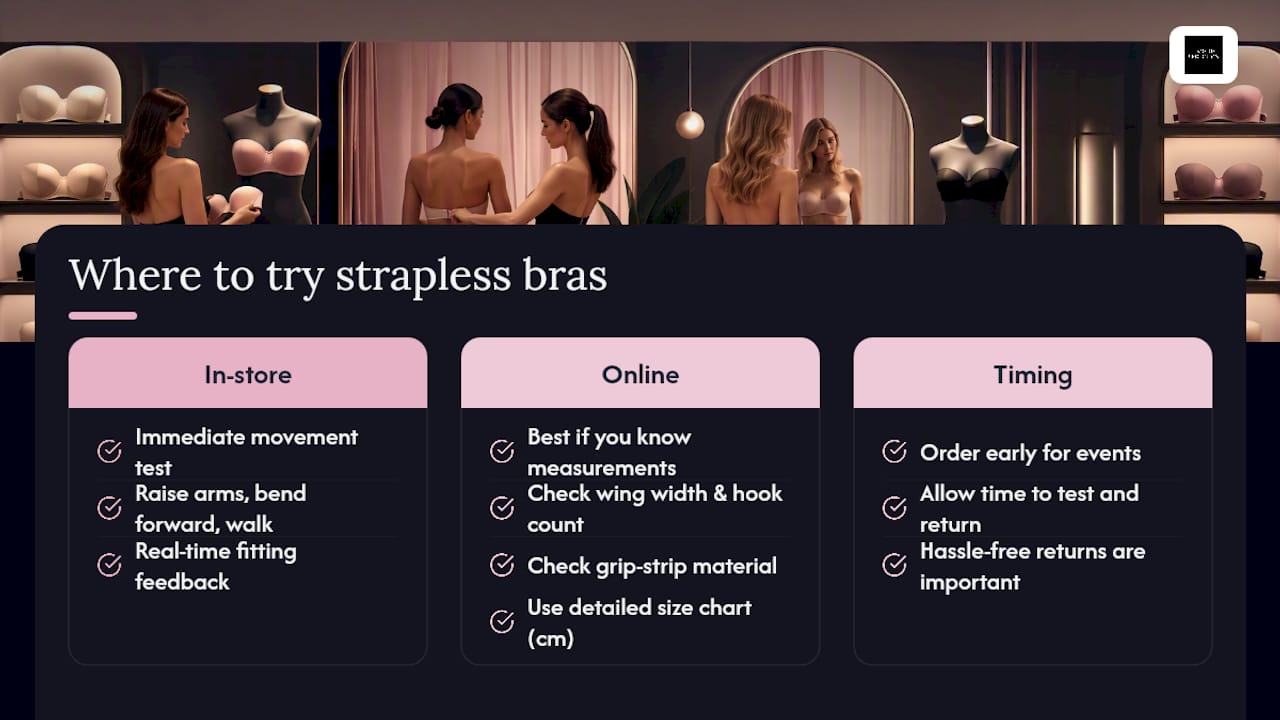
In-store fitting lets you run the movement test immediately: raise your arms, bend forward, walk around the fitting room before you buy. That real-time feedback is the biggest advantage of trying on in person, and it’s hard to replicate any other way.
Ordering online works best when you already know your measurements and have a specific construction feature in mind, such as boning or a longline band, rather than guessing at cup shape from a photo. Check the product description for wing width, hook count, and grip strip material before adding to cart. A detailed size chart with both band and bust measurements in centimetres is more reliable than size labels alone, since sizing runs differently between brands.
If you’re buying for an event with a firm date, such as a wedding, order with enough lead time to test the bra properly and return it if needed. Hassle-free returns matter more for strapless styles than almost any other lingerie category, because the movement test can only really happen once you’re wearing the bra normally, not standing still in front of a mirror. If you’re planning outfits around a wedding or formal event, this guide on what to wear under a wedding dress covers fittings in more detail, and this wedding dress code guide is a useful reference for guests planning outfits around the same events.
What fabric and materials matter most in a strapless bra?
The band fabric does more physical work in a strapless bra than in any other style, so its material matters more than most shoppers assume.
Power mesh and knitted elastane blends give the band its firm, even tension without feeling like a tourniquet. Cheaper woven elastic bands lose recoil faster and tend to roll rather than sit flat.
Silicone-lined edges, usually along the top and bottom of the band, are what actually grip skin. These strips work best against clean, dry skin, which is why body lotion applied right before wearing can undo an otherwise well-built bra.
Breathable cup linings, such as cotton-blend or moisture-wicking synthetic fabric, matter most for warm weather or long events, since a strapless bra sits closer to skin without straps to shift airflow. Satin and lace outer layers look elegant but check the inner lining fabric separately. Look isn’t the whole story.
Boning material, usually flexible plastic or spiral steel, should feel rigid enough to resist twisting but not sharp or poking through the fabric edge. Run a finger along every boning channel before buying to check for rough seams.
How do you care for a strapless bra so it keeps its grip?
Hand wash in cool water after every two to three wears, since body oils and sweat break down both elastic and silicone grip faster than fabric wear does. Skip the washing machine unless the bra has a dedicated lingerie bag, and even then, expect faster elastic fatigue.
Never wring or twist the band to remove water. Press excess moisture out with a towel and lay flat to dry, away from direct heat or sunlight, which degrades both elastic and silicone bonding.
Wipe silicone grip strips with a clean, damp cloth after wear if you’ve applied lotion or self-tanner that day. Residue buildup on the silicone is one of the fastest ways to lose the very grip you paid for.
Rotate between two or more strapless bras rather than wearing the same one for every strapless occasion. Elastic needs recovery time between wears to maintain its snap-back, and a bra worn daily fatigues within weeks rather than months.
A fitter’s quick checklist from the shop floor
Three checks settle most fit questions before a customer even reaches the change room: is the band level, does it survive arms overhead, and is the cup containing tissue without gaping. If those three hold, the bra is doing its job.
One habit worth building at home: try the bra on for the actual length of your event, not just a few minutes in front of a mirror. If sizing still feels wrong once you’ve done that, use hassle-free returns rather than living with a bra that slips.
— Lingerie Seduction
Find the strapless style that matches how you move
Lingerie Seduction stocks strapless pieces built around the same fit logic in this guide, so you’re choosing by construction, not just by size on a label. That’s the real difference between a bra that survives a wedding reception and one that needs constant adjusting.
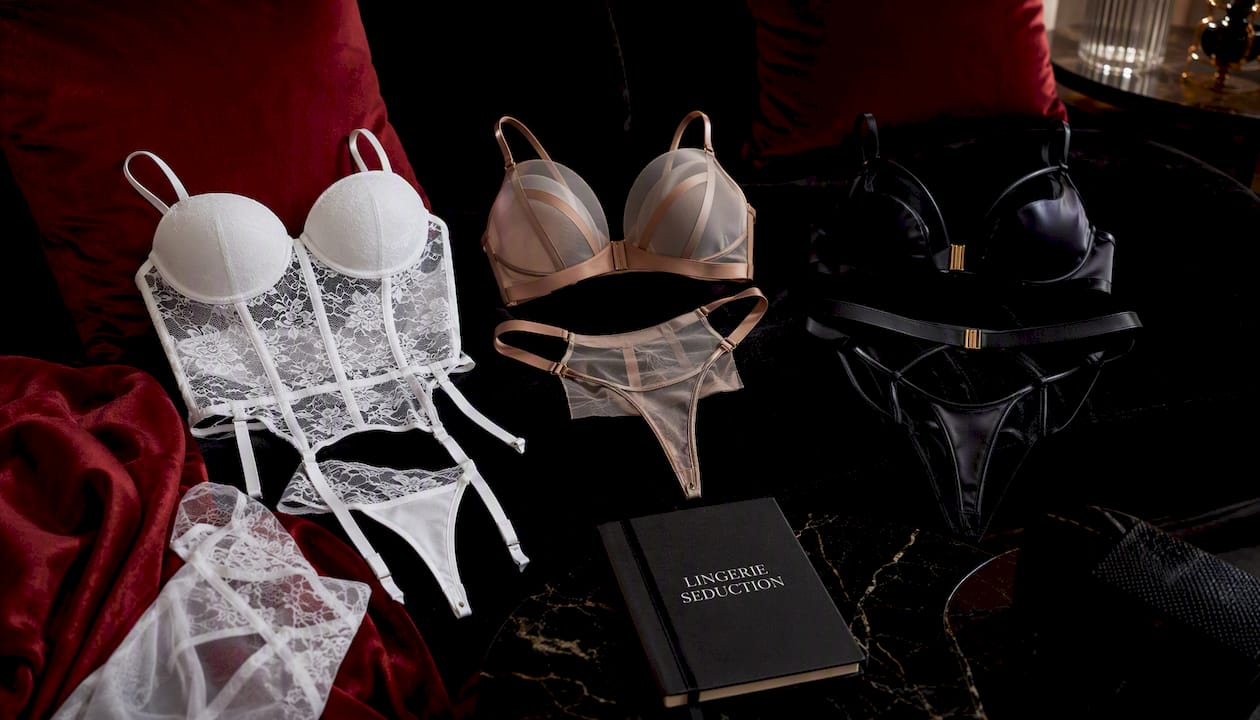
The White Lace Strapless Underwire Bustier suits bridal wear and formal events where longline-style support and hours of wear are non-negotiable. The Sheer Nude Mesh Faux Leather Bra Set works for outfit-focused occasions where a backless or fashion-forward look matters as much as fit. The Black Strappy Satin Bra & Gstring Lingerie Set gives you convertible, outfit-led versatility if you want one set that adapts to more than one look.
Free shipping is available on orders over a specified threshold, and returns are hassle-free if the fit isn’t right once you’ve run the movement test at home. Browse the full bra sets range to compare structured and convertible options side by side, then place your order with confidence that a wrong size is a quick exchange, not a wasted purchase.
Sources
- Strapless Bra Size Calculator — Free & Instant Results
- Strapless Bra Fit: How Secure Should It Really Feel?
- How to Make a Strapless Bra Stay Up All Day: Expert Tips for Perfect Fit, Support & Confidence | Tarbo
FAQ
Do you size up or down for a strapless bra?
Most fit guides recommend sister-sizing down one band and up one cup as a starting point, since strapless bras need a firmer band than everyday styles. Stop sizing down further if you notice rib pain or bulging tissue, and switch to a more structured style instead.
How are strapless bras supposed to fit?
A strapless bra should sit level all round, feel firmer than your regular bra, contain breast tissue without gaping or spilling, and stay in place through raised arms, bending, and walking.
How do I choose the right size for a strapless bra?
Start with your accurate band and bust measurements, then test the sister size (down a band, up a cup) against the fit checklist: level band, no gaping, and a pass on the arms-overhead movement test. If sizing down repeatedly still fails, choose a longline or heavily boned style instead.
What is the 3 bra rule?
Definitions vary depending on the source, but it commonly refers to the idea that a well-stocked lingerie drawer should include at least three bra styles: an everyday t-shirt bra, a strapless or convertible option, and a special-occasion style, so you’re never caught without the right support for the outfit.


