

Bring Exact Undergarments to Fittings for a Flawless Wedding Dress Fit
Wear nude, seamless underwear as your base layer, then match bust support and shapewear to your dress silhouette. Bring the exact pieces to every fitting and test-wear them for a full day before the wedding. Bridal experts and boutiques like Brides agree this combination avoids visible lines and keeps you comfortable from ceremony to last dance.
TL;DR:
- Nude, seamless underwear is ideal for nearly all dress fabrics, with bonded seams and low-rise styles preferred to prevent visible lines and VPL.
- For fitted, mermaid, or sheath gowns, seamless smoothing briefs or laser-cut shorts are best, while bust support is crucial for A-line and ball gowns.
- Backless and low-back gowns require adhesive bras or sewn-in support, and plunge necklines often need low-gore or stick-on bras for discreet coverage.
- Properly fitting shapewear should be chosen based on the gown style, with size and rise carefully tested against the actual dress to avoid bulges and discomfort.
- Test all undergarments and shapewear for several hours before the wedding day, and pack a kit with backup options for slips, tape, and adhesives to prevent slips and mishaps.
Table of Contents
- What to wear under your wedding dress for each silhouette
- Which bra gives you the best support without showing?
- Do you need shapewear under your wedding dress?
- Choosing seamless underwear colour and fit
- What to bring to your dress fittings
- Your wedding-day undergarment emergency kit
- Lingerie Seduction: bridal corsets built for fit-testing
- Plus-size and specialty undergarment options
- Comfort and breathability across seasons
- Stopping slips, bunching and visible lines
- Matching undergarments to your dress fabric
- Why comfort should always beat trends
- Shop bridal corsets built for test-wearing, not guesswork
- Sources
- FAQ
What to wear under your wedding dress for each silhouette
Your dress shape decides almost everything about what goes underneath it. A gown that clings needs smoothing; a gown that billows needs support up top and not much else.
Fitted, mermaid or sheath gowns show every seam, so silk and crepe fabrics are the least forgiving. Seamless, laser-cut briefs or a mid-thigh smoothing short work best here, and seamless, laser-cut or bonded seams genuinely disappear under slinky fabric in a way that regular cotton underwear never does.
A-line and ball gowns are the opposite problem. The skirt hides your hips and thighs completely, so shapewear rarely does anything useful there. What matters is bust support, since these gowns are often strapless or have structured bodices that need real backup underneath.
Backless and low-back styles rule out almost every standard bra. You’re looking at adhesive cups, a low-back convertible bra, or sewn-in support built into the gown itself.
Plunging necklines need a bra with a low centre gore or a stick-on option that doesn’t peek above the fabric line.
Quick reference by silhouette:
- Mermaid or sheath: seamless smoothing shorts, nude seamless briefs, bonded-seam bodysuit
- A-line or ball gown: focus on bust support, skip shapewear unless you want it, consider a petticoat for volume
- Backless or low-back: adhesive bra, low-back convertible strap, or sewn-in cups
- Plunge neckline: low-gore bra, adhesive cups, or a sewn-in bridal corset with front support
Waist and hip rise matter as much as style. A shapewear short that sits too low will roll under a fitted skirt, while one that sits too high can dig in under an empire waistline. Try the rise against your actual dress, not against a mirror at home.
Which bra gives you the best support without showing?
Modern gowns increasingly come with their own internal architecture. Boning, structured corsetry and built-in cups mean many brides genuinely don’t need a separate bra, particularly with heavier satins or corseted bodices.
That said, built-in cups are usually only enough support for smaller busts or gowns with a snug, structured fit. If you’re fuller-chested or the dress is strapless with minimal boning, you’ll want backup:
- Strapless bras work under most necklines but need a firm silicone grip band, or they slide by hour three.
- Longline bustiers extend support down to the waist, useful for gowns without much internal structure.
- Adhesive bras and stick-on cups are the go-to for backless and very low-back gowns.
- Sewn-in cups or corsetry added by your seamstress remove the bra question entirely.
Adhesive bras and stick-on cups need a fresh, unused pair on the actual wedding day. The pair you test-wore at your fitting has already lost some grip, and heat plus movement is a lot to ask of old adhesive.
Ask your seamstress directly whether she can add boning or sewn-in cups during alterations, and whether that changes how the bodice sits on your body.
Pro Tip: Test any adhesive bra for a full eight hours at home, including arm-raising and a mock first dance, before you trust it for the day.
Do you need shapewear under your wedding dress?
Shapewear is optional, not a rule. It helps most under fitted silhouettes like mermaid or sheath cuts, and does very little under an A-line or ball gown where the skirt already hides your shape.
If you’re going with shapewear, three main styles cover most needs:
- Mid-thigh shorts: light to moderate control, good under fitted skirts, less risk of visible lines at the hem.
- High-waisted briefs: waist smoothing without full-leg compression, suited to gowns with a defined waistline.
- Full bodysuits: the most even smoothing from bust to thigh, best for gowns with minimal structure of their own.
Never size down expecting extra compression. A shapewear piece one size too small rolls, digs in and shows through fabric far more than a correctly sized one. Comfort tends to beat maximum compression over an eight-hour day, since a garment that rolls or restricts your movement causes more visible problems than one with slightly less squeeze.
Choose breathable panels over solid compression fabric, and pick a mid-thigh length with bonded seams if chafing is a concern, since the inner-thigh area takes a beating on a dance floor.
Choosing seamless underwear colour and fit
Nude wins over white almost every time. Nude, seamless underwear shows less through both white and ivory fabric than bright white underwear, which can create a visible outline or a slight grey cast in photos.
Ivory can work if your gown itself is a warm ivory and the fabric is thick enough to hide everything anyway, but nude remains the safer universal choice.
- Seamless or laser-cut edges disappear under silk, crepe and satin.
- Bonded seams beat sewn seams for avoiding visible panty lines.
- Low-rise styles suit low-back dresses; mid-rise suits everything else.
- Thongs eliminate rear VPL entirely; briefs are fine under fuller skirts.
What to bring to your dress fittings
Bring the exact undergarments, shapewear and shoes you’ll wear on the day, then actually wear them during the fitting. Alterations get shaped to what you have on, and a dress fitted to your bare body can sit completely differently once shapewear or a corset goes underneath it.
- Pack your chosen bra, shapewear and shoes in a bag labelled for fitting day.
- Wear all three during the actual fitting, not just the shoes.
- Ask whether sewn-in cups or internal boning could replace a separate bra.
- Skip lotion and fake tan before fittings so nothing transfers to the gown.
- Note how each garment feels after a couple of hours, not just the first five minutes.
Pro Tip: Sit, raise your arms and take a few dance-like turns in the fitting room. A garment that feels fine standing still can dig in the moment you move.
Your wedding-day undergarment emergency kit
Pack a small kit and hand it to a bridesmaid or your mother, so you’re not the one hunting for safety pins mid-morning.
- Spare seamless underwear in your dress colour
- Fresh adhesive cups or nipple covers, unopened
- Fashion tape and double-sided tape
- Safety pins and a needle with matching thread
- Deodorant wipes and small scissors
Apply shapewear right before you step into the gown, not hours earlier, since body heat softens elastic and adhesive over time. Fashion tape fixes a slipping strap or gaping neckline in seconds if you keep a strip pre-cut in your bag.
Lingerie Seduction: bridal corsets built for fit-testing
Lingerie Seduction stocks a curated bridal range built for exactly this process: bring it, test it, alter around it. Free shipping applies over $100, returns are hassle-free, and dispatch is fast, so you can order early enough to test-wear before your final fitting.
The Delicate Underwire Lace White Bridal Corset suits brides wanting light shaping without heavy compression. The Romantic Underwire Lace White Bridal Corset adds waist definition for structured gowns, while the Luxury Bridal Satin & Lace Underwire Corset delivers fuller support and smoothing under fitted satin skirts.
Plus-size and specialty undergarment options
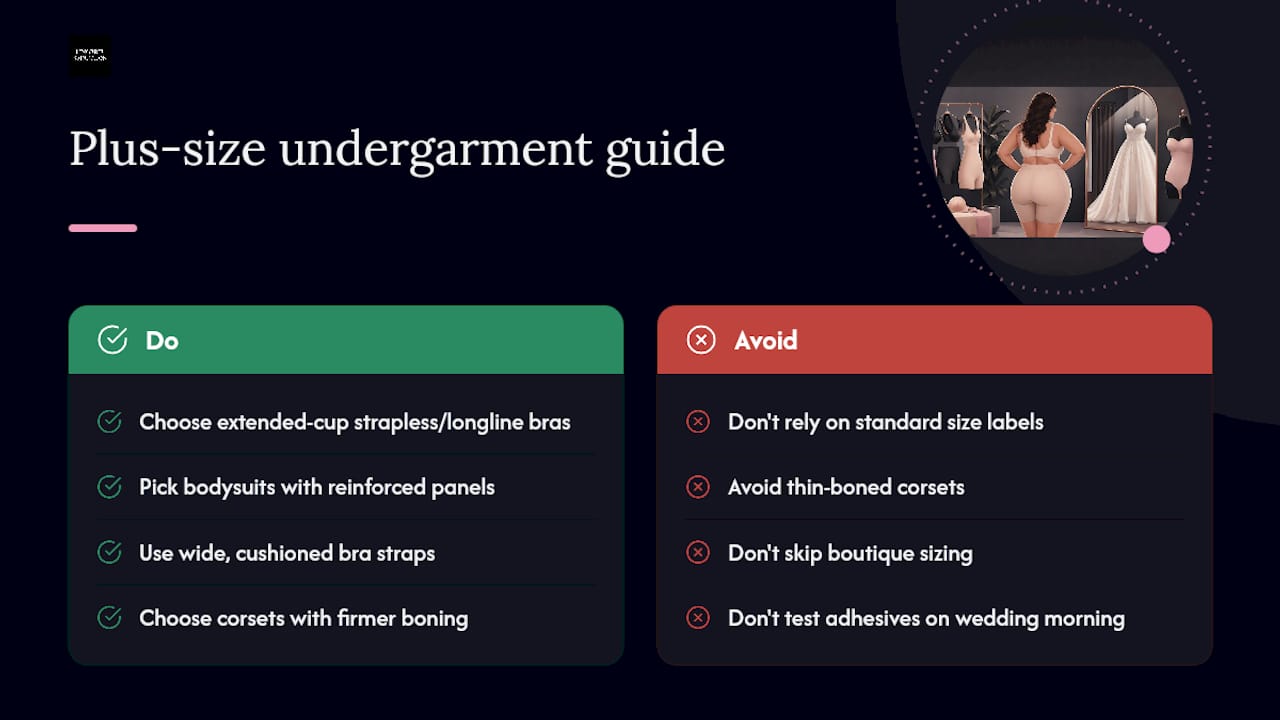
Support needs change with body shape, and a lot of standard bridal underwear simply isn’t built for a fuller bust or curvier hip line. Extended cup sizing on strapless and longline bras matters more here than on any other garment, since a band that’s technically your size but the wrong cup shape will slide or dig in within an hour.
Plus-size bodysuits with reinforced panels handle waist and torso smoothing without the squeeze rolling upward, which is the most common complaint with budget shapewear. Look for wide, cushioned straps on any bra doing serious lifting work, and firmer boning on corsets meant to sit under a structured bodice, since thin boning tends to buckle under a fuller frame rather than support it.
Specialty needs to go beyond size too. Mastectomy brides may need pocketed bras for prosthetics, while brides with sensitive skin should test adhesive products on their inner arm days before the wedding rather than discovering a reaction on the morning of. A boutique fitting, whether in person or guided by size charts and a soft tape measure at home, beats guessing from a standard size label every time. Lingerie Seduction’s wedding bridal lingerie guide covers fit tips across a broader size range if you want more detail before you order.
Comfort and breathability across seasons
A summer wedding and a winter one demand almost opposite undergarment strategies, and this is where a lot of brides get caught out packing for the wrong day.
For warmer months and outdoor ceremonies, breathable fabric panels matter more than compression strength. Testing garments by moving, sitting and dancing before the day reveals how a piece performs under body heat, not just how it looks in a fitting room mirror. Cotton-lined gussets and mesh panelling on shapewear reduce sweat buildup far better than solid nylon compression fabric, which traps heat against skin for hours.
Winter and indoor venues give you more flexibility, but heated reception venues plus a full-coverage gown can still get warm fast. Layering matters here: a lighter base layer under a corset beats a thick one, since bulk under structured boning creates pressure points that only get worse as the night goes on.
Whatever the season, adhesive products perform worse in heat and humidity, so a warm-weather wedding is exactly when a fresh, unused adhesive pair on the day matters most.
Stopping slips, bunching and visible lines
Most slipping problems trace back to one thing: a garment sized or fitted for standing still, not for a full day of movement.
Bonded seams and correctly sized shapewear are your first line of defence, since fabric that’s too tight will roll at the waistband the moment you sit down. A mid-thigh length with bonded seams checked against sitting and dancing beats a shorter style every time chafe or rolling becomes a concern.
Fashion tape secures a gaping neckline or a strap that keeps sliding, and it’s worth applying before the ceremony rather than fixing it mid-reception. Silicone-grip strapless bras stay put far better than ones relying on tightness alone, so check the grip band before you buy rather than after the first slip.
Bunching at the waist usually means the shapewear rise doesn’t match the dress’s waistline. A high-waisted brief under a low-cut gown will show through the fabric, while a low-rise style under an empire waist leaves a visible gap. Match the rise to the dress, not to what feels most secure in the shop.
Matching undergarments to your dress fabric
Fabric changes the rules more than most brides expect walking into their first fitting.
Lace often has an underlay, which gives you a bit more room to hide seams, but any bra strap or shapewear edge showing through the lace pattern itself will be obvious. Nude tones matter enormously here since lace filters light differently to solid fabric.
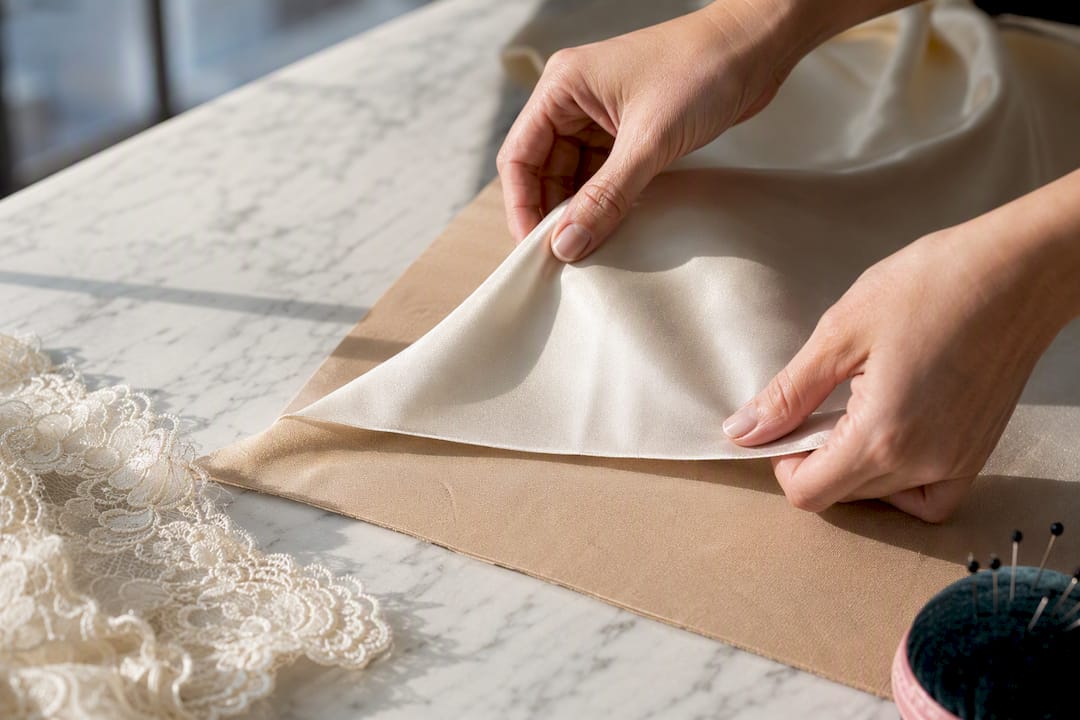
Satin clings and shows every ripple, making bonded-seam shapewear close to essential for a smooth line. It’s also one of the least forgiving fabrics for visible bra straps, so structured internal support or an adhesive bra pays off.
Sheer panels or illusion necklines need the most careful planning of all, since a standard bra strap or seam will be visible under bright ceremony lighting. This is where sewn-in cups or a corset built into the bodice genuinely earns its cost, because there’s simply nowhere to hide a separate garment.
Crepe and chiffon move more freely and forgive slightly more than satin, but seamless underwear still beats anything with a hemline or lace trim that could print through.
Why comfort should always beat trends
Wear what makes you feel like yourself, not whatever’s trending in bridal forums this year. Test every piece for hours beforehand, and always pack a backup. That’s the whole philosophy, and it holds up.
— Lingerie Seduction
Shop bridal corsets built for test-wearing, not guesswork
Lingerie Seduction gives you something a department store rack can’t: a curated bridal range small enough to actually try, compare and re-order before your final fitting, with free shipping over $100 and hassle-free returns if the fit isn’t right the first time.
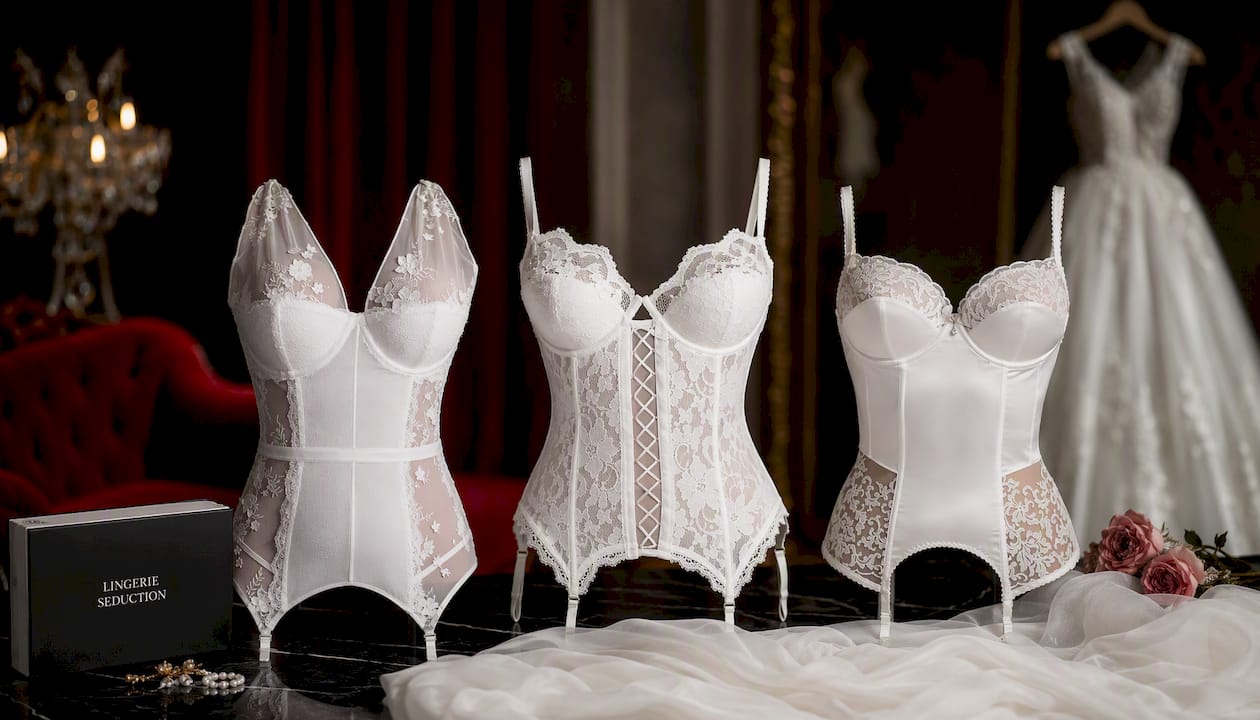
The Delicate Underwire Lace White Bridal Corset suits brides who want light structure under a soft A-line or empire gown without heavy compression. The Romantic Underwire Lace White Bridal Corset adds firmer waist definition, a good match for structured ball gowns or corseted bodices. For fitted satin or mermaid silhouettes that need real smoothing through the torso, the Luxury Bridal Satin & Lace Underwire Corset offers the most support of the three. Check the bridal lingerie must-haves guide for a full checklist, then order early enough to wear your chosen corset to your next fitting.
Sources
- What to Wear Under Your Wedding Dress
- What To Wear Under Your Wedding Dress
- What to Wear Under Your Wedding Dress: Secrets for Comfort & Flawless Fit
FAQ
What is the best undergarment for a wedding dress?
Nude, seamless underwear is the safest baseline for almost every gown, paired with bust support matched to your neckline, whether that’s a strapless bra, adhesive cups, or a structured bridal corset like those from Lingerie Seduction.
How do you flatten your stomach under a wedding dress?
A high-waisted, bonded-seam shapewear brief or a full bodysuit smooths the midsection without heavy compression that rolls or restricts movement; size correctly rather than sizing down, since a too-small piece creates more visible bulges, not fewer.
What goes under a wedding dress to make it puffy?
A petticoat or crinoline adds the fullness under ball gowns, and it’s worth fitting this with your boutique rather than buying a generic one, since volume needs to match the gown’s specific skirt structure.
Is it okay to have bare legs at a wedding?
Bare legs are entirely acceptable for most weddings, though hosiery is worth considering for cooler venues, formal dress codes, or if you want a smoothing effect under a fitted skirt.
How do I stop my undergarments from slipping during the reception?
Test adhesive bras and shapewear for several hours before the day, replace adhesives with a fresh pair on the wedding morning, and keep fashion tape in your emergency kit for any strap or neckline that shifts.


