

Stop a run in its tracks: prevent stockings runs for good
The moment you feel that telltale pull, stop moving and press the fabric flat against your skin. A tiny dot of clear nail polish or flexible fabric glue at each end of the run will stop it spreading within seconds. Long term, the two habits that actually prevent stockings runs are careful handling when you dress and proper washing and storage between wears.
TL;DR:
- Using a small amount of clear nail polish or fabric glue at the ends of a run immediately stabilizes the broken fibers and prevents it from spreading further.
- Choosing the correct denier for your activity, such as 10-15 for evening wear and 40+ for active days, significantly reduces the risk of runs.
- Proper handling techniques like rolling hosiery onto the leg while seated and removing sharp jewelry during dressing minimize initial snags and tension.
- Hand washing in cool water with mild detergent and storing hosiery separately extend its lifespan and decrease the chances of fabric fatigue leading to runs.
- Regular inspection for fabric dullness and a loose waistband signals when to retire hosiery before a run develops, especially for sheer and lightweight pairs.
Table of Contents
- Quick emergency fixes: step-by-step actions to stop a run now
- How to put on hosiery and handle it safely to avoid snags
- Choosing hosiery that resists runs: denier, reinforced areas and fit
- Care and storage to extend hosiery life
- Lingerie Seduction’s practical tips and how our products support longevity
- Recommended hosiery brands and materials known for durability to prevent runs
- Tips on when to replace hosiery before runs develop due to fabric fatigue
- Our honest take on stopping stockings runs
- Shop hosiery and care essentials built to last
- Sources
- FAQ
Quick emergency fixes: step-by-step actions to stop a run now
A run doesn’t grow because the nylon is weak. It grows because tension keeps pulling at the broken loops until they unravel like a knitted jumper thread. The first priority when a run occurs is removing that tension, since continuing to walk or fidget with the fabric commonly makes the ladder grow quickly.
Here’s what to do, in order:
- Sit down immediately. Hold the fabric gently from behind the run rather than pulling at it. Movement is what turns a pinhole into a ladder.
- Stabilise the area. Slip a tissue, a business card, or your flat hand behind the fabric so you’re not dabbing adhesive onto skin or a second layer of nylon.
- Apply a tiny dot of clear nail polish or flexible fabric glue at the very top and bottom of the run only. A dab at each endpoint bonds the broken fibres and stops the chain reaction, whereas painting across the whole ladder leaves a stiff, shiny patch that’s more obvious than the run itself.
If you’re caught without polish, extra-hold hairspray or a swipe of dry soap will hold the fibres together for an hour or two. Both are genuine short-term stabilisers, but hairspray washes out with sweat or humidity and neither lasts as long as a proper adhesive, so treat them as a stopgap rather than a fix.
Once you’re home, decide whether the pair is salvageable. Opaque or patterned tights can often be hand stitched with fine polyester thread and a beading needle, since the pattern hides the repair. Sheer nylons are a lost cause for sewing. Stitches pucker and shine through, so a laddered sheer stocking is one to retire.
Pro Tip: Keep a “run kit” in your handbag, a small vial of clear polish, a spare hairspray sachet, and a folded tissue. Thirty seconds of triage at your desk saves an entire pair.
How to put on hosiery and handle it safely to avoid snags
Most runs start before you’ve even left the house, at the moment of dressing. Wrong sizing or aggressive tugging creates the tension that turns a small snag into a full ladder, which makes the way you put stockings on just as important as the fabric itself.
The roll-to-toe method solves most of this. Roll the leg down into itself until you reach the toe, slip your foot in, then unroll slowly up the leg while seated. Sitting matters. Standing tempts you to yank the waistband up in one sharp pull, which is exactly the overstretching that starts runs.
Before you touch a single pair, run through this checklist:
- Trim and file fingernails so no sharp edge can catch the nylon.
- Remove rings, bracelets, and watches, they’re the most common cause of snags nobody notices until it’s too late.
- Smooth rough patches on heels and elbows with a body scrub or moisturiser.
- Consider cotton or rubber gloves when handling very sheer or delicate deniers.
Hospitals give patients recovering from varicose vein surgery near identical advice for compression stocking handling, and it applies just as well to everyday sheer hosiery. Our ultimate hosiery guide walks through the full dressing routine with more detail if you want to build the habit properly. Keep your emergency kit, clear polish, a fine needle, and a tissue, in the same drawer as your hosiery so you’re never caught out.
Choosing hosiery that resists runs: denier, reinforced areas and fit
Denier measures the thickness of the yarn, not the strength of the weave, but the two are closely linked. A 10 denier stocking is delicate and sheer; a 40 denier pair resists snagging noticeably better simply because there’s more material to catch a nail before it breaks through to skin.
Match the denier to what you’re actually doing that day:
- 10 to 15 denier for evening wear where you’re seated most of the night and appearance matters more than durability.
- 20 to 30 denier as the everyday workhorse, sheer enough to look polished, tough enough to survive a commute.
- 40 denier and above, including opaque styles, for anything involving walking, standing, or winter layering.
Reinforced toes and gussets aren’t a marketing gimmick. Those are the two points that take the most friction against shoes and seams, so a double layer of yarn there genuinely extends the life of the pair. Our denier guide breaks down which weight suits which occasion if you’re still deciding.
Fit matters more than most people realise. A too small pair forces the nylon to stretch beyond its comfortable range every time you move, and that constant tension is what causes premature runs. If you’re between sizes in an ultra sheer style, size up. Opaque and patterned hosiery is naturally more forgiving of small snags since the design hides minor damage that would be glaring on a plain sheer nylon.

Care and storage to extend hosiery life
Most runs trace back to damage nobody sees happening: fibres weakened by hot water, a fabric softener coating that stiffens the elastane, or a night crammed into a drawer next to a zip. Fixing the care routine fixes the root cause.
- Hand wash in cool water with a mild detergent. Skip fabric softeners entirely. Softeners and heat both degrade the elastane fibres that give hosiery its stretch, which is the single biggest reason a pair starts running earlier than it should.
- If you must machine wash, use a mesh laundry bag on the delicate cycle. The bag stops the stockings tangling with zips, hooks, or rougher fabrics in the same load.
- Air dry away from direct heat. Press excess water out gently between a towel rather than wringing, and keep the pair well clear of radiators, heaters, or a tumble dryer.
- Store in separate mesh bags or a dedicated compartment, never looped over a hook or tangled with jewellery.
Hand washing in cool water and storing hosiery separately genuinely extends how many wears you get from a single pair, and it costs nothing but a few extra minutes. Our lingerie care guide covers the same principles for delicate fabrics generally, worth a read if you’re building out a full care routine.
Lingerie Seduction’s practical tips and how our products support longevity
We stock sheer and reinforced hosiery side by side because the right choice depends entirely on what you’re wearing it for, not on which pair looks nicest on the hanger. A date night calls for something delicate; a full day on your feet calls for reinforced toes and a heavier denier.
A few things we recommend to every customer who asks about run prevention:
- Keep a mesh wash bag and a mild detergent on hand specifically for hosiery, separate from your regular laundry supplies.
- Cotton gloves are worth the small cost if you’re handling anything under 15 denier.
- Our delicate lace top stockings come with a silicone grip band, which reduces the slipping and re-adjusting that causes so much unnecessary friction through the day.
- Silicone-top stockings or a garter belt reduce movement against your thighs, which means less repetitive friction and fewer runs starting at the top band.
Every customer review and repeat order tells us the same thing: hosiery that fits properly and gets washed properly simply lasts longer, no matter the brand.
Recommended hosiery brands and materials known for durability to prevent runs
Not all nylon is equal. Blends that include a higher percentage of elastane or spandex alongside the nylon flex further before fibres snap, which is the actual mechanical reason some pairs outlast others even at the same denier.
Look for hosiery described as having a nylon and elastane blend rather than pure nylon. The elastane gives the weave give, so a snag has to work harder to become a full ladder. Brands that specifically market reinforced heel and toe construction, sometimes labelled “run resist” or “ladder resist,” use a tighter knit at stress points, which is worth paying slightly more for if you’re hard on hosiery.
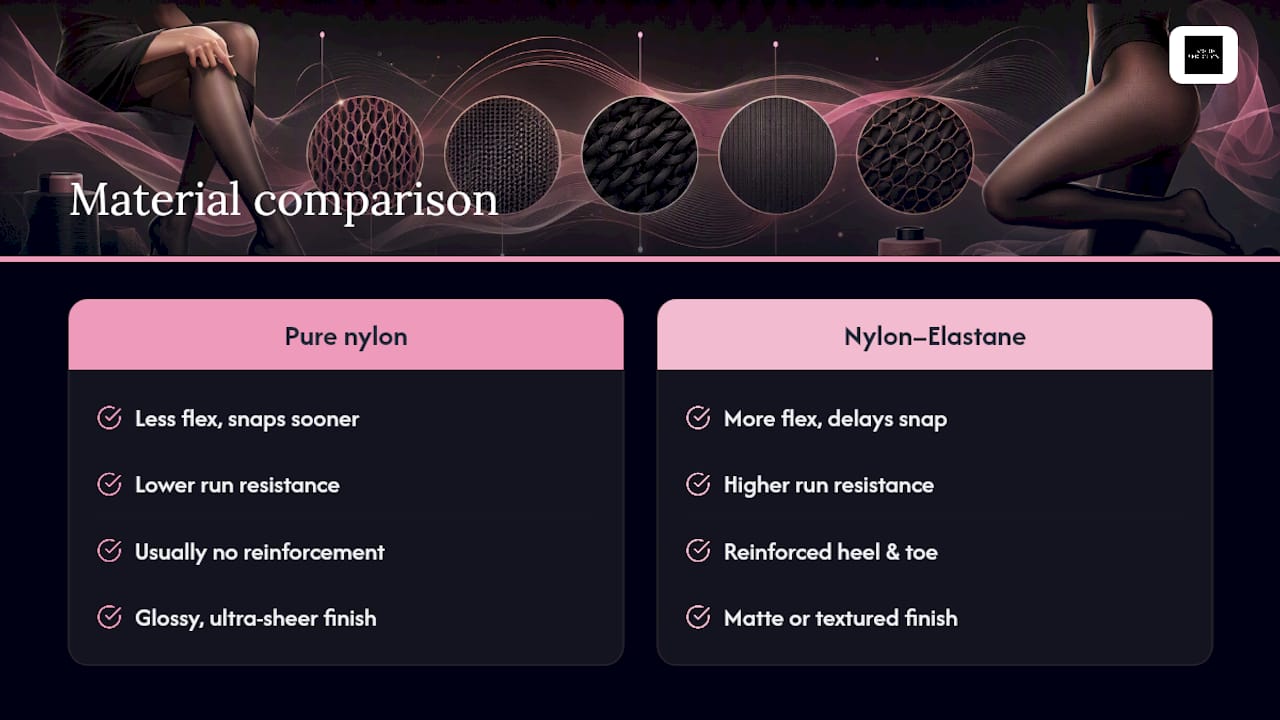
Matte and textured finishes also tend to disguise minor snags better than glossy ultra sheer nylons, simply because the surface already has visual texture to hide a small pull. If you want the sheerest possible look, accept that you’re trading some durability for it and plan accordingly, lighter deniers for shorter wears, sturdier ones for full days.
The apparel world outside hosiery deals with the same trade off between sheerness and toughness. Fabric testing on durable activewear shows that tighter knit construction and fibre blend directly affects how a textile handles repeated friction and stress, the same principle that governs how long a stocking survives a day of walking.
Tips on when to replace hosiery before runs develop due to fabric fatigue
Hosiery doesn’t fail suddenly. It fatigues gradually, and by the time you see a run, the fibres were probably compromised several wears earlier.
Hold a pair up to the light after every third or fourth wear. If you notice a general dulling or a slight fuzziness across the knit rather than at one specific point, that’s fabric fatigue setting in evenly, and it’s a sign the elastane has lost most of its recovery. Waistbands that no longer snap back after stretching are another clear signal; once the elastic memory is gone, every wear puts more strain on the nylon itself.
Sheer hosiery under 20 denier typically lasts fewer wears than a heavier opaque pair, with lifespan varying based on handling and washing. Treat that as a rough guide rather than a fixed number. A pair that’s hand washed and stored properly will outlast one that’s been through a hot machine cycle even a handful of times.
The smartest habit is retiring hosiery before the first run rather than after. Keep your newest, most reliable pairs for occasions where a run would be a genuine problem, and let older pairs handle low stakes days until they finally give out.
Our honest take on stopping stockings runs
Most advice on this topic treats prevention as an afterthought to the emergency fix, a nail polish tip bolted onto the end of an article about something else. We think that’s backwards. The emergency fix matters, but it’s damage control. The real leverage is in the boring stuff: how you put the stockings on, how you wash them, and whether you’re wearing the right denier for the day you’ve actually got planned.
The freezing hack gets a lot of attention online, and to be fair, some testing suggests it can help with certain sheer blends by changing fibre tension before the first wear. We wouldn’t build a whole routine around it. It’s low risk to try, but it’s not a substitute for buying the right denier for the job or handling hosiery with clean, filed nails.
If you take one thing from this guide, make it the sizing point. Tension from a pair that’s slightly too small does more damage over a single wear than a dozen careless handling mistakes combined.
— Lingerie Seduction
Shop hosiery and care essentials built to last
Once you’ve sorted your handling and washing routine, the fabric itself is the last variable worth getting right. Our range runs from ultra sheer lace top styles for date nights to reinforced everyday deniers, so you’re matching the pair to the occasion rather than hoping one style does everything.

If you’re building out an evening look, our luxury sheer mesh and lace babydoll set and luxe black lace cami set pair naturally with delicate hosiery, while our delicate black lace top stockings come with a silicone grip band that cuts down on the slipping and refastening that wears hosiery out early. Every order over $100 ships free, and returns are hassle free if the fit or style isn’t quite right. Browse the current range and add a mesh wash bag to your cart while you’re there. Your next pair will last considerably longer than the last one did.
Sources
- Instructions for compression stockings (post varicose vein surgery) — St Vincent’s Hospital Melbourne
- How can I stop runs in my stockings — Spiegato
- Rapidrepair
- Does freezing tights stop laddering? — Good Housekeeping (UK) test
FAQ
Does hairspray stop runs in stockings?
Extra-hold hairspray can stiffen the fibres around a run enough to slow it temporarily, but it washes out with sweat or humidity, so treat it as a stopgap rather than a lasting fix.
What does it mean if your stockings run?
A run means the knit has broken at a weak point, usually from a snag, overstretching, or fabric fatigue, and the loops are unravelling under tension until something stops them.
How do I fix a run in stockings?
Stop moving, stabilise the fabric with a tissue behind it, then apply a tiny dot of clear nail polish or flexible fabric glue at the top and bottom of the run only, never across the whole ladder.
What can I use to hold up stockings?
A silicone grip band or a garter belt holds stockings in place without the constant tugging and readjusting that causes friction runs, and several of our lace top styles come with a built in grip band for exactly this reason.
How often should I replace my hosiery to prevent runs?
Sheer pairs under 20 denier typically last around five to ten wears depending on handling and washing, and any pair with visible fuzziness or a waistband that’s lost its snap should be retired before it runs.


