

Denier in tights: what it means and how to choose
Denier measures the weight of yarn used to make tights. Technically, one denier equals the mass in grams of 9,000 metres of yarn). The rule is simple: the lower the number, the sheerer the tights; the higher the number, the more opaque and substantial they feel.
Quick picks for shoppers:
- 5–15 DEN — ultra-sheer, bare-leg look, warm-weather events and formal occasions
- 20–40 DEN — everyday sheer to semi-opaque, office and casual wear
- 50+ DEN — opaque, winter warmth, boots and heavier outfits
Denier is not the whole story, though. Yarn composition and knit technology also shape how tights look and feel on the leg.
Key takeaways
Denier is the single most useful number on a hosiery label, but composition and knit determine the full picture.
| Point | Details |
|---|---|
| Denier definition | One denier equals the mass in grams of 9,000 metres of yarn; lower numbers mean sheerer tights. |
| Visual rule | 5–15 DEN is ultra-sheer; 15–40 DEN is sheer to semi-opaque; 50+ DEN is opaque. |
| Warmth caveat | Denier does not determine warmth; fibre composition (wool, cashmere, thermal blends) does. |
| Before you buy | Check composition, look for photos on a real leg, and confirm the return policy. |
| Lingerie Seduction | Stocks hosiery and lingerie with denier and composition details; free shipping over $100 in Australia. |
Table of Contents
- What does denier actually measure in tights?
- What do different denier ranges actually look like?
- How does denier affect durability, warmth, and feel?
- How to choose the right denier for your outfit and season
- Common myths about denier, corrected
- Lingerie Seduction’s approach to denier and product photography
- Hosiery and lingerie at Lingerie Seduction
- Sources
- FAQ
What does denier actually measure in tights?
Denier (abbreviated DEN or D) is a unit of linear mass density. One denier equals the mass in grams of 9,000 metres of a single yarn strand. Historically, a single strand of natural silk measures approximately one denier, which is why ultra-fine hosiery is sometimes described as “silk-like” at very low denier counts. The Collins Dictionary definition confirms this: denier is the weight in grams of 9,000 metres of yarn, used as a standard measure of fibre fineness.
What denier does not do is guarantee a specific level of opacity, warmth, or durability on its own. Several other factors shape the final result:
- Yarn composition — polyamide, elastane, wool, cotton, and cashmere all behave differently at the same denier count
- Knit structure — tighter knits and 3D knitting techniques can make a lower-denier fabric appear denser than the number suggests
- Colour and finish — darker colours and matte finishes tend to read as more opaque than light or shiny finishes at the same denier
- Brand variation — two pairs both labelled 20 DEN can look noticeably different depending on the manufacturer’s yarn and construction
A note on marketing: Some product listings state only the denier count without specifying yarn composition. When composition is missing, the denier number alone cannot tell you how warm, durable, or truly sheer the tights will be. Check the full product description before buying.
What do different denier ranges actually look like?
This is where the number becomes useful. Hosiery guides consistently map denier bands to visual categories, and the differences are clear once you know what to look for.
Ultra-sheer tights have very low denier values, appearing almost invisible on the leg. Skin tone shows through completely, veins and blemishes remain visible, and the finish is typically glossy. They are delicate and ladder easily. Best for formal events, warm Australian summers, and occasions where a bare-leg look is the goal but some coverage is preferred. Pair with strappy heels, silk dresses, or tailored trousers for evening.
Plain black sheer stockings sit in this category — the leg is visible through the fabric, and the effect is polished rather than covered.
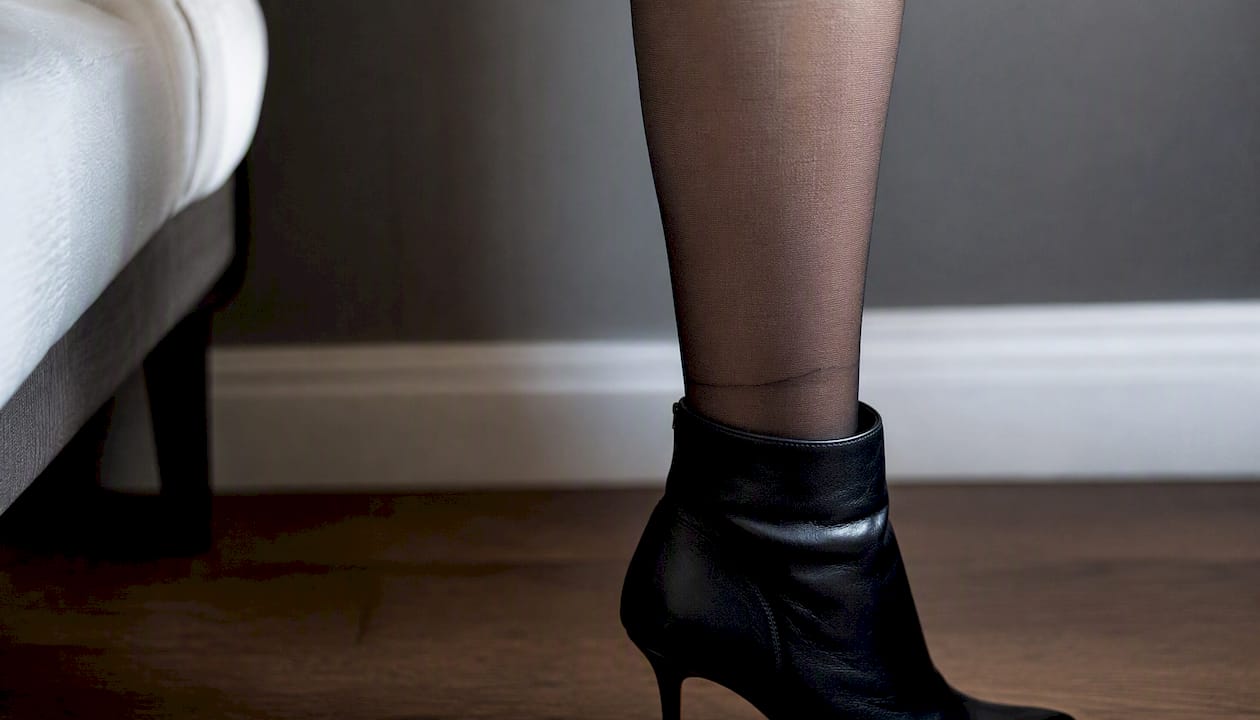
Sheer: 15–30 DEN
A light wash of colour over the leg. Skin tone is still visible but softened. This is the classic everyday sheer that most people picture when they think of tights. Lower denier produces a barely-there look, while higher denier gives more coverage. At 20 DEN, tights work well for office environments, smart casual outfits, and most Australian spring and autumn days.
Semi-opaque: 30–40 DEN
Skin tone is barely visible. These tights provide a smooth, even finish and are noticeably more substantial than sheer options. They suit cooler days, business formal dress codes, and outfits where you want the tights to read as a deliberate style choice rather than a background layer. Retail classification typically treats 30–50 DEN as the semi-opaque range, sitting between sheer and fully opaque.
Opaque: 50–80 DEN
No skin visible. These tights look like a second skin in a solid colour. They are robust, comfortable in cooler temperatures, and pair well with boots, midi skirts, and winter workwear. Anything over approximately 50 DEN is commonly classed as opaque by retailers. Thick-top black lace stockings fall into this category for those wanting a sturdier, more substantial option.
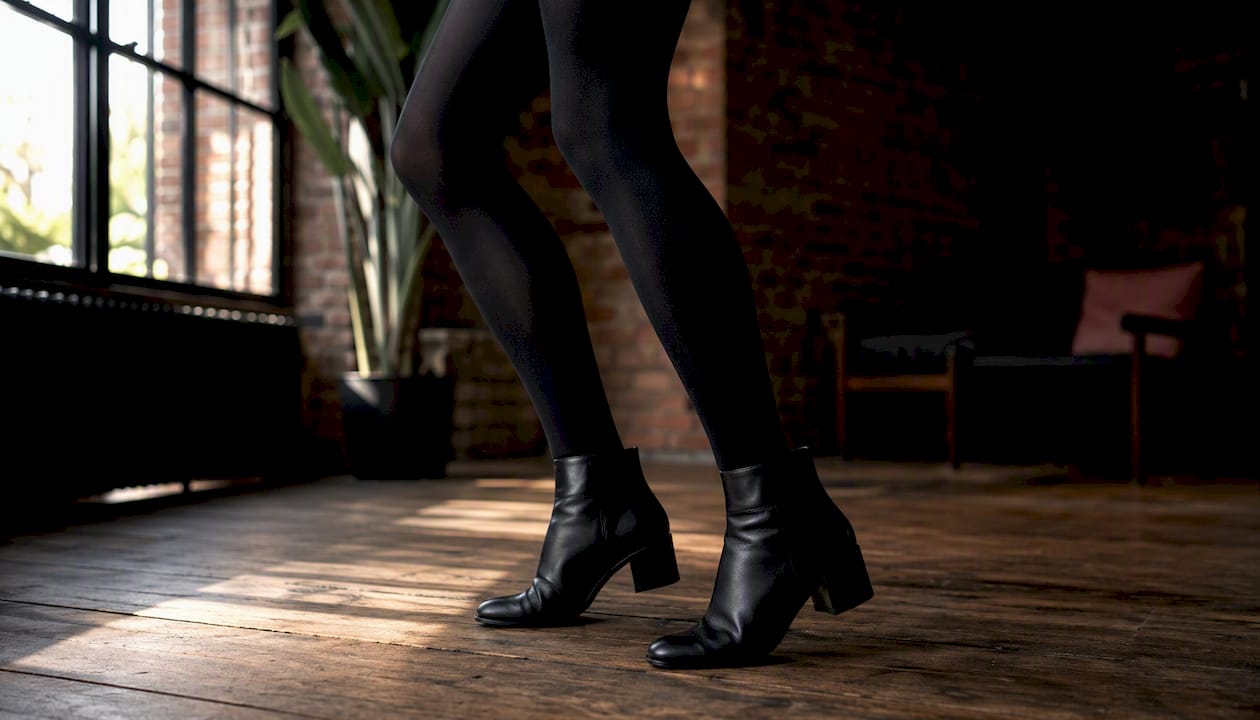
Deep opaque tights have very high denier values, resulting in heavy, warm, and completely opaque coverage. They feel closer to leggings than traditional tights, suitable for cold winters, outdoor events, and layering when warmth is needed.
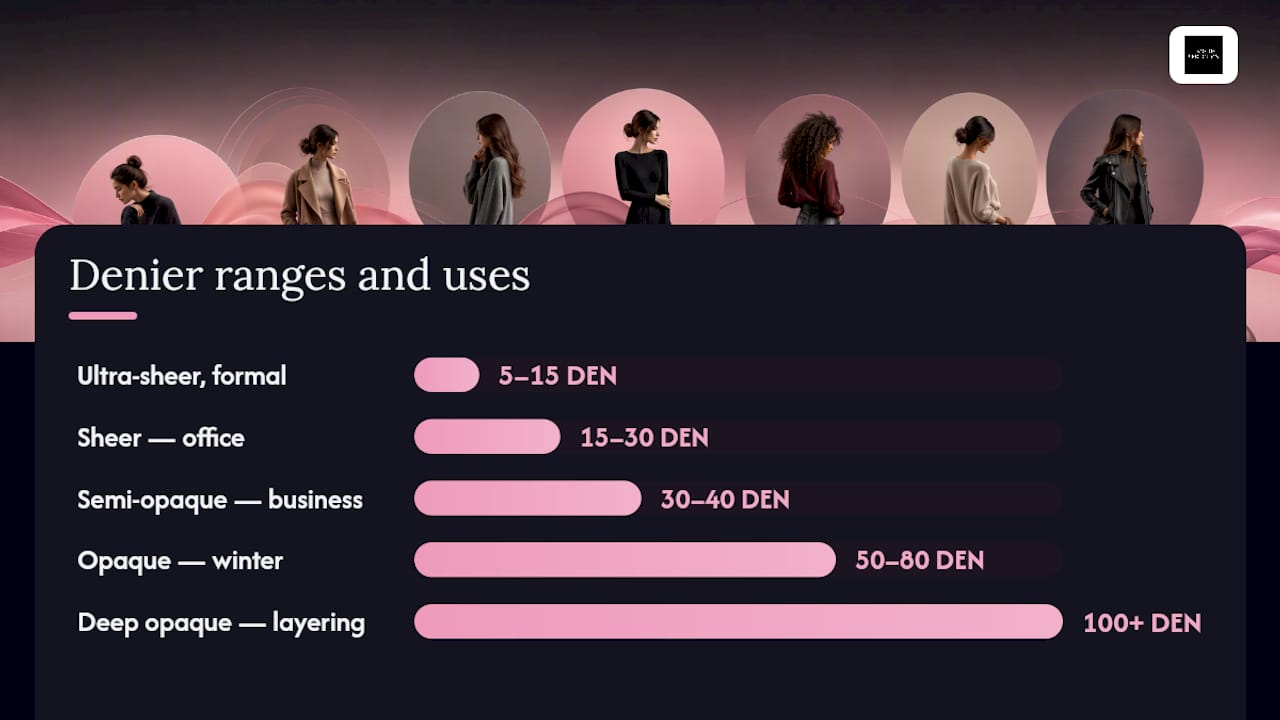
| Denier range | Visual finish | Best for |
|---|---|---|
| 5–15 DEN | Ultra-sheer, skin fully visible | Formal events, warm weather, bare-leg effect |
| 15–30 DEN | Sheer, skin softened | Everyday office, spring/autumn, smart casual |
| 30–40 DEN | Semi-opaque, skin barely visible | Business formal, cooler days, styled outfits |
| 50–80 DEN | Opaque, no skin visible | Winter, boots, heavy fabrics |
| 100+ DEN | Deep opaque, legging-like warmth | Cold weather, outdoor wear, layering |
Pro Tip: Some manufacturers use 3D knitting and strategic elastane placement to make low-denier fabrics appear denser than the number suggests. If you want a sheer look but need extra resilience, look for tights that specify advanced knit technology in the product description — the denier count alone won’t tell you this.
For styling ideas that match hosiery to outfits, the Lingerie Seduction hosiery guide covers pairings in detail.
How does denier affect durability, warmth, and feel?
Denier influences these qualities, but it does not determine them alone.
Durability trade-offs:
- Low denier (5–20 DEN) tights are lightweight and delicate. They ladder more easily, particularly at the toe and heel. Handle with care: remove jewellery before putting them on, and avoid rough surfaces.
- Mid-range denier (20–50 DEN) offers a reasonable balance between sheerness and resistance to runs.
- High denier (50+ DEN) tights are more robust and less prone to laddering, though a snag can still cause damage.
Warmth: Denier measures yarn weight, not insulating performance. Warmth is primarily a function of fibre type and construction, not denier count. A 40 DEN polyamide tight will feel cooler than a 40 DEN wool-blend tight at the same thickness. If warmth is the priority, check the fibre composition — wool, cashmere, and thermal blends outperform plain polyamide regardless of denier.
Feel: Higher denier tights tend to feel more substantial and supportive on the leg. Lower denier tights feel lighter and more skin-like. Neither is objectively better; it depends on the occasion and personal preference.
Care tips by denier:
- 5–30 DEN: hand wash in cool water, lay flat to dry, never wring
- 30–80 DEN: gentle machine cycle in a laundry bag, cool water
- 100+ DEN: follow the care label; most tolerate a gentle machine cycle but avoid high heat
How to choose the right denier for your outfit and season
Work through these five steps before buying:
- Occasion — formal event, office, casual, or outdoor? Formal and warm-weather occasions suit 5–20 DEN; office and smart casual suit 20–40 DEN; winter and outdoor suit 50+ DEN.
- Warmth need — if warmth matters, check the fibre composition, not just the denier. Wool or thermal blends at 40–80 DEN will outperform plain polyamide at 100 DEN in some conditions.
- Shoe type — delicate heels and sandals pair naturally with sheer tights (5–20 DEN); ankle boots and knee-highs suit semi-opaque to opaque (30–80 DEN); chunky boots work with deep opaque (80+ DEN).
- Colour match — darker tights at lower denier still show skin tone. If you want a consistent colour finish, go 40 DEN or above.
- Durability preference — if you need tights to last through a long day or repeated wear, choose 30 DEN or above and check the yarn composition for elastane content.
Outfit match examples:
- Office workwear, skirt or dress: 20–30 DEN in nude or black
- Evening or bridal: 10–15 DEN ultra-sheer; pair with plain sheer ivory garter belt stockings for a bridal look
- Casual skirts, warmer months: 15–20 DEN
- Winter layering under midi skirts: 60–80 DEN
- Boots pairing: 40–80 DEN; match the visual weight of the tight to the boot — slim boots suit 40 DEN, chunky boots suit 80+ DEN
Red flags when shopping online:
- No denier listed at all
- No composition details (just “nylon” with no blend breakdown)
- Product photos on a mannequin or flat surface only — photos on a real leg in natural light are the most useful for judging sheerness
- No return window or a very short one
Sizing and care quick notes:
- Always check the brand’s size chart; hosiery sizing varies between manufacturers
- Store tights folded, not balled, to reduce stress on the yarn
- Keep away from sharp objects and rough surfaces during wear
For boot and hosiery pairing ideas, this guide on styling over-the-knee boots is a useful reference.
Common myths about denier, corrected
Myth vs fact:
- “Higher denier = warmer tights” — False. Warmth depends on fibre composition and construction, not denier count. A wool-blend tight at 30 DEN will be warmer than a polyamide tight at 100 DEN.
- “Denier is consistent across brands” — It is not. Two pairs both labelled 40 DEN can look and feel different depending on the manufacturer’s yarn, knit, and finish. Fabrication and finish vary significantly.
- “Sheer tights are always fragile” — Not always. Knit technology and elastane content can make low-denier tights more resilient than their weight suggests.
Pro Tip: When reading a product listing, look for three things beyond the denier number: the fibre composition (polyamide percentage and elastane content), whether the brand shows photos on a real leg, and whether there are customer reviews mentioning durability. These three signals tell you more than the denier count alone.
Lingerie Seduction’s approach to denier and product photography
At Lingerie Seduction, product selection and photography follow a straightforward standard: show the product as it actually looks. Where hosiery is featured, the aim is to photograph on a real leg in natural light so shoppers can judge sheerness and finish accurately before buying. This matters most at the sheer end of the range, where a 10 DEN and a 20 DEN can look identical in a flat-lay shot but very different on the leg.
All products ship from Australia with fast local dispatch. Orders over $100 qualify for free shipping, and returns are hassle-free. For shoppers who are unsure about denier before buying, the product descriptions include composition details and denier counts where available.
Blog content, including this guide, is tagged by topic so shoppers can find relevant styling and sizing information quickly.
Hosiery and lingerie at Lingerie Seduction
Sheer fabrics and fine knits run through the Lingerie Seduction collection, so the same principles that apply to tights apply to the lingerie you pair with them.
The current collection includes pieces that complement both sheer and opaque hosiery choices:
- Ivory & Champagne 3 Piece Bra & Garterbelt Set — pairs naturally with ultra-sheer 5–15 DEN stockings for bridal and formal looks
- Sheer Peach Floral Lace Lingerie Set — delicate lace that works alongside low-denier sheer hosiery for special occasions
- Sheer See Through Mesh & Lace White Robe — sheer mesh construction, suited to bridal and editorial styling with fine-denier hosiery
- Sexy Black Lace & Microknit Sleepwear Set — microknit fabric that echoes the fine-yarn construction of quality low-denier tights
- Luxury Sheer Mesh & Lace Women’s Babydoll Set — sheer mesh panels for special-occasion pairings with ultra-sheer hosiery
- Luxe Black Lace Cami Lingerie Set — versatile for pairing with both sheer and opaque hosiery depending on the outfit
Free shipping on orders over $100. Hassle-free returns. Discreet packaging. Fast local dispatch across Australia. Browse the full collection at Lingerie Seduction.
Sources
FAQ
Is 60 denier thicker than 40 denier?
Yes. 60 DEN tights are thicker and more opaque than 40 DEN. Both sit in the opaque-to-semi-opaque range, but 60 DEN provides more coverage and is generally more robust.
Are 15 or 20 denier tights better?
Neither is objectively better. 15 DEN gives a sheerer, more bare-leg finish; 20 DEN offers slightly more coverage and durability. Choose 15 DEN for formal or warm-weather occasions and 20 DEN for everyday office or smart casual wear.
Are 200 denier tights see-through?
No. At very high denier values, tights are completely opaque and feel close to thermal leggings. They are suited to cold weather and outdoor wear, with no skin visible at all.
Are 40 denier tights see-through?
At 40 DEN, tights are semi-opaque. Skin tone is barely visible, and the finish reads as a smooth, even colour. Retail classification places 30–50 DEN in the semi-opaque category, so 40 DEN sits at the denser end of that range.
Recommended
- The Ultimate Hosiery Guide: How to Level Up Your Leg Game in 2026 – Lingerie Seduction
- Hold Ups vs Stockings: The Ultimate Aussie Hosiery Showdown for 2026 – Lingerie Seduction
- How to Choose and Style Plus Size Stockings: The Best Guide for 2026 – Lingerie Seduction
- How to Look Sexy But Stay Warm This Winter – Lingerie Seduction


