

The role of elastic in lingerie: fit, comfort, and design
Elastic is the structural backbone of lingerie, controlling how a garment stretches, holds shape, and returns to its original form during wear. Without the right elastic, even a perfectly cut pattern and premium lace will fail to deliver comfort or support. The role of elastic in lingerie spans function and finish: it anchors bra bands, edges cups, trims waistlines, and defines the silhouette of everything from everyday briefs to statement bodysuits. Understanding how elastic works, and how to choose it well, is the difference between lingerie that fits beautifully and lingerie that loses its shape after a handful of wears.
What types of elastic are used in lingerie?
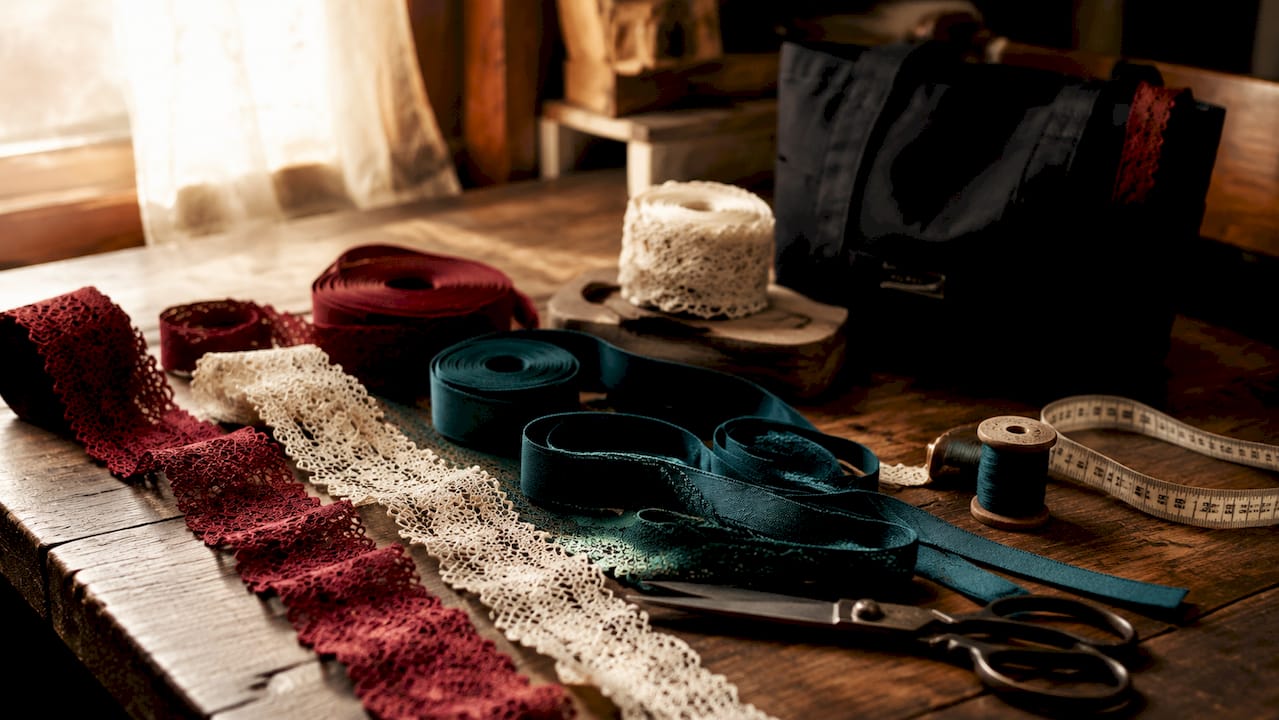
Lingerie construction relies on several distinct elastic types, each chosen for a specific combination of function and appearance. The three most common are picot elastic, fold-over elastic (FOE), and lace elastic. Each behaves differently on the body and serves a different design purpose.
- Picot elastic features a decorative looped edge along one side. That loop creates a soft, scalloped finish that sits comfortably against skin without digging in. Picot elastic appears most often on knicker leg openings and waistbands where the decorative edge faces outward.
- Fold-over elastic (FOE) is a flat, silky band that folds in half over a raw fabric edge to create a clean, finished seam. It is the go-to choice for minimalist designs and anywhere a smooth edge is needed without bulk.
- Lace elastic combines stretch with a lace pattern, adding a romantic, textured finish to edges. It works well on bralette bands, thong waistbands, and crotchless garments where the elastic itself forms part of the visual design.
Elastic finishes like picot, FOE, and lace serve both functional support and aesthetic roles simultaneously. That dual purpose is what makes elastic selection so consequential in intimate apparel design.
Width matters as much as type. 18mm elastic bias tape is the most widely used size for lingerie edges because it conforms to anatomical curves without rigidity. It is commonly supplied in 25-metre rolls for production use. Narrower elastics suit straps and delicate edges; wider bands work for bra underbands and waistbands where more support is needed.
Pro Tip: Before cutting elastic for a new design, stretch a short length against your own body to feel how it behaves. Stiff elastic that resists stretching will feel restrictive in wear, even if the measurement looks correct on paper.
How do stretch and recovery affect lingerie fit?
Elasticity in women’s intimate wear is defined by two properties: stretch percentage and recovery rate. Stretch percentage describes how far an elastic extends relative to its resting length. Recovery rate describes how completely it returns to that resting length after being stretched. Both properties determine whether a garment fits well after the first wear or the fiftieth.
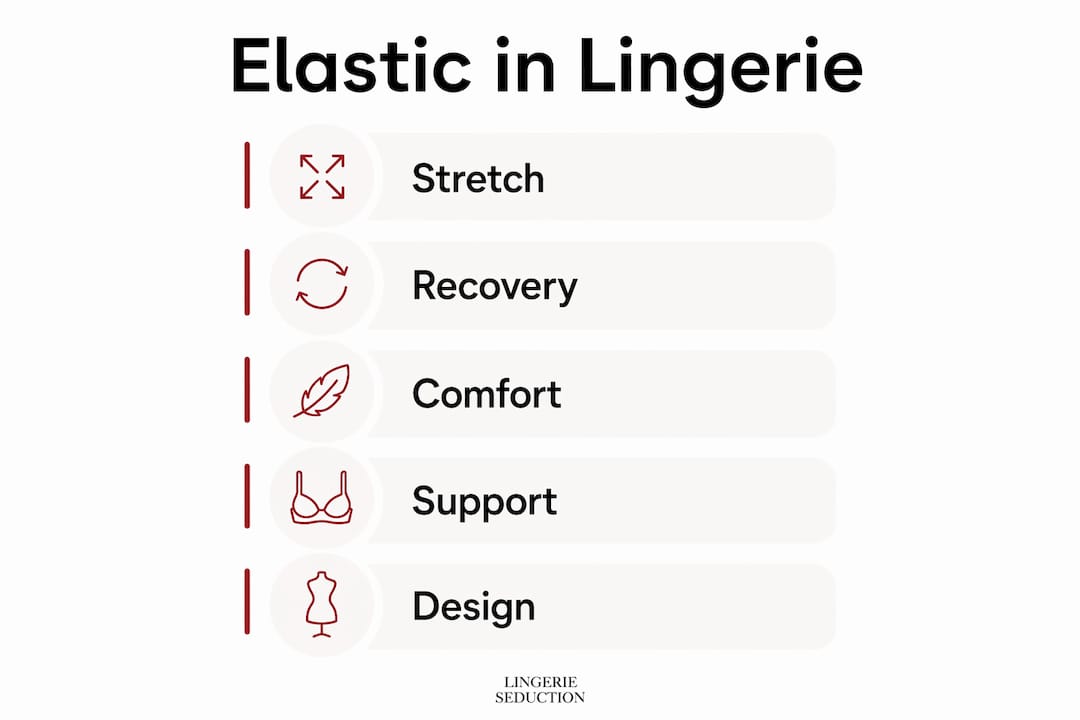
Elastic recovery is the primary quality that affects whether a bra maintains its fit after wear or becomes loose and saggy. A bra band that loses recovery quickly will ride up, fail to anchor the underwire, and allow straps to slip. That is not a sizing problem. It is an elastic quality problem.
The table below shows how different recovery levels affect garment performance:
| Recovery level | Effect on fit | Common outcome |
|---|---|---|
| High recovery (90%+) | Garment returns to original shape after each wear | Long-lasting fit, consistent support |
| Moderate recovery (70–89%) | Some shape retention, gradual loosening over time | Acceptable for low-stress garments |
| Low recovery (below 70%) | Elastic stretches out quickly under repeated wear | Band creep, strap slipping, poor support |
Bra band elastic requires a balance of tension: too soft causes creeping and riding up, while too firm causes discomfort and pressure marks. The goal is controlled tension, not maximum tightness. That distinction matters enormously for wearers who confuse support with restriction.
Poor elastic recovery leads to bras that lose shape quickly and become uncomfortable after only a few wears. Choosing elastic with strong recovery is not a premium detail. It is a baseline requirement for any well-constructed intimate garment.
Pro Tip: Test elastic recovery before sewing by stretching a 10cm length to double its size, holding for 10 seconds, then releasing. If it does not return close to its original length, it will not hold its shape in a finished garment.
Does elastic choice matter more than the pattern?
Elastic choice influences final fit more than the pattern itself. That claim surprises many sewists who spend hours refining a pattern but grab the first elastic they find. The pattern controls the shape of the cut pieces. The elastic controls how those pieces behave on a moving body.
Two elastics that look identical can behave drastically differently. Their stretch-to-recovery ratio dictates fit comfort, and that ratio is invisible to the eye. A lace elastic and a picot elastic of the same width and colour can produce completely different fit outcomes on the same pattern. Designers who skip stretch testing before cutting are making a significant gamble.
Elastic is not a finishing detail. It is a structural decision. The moment you choose an elastic with the wrong stretch-to-recovery ratio, you have already determined how the garment will fit, regardless of how well you sew it. Treat elastic selection with the same rigour you apply to fabric choice.
Elastane fibre in small amounts dramatically improves fit by allowing fabric to stretch and return to shape. It reduces cup gaping, supports band tension without stiffness, and improves overall flexibility. This is why fabric blends matter alongside elastic selection. A cotton-elastane blend in a stretch lace underwire slip behaves very differently from a rigid woven fabric, even with identical elastic applied.
Elastic bias tape with a cotton-elastane blend stretches 20–40% and recovers well, making it suited for lingerie edging that must adapt to anatomical curves. It is used on waistbands, cup edges, straps, and necklines where softness and stretch are both needed. The fabric blend and the elastic work together. Choosing one without considering the other produces inconsistent results.
Practical tips for selecting and applying elastic in lingerie
Choosing the right elastic for each part of a lingerie garment requires matching the elastic’s properties to the demands of that specific component. A bra band needs different elastic than a thong waistband. A strap needs different elastic than a cup edge.
- Match elastic width to the garment component. Use 6–10mm elastic for straps and delicate edges. Use 12–18mm for waistbands and bra underbands. Wider elastic distributes tension across more skin surface, reducing pressure points.
- Prioritise recovery over stretch for support garments. For bra bands and underwired pieces, choose elastic with high recovery. For crotchless garments and decorative trims, moderate recovery is acceptable because structural support is not the primary function.
- Test stretch percentage before cutting. Measure how far your elastic stretches relative to its resting length. For bra bands, elastic that stretches to roughly 1.5 times its resting length provides firm support without restriction.
- Sew with a zigzag or stretch stitch. A straight stitch will snap when the elastic stretches in wear. A zigzag stitch moves with the elastic and preserves its recovery. Use a ballpoint needle to avoid piercing the elastic fibres.
- Wash elastic garments in cold water on a gentle cycle. Heat degrades elastic fibres and accelerates recovery loss. Air drying rather than tumble drying extends the life of elastic significantly.
- Avoid pinning elastic directly. Pins pierce elastic fibres and create weak points. Use clips or hand-baste elastic in place before machine sewing to preserve its integrity.
The role of stretch fabric in crotchless lingerie and other open-construction garments is particularly worth noting. In these pieces, the elastic does more than finish an edge. It defines the garment’s entire structural frame. Choosing lace elastic for a crotchless lingerie set means the elastic is the primary visual and structural element simultaneously. Width, colour, and recovery rate all affect how the finished piece looks and wears.
Key takeaways
Elastic is the single most influential construction element in lingerie, determining fit, support, and garment longevity more than any other component.
| Point | Details |
|---|---|
| Elastic type determines finish | Picot, FOE, and lace elastic each serve distinct functional and aesthetic roles in lingerie construction. |
| Recovery rate drives durability | High-recovery elastic maintains garment shape over repeated wear; low recovery leads to sagging and poor support. |
| Width must match the component | Use 6–10mm for straps and edges; use 12–18mm for bra bands and waistbands to distribute tension correctly. |
| Elastic outweighs pattern in fit | Two identical-looking elastics can produce very different fit outcomes; always test stretch and recovery before sewing. |
| Fabric blend and elastic interact | Elastane-blend fabrics work with elastic to improve flexibility and reduce gaping in cups and bands. |
Elastic is the detail most designers underestimate
At Lingerie Seduction, we see the results of elastic decisions every time we assess a garment’s quality. The most common mistake is treating elastic as an afterthought, something chosen for colour match or price rather than performance. A beautifully constructed bra in premium lace will still fail if the band elastic loses recovery after three washes.
The stretch-to-recovery ratio is the number that matters most, and it is the one most designers never measure. Testing elastic before sewing is not an advanced technique. It takes 30 seconds and prevents hours of rework. We have found that garments with well-chosen elastic require fewer fit adjustments and generate far fewer comfort complaints.
Thoughtful elastic choice also changes what is possible aesthetically. Lace elastic on a European lace lingerie set is not just decorative trim. It is a structural choice that allows the garment to move with the body while maintaining its visual line. That is the kind of detail that separates a garment that looks good on a hanger from one that fits beautifully in wear.
— Lingerie Seduction
Lingerie Seduction: elastic quality you can feel
Good elastic is invisible when it works correctly. You feel the support without the restriction, and the garment holds its shape wear after wear. At Lingerie Seduction, every piece in our collection is selected with that standard in mind.

The Red Lace Bodysuit and the Black Lace 3 Piece Luxury Lingerie Set both demonstrate what high-recovery elastic looks and feels like in a finished garment. The bands stay in place, the edges lie flat, and the fit holds across repeated wear. Free shipping on orders over $100 and hassle-free returns make it easy to find the pieces that work for you.
FAQ
What is the role of elastic in lingerie?
Elastic controls how lingerie stretches, holds shape, and returns to its original form during and after wear. It provides structural support in bra bands, finishes edges on cups and waistbands, and determines how well a garment fits across different body movements.
What types of elastic are used in lingerie making?
The three main types are picot elastic, fold-over elastic (FOE), and lace elastic. Each type serves both functional and aesthetic purposes, with picot offering a decorative looped edge, FOE creating clean flat finishes, and lace elastic adding textured visual appeal.
How does elastic recovery affect bra fit?
Elastic recovery is the ability of elastic to return to its original length after stretching. Low recovery causes bras to lose shape quickly, leading to band creep, strap slipping, and reduced support after only a few wears.
What width elastic is best for lingerie edges?
18mm elastic bias tape is the most widely used size for lingerie edges because it conforms to body curves without rigidity. Narrower widths of 6–10mm suit straps and delicate trims, while wider bands work best for bra underbands.
Does elastic choice affect fit more than the pattern?
Yes. Elastic choice influences final fit more than the pattern itself, because two visually identical elastics can produce completely different results on the body. Testing stretch percentage and recovery before sewing is the most reliable way to predict how a finished garment will fit.


