

3 Essentials to Stop Visible Lines: Panty Styles Guide
For everyday wear, a soft cotton bikini or hipster wins on comfort and breathability. For fitted clothing where visible lines are the enemy, a seamless thong or seamless bikini disappears under the fabric. For special occasions, style takes over practicality, and fabrics shift toward lace and satin. Fit and fabric matter more than the cut name on the label, and the sections below explain rise, gusset design, fabric composition and care so you can build a practical rotation.
TL;DR:
- Cotton underwear remains the best choice for daily comfort and breathability, especially with cotton gussets for hygiene and moisture control.
- Seamless styles, especially in thongs and bikinis, provide the best invisibility under tight-fitting and structured clothing.
- Correct sizing depends on measuring hips accurately and comparing to brand-specific size charts, with wider gussets and reinforced waistbands suited for curvier figures.
- Hand-washing delicate fabrics and avoiding tumble dryers extends underwear lifespan, as heat damages elastane fibers over time.
- Building a practical rotation of trusted styles in a few versatile cuts outperforms maintaining a large drawer of poorly fitting or infrequently worn options.
Table of Contents
- Panty styles guide: cuts, coverage and where each one belongs
- Which fabric gives you comfort versus invisibility?
- How do you choose a panty style for your outfit?
- How do you measure for the right panty size and avoid fit problems?
- How should you wash and store your underwear?
- How does Lingerie Seduction help you find the right fit?
- Our take: build a rotation, not a drawer full of one-offs
- Suggested shop starts from our collection
- Sources
- FAQ
Panty styles guide: cuts, coverage and where each one belongs
Every panty style boils down to two variables: how much fabric sits at the waist (the rise) and how much it covers at the back and sides. Once you can read those two things, the cut names stop being marketing jargon and start being useful shorthand.
Brief. Full coverage at the front and back, sitting at or near the natural waist. This is the most conservative cut and the one most brands use as their comfort baseline. Good under high-waisted jeans or trousers where you want zero riding up.
Bikini. Mid-rise, moderate coverage, narrower at the hip than a brief. It’s the most versatile everyday cut because it sits low enough to pair with low-rise jeans but still covers enough to feel secure. The Strategist’s testing found a soft organic cotton bikini or hipster consistently outperformed other cuts for everyday comfort, with winning styles built from blends like 92% organic cotton and 8% spandex.
Hipster. Sits lower on the hip than a bikini, with a straighter leg line. Great under low-rise pants and for anyone who finds a waistband digging in uncomfortable.
Boyshort. Covers more of the bottom and upper thigh than any other cut, cut like a mini short. It’s the go-to for lounging, sleeping, and preventing inner-thigh chafe, and it’s frequently recommended for plus-size bodies because the extra fabric distributes elastic tension across a wider band instead of cutting in at one point.
Thong. Minimal back coverage, a narrow strip of fabric running up the centre back. Contrary to the assumption that thongs are inherently less comfortable, testers found that a well-made thong with a flat, non-twisting back strip often beat a poorly cut brief for all-day wear.
G-string. An even more minimal version of the thong, using a thin string rather than a fabric strip across the hip and back. This is the difference between thong and G-string in a nutshell: a thong still has some fabric coverage on the sides and back, while a G-string reduces that to almost nothing.
Cheeky/Brazilian. Sits between a bikini and a thong in back coverage, showing a bit more cheek than a bikini without going full thong. A popular middle ground for anyone easing away from full-coverage cuts.
Tanga. Similar rise to a bikini but with less back coverage, closer to a cheeky cut. Often used interchangeably with “Brazilian” depending on the brand.
High-waist brief. Rises above the navel, offering light tummy control alongside full coverage. A practical pick for anyone who wants some smoothing without buying dedicated shapewear.
Seamless. Not a cut on its own but a construction method. Bonded or laser-cut edges replace stitched hems, and seamless construction reduces visible panty lines more reliably than a traditional finish. You can find seamless thongs, seamless bikinis and seamless briefs, so choose the seamless version of whichever cut suits your coverage needs.
Wacoal’s panty style guide uses these same canonical definitions, and most Australian retailers follow the same rise and coverage logic even when marketing names differ slightly.
- Brief: full coverage, natural waist, most conservative
- Bikini: mid-rise, moderate coverage, most versatile
- Hipster: low-rise, straight leg line
- Boyshort: maximum coverage, best for chafe prevention
- Thong: minimal back coverage, narrow fabric strip
- G-string: near-zero coverage, thin string sides
- Cheeky/Brazilian: partial back coverage, middle ground
- Tanga: bikini rise with reduced back coverage
- High-waist brief: above-navel rise, light smoothing
- Seamless: construction method, not a cut, minimises VPL
Which fabric gives you comfort versus invisibility?
Cotton remains the benchmark for everyday underwear because it breathes and manages moisture better than synthetics, which matters for skin comfort over a full day. The Strategist’s fabric comparisons back cotton for daily wear, while modal and microfiber earn their place when you need a silky hand-feel and a fabric that won’t print through fitted clothing.
Lace and mesh sit at the decorative end. They look beautiful but breathe less than cotton, so they’re better suited to shorter wear windows: date nights, occasion pieces, or layered under something else. Elastane (spandex) is commonly blended in most pairs, providing stretch to move with you while maintaining shape through wash cycles.
The gusset, which is the fabric panel at the base that sits against the body, deserves its own attention. A cotton gusset is standard advice even on lace or synthetic-shell panties, because it keeps the part touching skin breathable regardless of what the outer fabric is doing. If you’re asking what is a gusset and why it matters, this is the answer: it’s the hygiene-critical panel, and a synthetic gusset on an otherwise pretty pair is a comfort compromise worth checking before you buy.
Seamless and bonded construction changes the game for invisibility. Instead of a stitched hem creating a ridge under clothing, bonded edges lie flat against the skin, which is why seamless styles show up so often in the “what to wear under leggings” conversation.
- Cotton: breathable, ideal for everyday and the gusset panel
- Modal: soft, drapes well, good invisibility
- Microfiber: silky, minimal show-through, quick-drying
- Nylon/polyamide: durable, often blended for shape retention
- Lace/mesh: decorative, less breathable, better for shorter wear
- Elastane: typically 5–10% of the blend, provides stretch and recovery
Pro Tip: *Check the fabric label before the price tag.
How do you choose a panty style for your outfit?
Work through this in order and you’ll land on the right pick faster than scrolling ten product pages.
- Identify the outfit silhouette. Fitted or bodycon calls for minimal-line styles; loose or structured clothing gives you more room to choose comfort-first cuts.
- Decide how much invisibility you actually need. Leggings and bodycon dresses show every seam, so seamless thongs or seamless bikinis are the safest bet. Outfit-to-cut mapping from The Scarlett Club backs this pairing specifically for close-fitting fabrics.
- Rank comfort priorities. If you’re sitting at a desk all day, a rising waistband or thong strip that shifts will bother you far more than it would on a night out.
- Match cut and fabric together, not separately. A seamless cut in a stiff synthetic fabric still shows lines if the fabric itself doesn’t stretch cleanly.
For quick reference: leggings and bodycon dresses pair best with seamless thongs or bikinis; tailored trousers suit hipsters or briefs, which sit flat under structured waistbands; activewear wants moisture-wicking microfiber in a boyshort or bikini cut; lounging and sleep favour boyshorts for the chafe-free coverage; date nights open the door to lace and cheeky cuts where invisibility matters less than how it looks; and bridal wear typically pairs shapewear with a smooth-front brief or seamless style underneath.
For fuller coverage under structured dresses, a hybrid bikini-boyshort style, similar to The Tidal Bikini, splits the difference between comfort and coverage without resorting to full shapewear.
The trade-off most readers get wrong is assuming shapewear replaces the need for the right panty. Shapewear smooths the silhouette; the panty underneath still needs to be seamless or it will print through both layers. For minor visible-line issues, adhesive nipple covers and body tape solve a different problem, not this one; a properly fitted seamless panty is the actual fix.
How do you measure for the right panty size and avoid fit problems?
Most fit complaints, digging, rolling, or wedgies, trace back to one thing: the size chart wasn’t read against an actual hip measurement. Wrap a soft tape measure around the fullest part of your hips and bottom, keep it parallel to the floor, and check that number against the brand’s own Australian size chart rather than guessing from your regular clothing size. Fit guidance widely recommended by retailers also flags gusset width and waistband tension as the two features worth checking before you commit to a size.
Signs you’ve got the wrong size include a waistband that rolls down quickly, fabric bunching at the gusset, or leg elastic digging in. Adjusting size or cut can address these fit issues.
- Measure hips at the widest point, tape parallel to the floor
- Cross-check against the brand’s own size chart, not your dress size
- Wide gusset panels suit fuller hip-to-thigh ratios
- Reinforced waistbands prevent rolling on curvier figures
- Higher-cut leg seams reduce digging for narrower hips
Lingerie Seduction’s own fit guide for different body types breaks these adjustments down further if your shape doesn’t match the “standard” size chart assumption.
How should you wash and store your underwear?
Cotton and microfiber tolerate a cold, gentle machine cycle, but lace and mesh last longer hand-washed or bagged in a mesh laundry bag to stop snagging. Skip the tumble dryer wherever you can: heat breaks down elastane fibres faster than almost anything else, which is why a pair that fit perfectly on day one feels loose within a few months of dryer use.
- Cold water, gentle cycle is recommended for cotton and microfiber; mesh bags or hand wash are better for lace and delicate trims; air drying flat away from heat preserves elastane. Replace everyday styles periodically as elastane wears out. Treat stains promptly with cold water before washing.
How does Lingerie Seduction help you find the right fit?
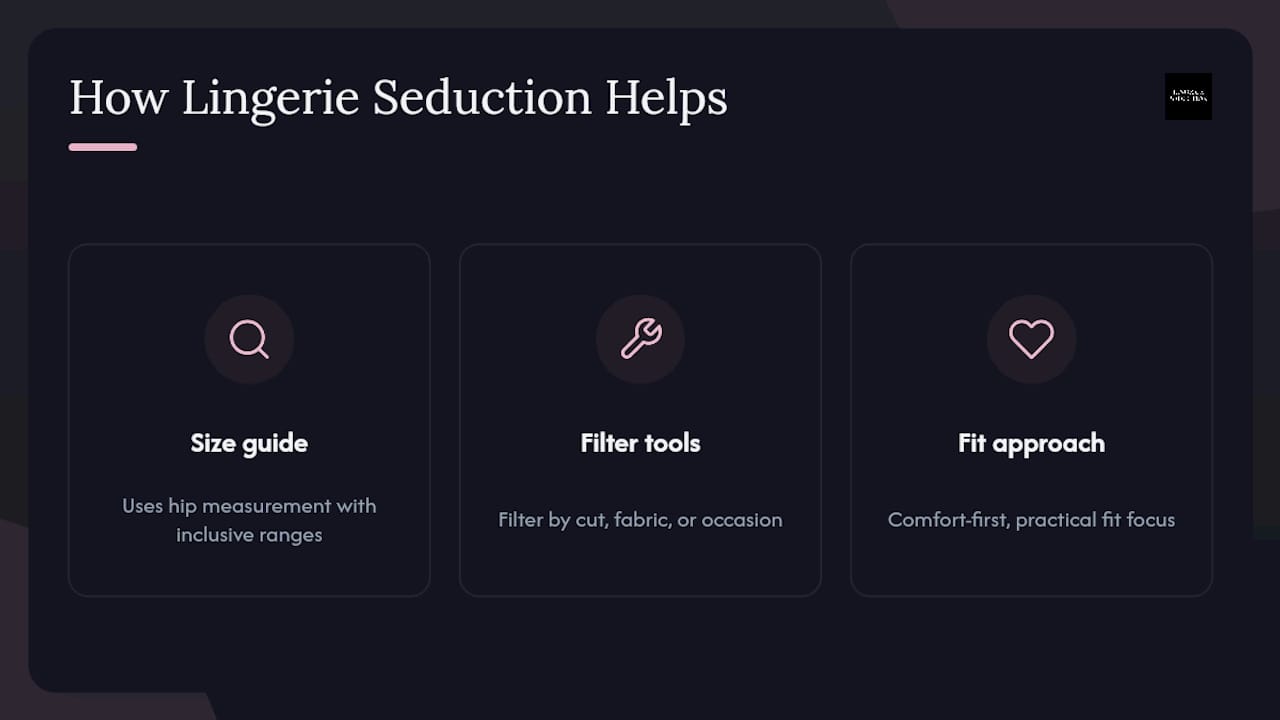
Lingerie Seduction’s size guide walks you through the same hip-measurement method covered above, matched against inclusive size ranges rather than a single standard fit. Filter tools on the site let you shop by cut, fabric, or occasion, so you’re not scrolling through styles that don’t suit what you actually need. It’s built for the same practical, comfort-first approach this guide follows.
Our take: build a rotation, not a drawer full of one-offs
Buy multiples once you find a style that fits well; a single trusted cut in three colours beats ten different cuts that half-fit. Keep three categories on hand: everyday cotton, a seamless style for fitted clothes, and one occasion piece. Fit and fabric decide comfort long before the cut name does.
— Lingerie Seduction
Suggested shop starts from our collection
Once you know your everyday and fitted-clothes styles, occasion pieces are the fun part. For coordinating a full look under a dress or skirt, sheer stockings for garters give you the hosiery half of a matched set without hunting for separates.

For special occasions where practicality takes a back seat to how something feels and looks, a piece like the candy pink lace crotchless teddy illustrates exactly where lace and mesh belong in the fabric hierarchy discussed earlier: short wear windows, high impact. If you want a fully coordinated set for a date night or bridal occasion, the quarter cup bra and garter belt set pairs matching pieces so you’re not mixing shades or trims across separate purchases. All three sit within Lingerie Seduction’s free shipping threshold on orders over $100, with hassle-free returns if the fit isn’t right the first time. Check the size guide before you order, then browse the full range and add your picks to cart.
Sources
- Best women’s underwear | The Strategist
- Panty Styles – Wacoal
- Panty Types Explained: Thong, Brief, Bikini, Boyshort, and Every Cut In Between | The Scarlett Club
FAQ
What is a gusset?
A gusset is the fabric panel at the base of a panty that sits against the body, and experts recommend a cotton gusset on nearly every style for breathability and hygiene, regardless of the outer fabric.
What’s the difference between a thong and a G-string?
A thong keeps a strip of fabric at the back and sides, while a G-string reduces that to a thin string with almost no coverage, making the G-string the more minimal of the two cuts.
Bikini vs brief: what’s the real difference?
A brief sits at the natural waist with full front and back coverage, while a bikini sits lower on the hip with narrower coverage at the sides, making the bikini the more versatile everyday choice.
What should I wear under leggings or bodycon dresses?
Seamless thongs or seamless bikinis are the safest pick, since bonded edges lie flat against skin and avoid the visible line a stitched hem creates.
How often should I replace my everyday underwear?
Most cotton and microfiber styles hold their shape through regular wear until the elastane fatigues and the waistband starts rolling.


