

Measure First: Hosiery Size Guide Using Height and Weight
Most hosiery sizes come from a height and weight band, usually labelled A to E or S to XL, so check those two numbers against the brand chart first. If the product page also lists hip, thigh or leg length, measure those before you buy. Sitting between two sizes? Go larger for opaque or structured styles, smaller for sheer nylons you want snug.
TL;DR:
- Hosiery size charts are based on overlapping height and weight ranges, with additional measurements like hip, thigh, and leg length guiding fit.
- For between sizes, choose smaller for sheer styles to ensure snugness and larger for opaque styles that require more room.
- Plus-size, tall, petite, and hold-up hosiery may need specialized charts focused on hip, thigh, or leg length to get an accurate fit.
- Proper measurement involves standing straight for height, weighing in light clothing, and using a flexible tape for hips, thighs, and inseam, with care to avoid twists.
- Hand-washing hosiery in lukewarm water and air-drying preserves shape and elasticity, avoiding softeners that damage silicone bands and fibers.
Table of Contents
- Hosiery size guide: how height and weight charts work
- How do I measure myself for hosiery?
- What if my measurements fall between two sizes?
- Special-fit guidance for plus-size, tall, petite and hold-ups
- How do I wash hosiery without stretching it out?
- Why trust this hosiery size guide?
- A quick word on getting it right the first time
- Pieces that pair perfectly with well-fitted hosiery
- Sources
- FAQ
Hosiery size guide: how height and weight charts work
Every hosiery brand builds its chart around the same basic idea: height and weight together predict leg length and circumference better than either figure alone. That is why almost every hosiery size chart uses overlapping bands rather than a single number per size.
A typical spread looks like this. Size A generally covers a range of shorter heights and lighter weights. Size C or M usually covers medium heights and weights. Notice the overlap in weight between bands. That is deliberate. Brands assume a taller, lighter person and a shorter, heavier person might both need a mid-range size, so the bands are built wide enough to catch both body types without forcing anyone into a guess.
Where the letter and number systems diverge is in how finely they split the range:
- A–E systems tend to use five or six bands with generous overlap, common in pantyhose and tights.
- S–XL systems mirror standard clothing sizing and often correlate more tightly with hip measurement than weight alone.
- Denier (the thickness of the yarn) doesn’t change your size, but higher-denier opaque styles have less stretch, so a snug fit at 20 denier can feel tight at 70 denier in the same size.
- Leg length printed on the pack is usually an average for that height band, not a guarantee, which matters most for anyone at the tall or petite edge of a bracket.
Because multiple sizing systems exist across brands, the safest habit is mapping your own measurements to whichever chart sits on the product page you’re buying from, rather than memorising one system and assuming it travels.
How do I measure myself for hosiery?
Getting the right size starts with four numbers: height, weight, and (when a chart asks for them) hip and thigh circumference, plus leg length. Here’s how to take each one properly.
- Height. Stand barefoot against a flat wall, heels touching the skirting board, and mark where the top of your head sits.
- Weight. Weigh yourself in the morning, before eating, in light clothing, for the most consistent reading.
- Hips. Wrap a flexible tape around the fullest part of your hips and glutes, keeping it parallel to the floor.
- Thigh. Measure around the top of your thigh, roughly where a stocking band or hold-up top would actually sit, not higher up near the hip.
- Leg length or inseam. Measure from the crotch seam of a well-fitting pair of trousers down to the ankle bone, or have someone measure floor to hip for you.
Pro Tip: Measure in front of a mirror or ask someone to help with the tape at the back. A twisted or angled tape measure is the most common reason home measurements don’t match the size that arrives.
Cross-check hip and thigh figures against the product’s own sizing chart, since brands place the thigh measurement point slightly differently depending on the style.
What if my measurements fall between two sizes?
Start with height and weight, since that’s the primary filter almost every brand uses. Only bring in hip, thigh or leg length once those two numbers have narrowed you to one or two options.
- Always check the individual product’s chart rather than relying on a generic size memory, because ranges shift noticeably between brands and even between styles from the same brand, as Energetiks’ hosiery chart shows.
- If you’re between two bands on a sheer nylon or pantyhose, size down slightly for a smoother, snugger look, since sheer hosiery is designed to be worn firm against the leg.
- If you’re between sizes on an opaque, structured or textured style, size up, since these fabrics have less give and a too-small fit shows at the seams and waistband.
- For hold-ups specifically, favour the larger thigh measurement over the smaller one. A tight silicone band is uncomfortable and more likely to roll.
- Still unsure after checking the chart twice? Read the brand’s returns policy before you buy, so a wrong guess costs you nothing but time.
This order of operations, height and weight first, then circumference, then style-specific judgement calls, resolves most sizing questions without a single email to customer support.
Special-fit guidance for plus-size, tall, petite and hold-ups
Standard height and weight bands work for most shoppers, but four groups need a different starting point.
- Plus-size: Lean on hip and thigh measurements over weight alone, and shop from a chart specifically labelled for plus-size or extended ranges, since general bands often taper out before covering the full hip and thigh spread. Lingerie Seduction’s guide to choosing and styling plus size stockings breaks this down further.
- Tall or petite: Prioritise leg length where a brand lists it, and pick long or petite-specific ranges when available rather than stretching or bunching a standard-length product.
- Hold-ups and silicone bands: Measure thigh circumference where the band actually sits, and keep fabric softener away from the band entirely. It leaves a residue that breaks down the silicone grip, so clean those bands with mild detergent and water only.
- Seamed and fully fashioned stockings: These often run to a narrower size range than standard sheers and can require a specialised or made-to-measure option if your measurements sit outside the usual bands.
Pro Tip: A checklist tool like the one in Prima Dons & Donnas’ plus-size fit guide is worth running through even if you’re buying standard sizing, since the same measurement logic applies across most hosiery styles.
How do I wash hosiery without stretching it out?
Hosiery loses its shape from washing mistakes far more often than from ordinary wear, so the method matters as much as the size you buy.
- Hand-wash in lukewarm water, no hotter than 30°C, using a mild, non-synthetic detergent.
- Never wring the fabric. Squeeze gently instead, then press between two towels to draw out excess water.
- If you need a machine-wash fallback, place thicker opaque tights (70 denier or higher) in a lingerie bag on a cold, delicate cycle.
- Skip fabric softener entirely, especially on hold-ups with silicone bands, since it degrades both the fibres and the grip.
- Air-dry flat or on a low rack, away from direct heat or sunlight.
A full wash every 5 to 6 wears is enough to clear the body oils that weaken elastic fibres over time, with a quick spot-clean in between if needed. For lace pieces worn alongside your hosiery, Lingerie Seduction’s guide on how to properly wash lace lingerie covers the same gentle principles.
Why trust this hosiery size guide?
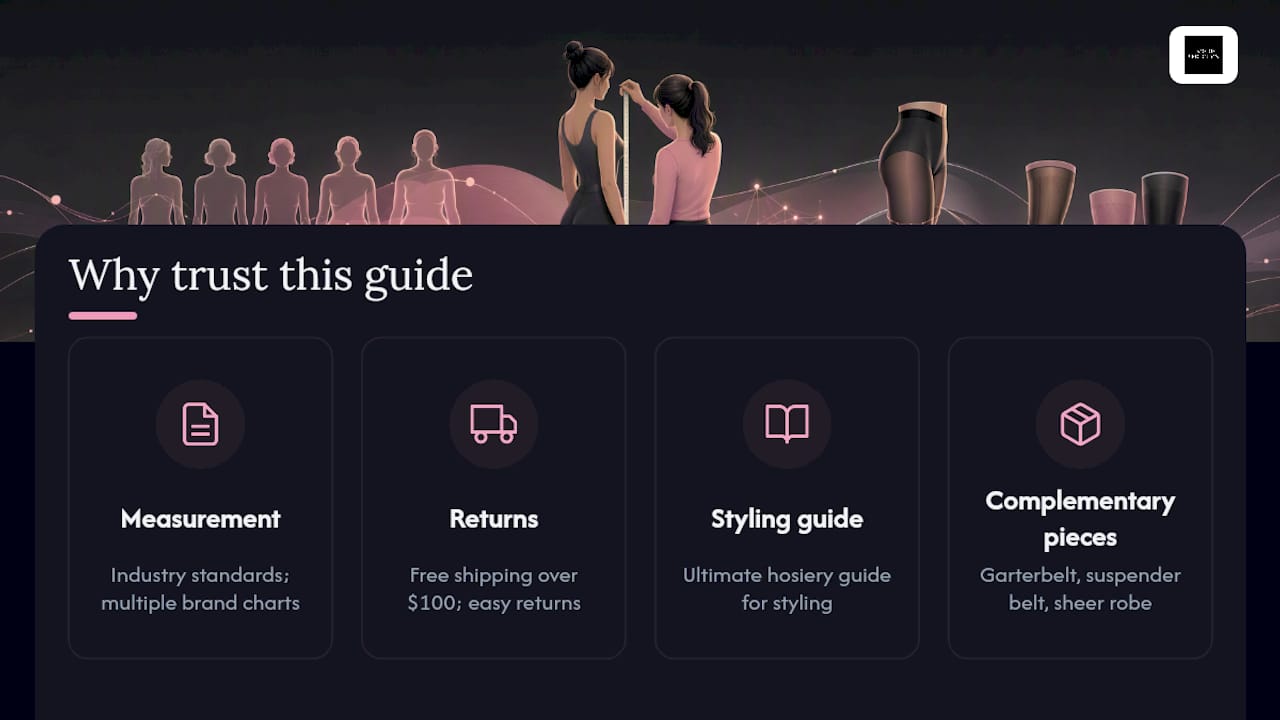
This guide draws on measurement standards used across the hosiery industry, cross-checked against multiple brand-specific charts rather than a single source, because sizing genuinely varies between labels. For deeper reading on styles, denier and how leg wear performs across seasons, Lingerie Seduction’s ultimate hosiery guide covers the styling side in more depth.
If a size still feels off once it arrives, Lingerie Seduction’s free shipping over $100 and hassle-free returns take the risk out of trying a new size. Once you’ve nailed your fit, pieces like a garterbelt set or suspender belt are designed specifically to sit alongside stockings, and a sheer robe layers naturally over the finished look.
A quick word on getting it right the first time
Guessing at hosiery sizing wastes money and time, and it’s the single biggest driver of returns in this category. We’d rather you measure properly once than order three sizes and hope one fits. If your numbers sit awkwardly between bands or you’re shopping a style you’ve never worn before, reach out to our fit-support team before you check out, not after the parcel arrives. Free shipping over $100 and hassle-free returns mean a wrong guess costs you almost nothing either way.
— Lingerie Seduction
Pieces that pair perfectly with well-fitted hosiery
Once your hosiery fits properly, it deserves the right pieces around it. The Ivory & Champagne 3 Piece Bra & Garterbelt Set gives stockings a proper anchor point, with garter clips designed to hold real tension without slipping.
For a bolder look, the Luxe Black Bra, G-string & Suspender Belt Set is built specifically to be worn with stockings, so the suspender straps sit at the correct height rather than being an afterthought. If you’re after something to layer over the top once you’re dressed, the Sheer See Through Mesh & Lace White Robe works for both bridal looks and everyday luxury. For sleepwear that carries the same sheer, considered construction, the Sexy Black Lace & Microknit Sleepwear Set is worth a look.
Every one of these ships free on orders over $100, and returns are hassle-free if a size doesn’t land the way you expected. Browse the full range and check the fit notes on each product page before you check out.
Sources
FAQ
How do I know what size stockings to buy?
Start with your height and weight against the brand’s chart, since most stockings and pantyhose sizes are built around those two figures first. Add thigh, hip or leg length only if the specific product asks for them.
What are the different sizes of hosiery?
Hosiery generally uses either an A to E letter system or an S to XL system, both based on overlapping height and weight bands. A typical A band covers 150 to 162 centimetres and 40 to 55 kilograms, while a C or M band covers 163 to 175 centimetres and 61 to 72 kilograms.
How do I determine my pantyhose size?
Measure your height and weight the same way you would for any hosiery chart, then check the specific product page, since pantyhose sizing can shift slightly between brands even within the same letter or number system.
Is size 12/14 large or XL?
It depends entirely on the brand’s own chart, since clothing sizes and hosiery sizes don’t always align. Check the height and weight band listed on that specific product page rather than assuming it matches your usual clothing size.
What should I do if my measurements don’t match any single size band?
Choose based on the fabric type: size down for sheer, snug-fit styles and size up for opaque or structured hosiery. If you’re still unsure, a brand’s returns policy is there for exactly this situation, and Lingerie Seduction’s hassle-free returns make a second attempt easy.


