

Why lingerie descriptions matter online: a practical guide
Lingerie descriptions are the single most important copy element on any online product page. Customers cannot touch, try, or feel the fabric before buying, so the description does the work a fitting room would otherwise do. The best descriptions cover five things: comfort (how the fabric feels against skin), fit (band length, underwire placement, cup shape), material (fabric type and weight), style (occasion and aesthetic), and care instructions. Get all five right and you reduce cart abandonment, cut returns, and build the kind of trust that converts browsers into buyers.
Key elements at a glance:
- Comfort: softness, breathability, stretch
- Fit: sizing guidance, underwire position, band behaviour on different torso lengths
- Material: fabric name, weight, and texture
- Style: occasion, mood, aesthetic
- Care: washing instructions, durability notes
Why lingerie descriptions matter online for every product page
Shoppers arrive at a lingerie product page with specific, body-related questions. Detailed product descriptions are vital because customers cannot physically inspect or try items before purchasing. A photo shows colour and silhouette. It cannot tell a shopper whether the lace scratches, whether the band will ride up on a short torso, or whether the underwire will dig into a sensitive sternum.
Fit uncertainty is the primary reason shoppers abandon their carts in the lingerie category. Generic copy lifted from a wholesale catalogue makes this worse, not better. It lists features (“adjustable straps,” “soft fabric”) without answering the real question: will this work for my body? That gap is where sales are lost.
The role of detailed descriptions in lingerie retail is to close that gap before the customer clicks away. Think of a well-written description as a knowledgeable sales assistant who pre-answers the questions a professional bra fitter would field in a boutique, available on every product page, around the clock.
What makes a lingerie description genuinely useful?
The difference between a description that converts and one that does not comes down to specificity. Industry experts recommend structuring descriptions with clear headers and concise bullet points covering material, fit, and care, because shoppers skim rather than read in full.
A useful description addresses:
- Fabric name and feel: “Stretch silk satin” tells a shopper far more than “soft fabric.” Naming the material sets accurate tactile expectations.
- Fit specifics: Does the underwire sit flat or project forward? Does the band run true to size or small? How does the cut behave on a fuller bust or a shorter torso?
- Sizing guidance: Note if a style runs small, large, or true to size, and flag which body shapes it suits best.
- Occasion and use case: Daily wear, bridal, gifting, or a special occasion each attract a different buyer with a different intent.
- Care instructions: Machine washable or hand wash only? Tumble dry or lay flat? These details signal product knowledge and build trust.
- Durability notes: Mention whether lace is reinforced, whether elastic retains shape after washing, or whether hardware is tarnish-resistant.
Descriptions that answer specific fit questions — such as how the underwire sits or what band length means for different torso sizes — function as fit proofs. They reduce the friction that stops a shopper from completing a purchase.
How descriptions shape the online purchase decision

Visual imagery grabs attention. Descriptions deliver the logical assurance needed to convert a browser into a confident buyer. The two work together: on-model listings outperform flat-lay-only listings by 25–40% in add-to-cart rates for intimate apparel, but that lift depends on the accompanying copy confirming what the image suggests about fit and feel.
Research into gender-specific responses to product descriptions shows that female shoppers prefer sensory, tactile, and fit-focused narratives to build decision certainty, while male shoppers respond more to functional, specification-heavy text. For a lingerie retailer whose primary audience is women buying for themselves, this means sensory language (“the fabric drapes softly,” “the lace sits flat against the skin”) is not decoration. It is a conversion mechanism.
Stat to know: Generic descriptions copied from wholesale catalogues result in high return rates because they fail to set accurate expectations about fabric feel, fit precision, and usage.
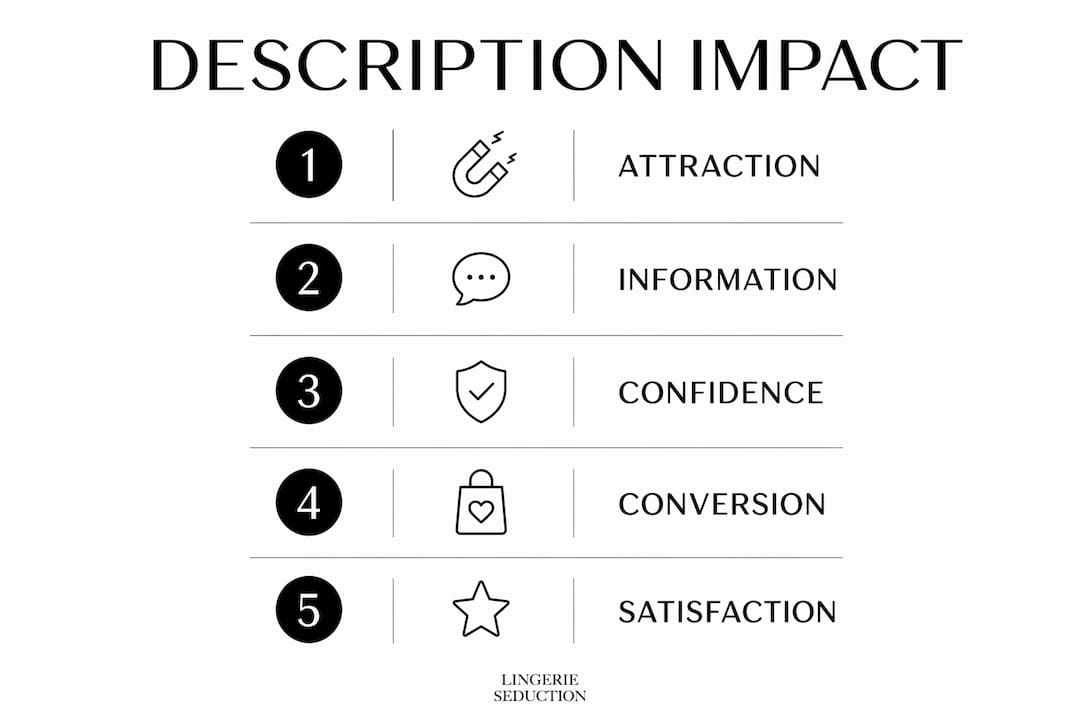
The emotional and logical drivers work in sequence. A shopper sees an image and feels drawn to a piece. The description then either confirms or undermines that feeling. If the copy is vague, the doubt wins and the cart is abandoned. If the copy is specific and honest, the shopper has what she needs to buy with confidence.
Best practices for writing lingerie descriptions that convert
Write for the customer’s questions, not for a feature checklist. The three questions every lingerie buyer asks before purchasing are: what does this feel like against my skin, how will this fit my body type, and what is this for? Structure each description around those three questions and the copy will do its job.
Do:
- Use sensory language that conveys texture (“smooth microfibre,” “delicate stretch lace”)
- Name the fabric specifically rather than describing it generically
- State whether sizing runs small, large, or true to size
- Mention the occasion the piece suits (bridal, everyday, gifting)
- Include care instructions as a standard field, not an afterthought
- Keep the tone consistent with your brand voice throughout
Avoid:
- Copy-pasting supplier catalogue text without editing
- Vague descriptors like “high quality” or “luxurious feel” with no specifics
- Writing for search engines first and shoppers second
- Omitting fit details for structured pieces like underwired bras or corsets
Pro Tip: Borrow the language professional bra fitters use in fitting rooms. Phrases like “the underwire follows the natural breast root” or “the band is cut shorter for a snug fit on a 10–12 frame” answer the exact questions shoppers are silently asking. This fit-proofing language reduces returns and builds credibility.
Scannability matters too. Use a short introductory sentence, then a bulleted list of key details (material, fit, occasion, care), then a closing sentence on the mood or occasion. Shoppers who skim will catch the bullets; shoppers who read will get the full picture.
How Lingerie Seduction approaches product descriptions for Australian customers
Lingerie Seduction builds descriptions around the specific concerns of Australian shoppers: accurate sizing, honest fabric information, and body-inclusive language that reflects real body diversity rather than a single idealised shape.
The approach covers several practical tactics:
- Inclusive sizing language: Descriptions note how a style fits across a range of cup sizes and body shapes, not just the sample size. A customer shopping for plus size lingerie gets the same level of fit detail as any other customer.
- Material specificity: Each product names the exact fabric composition, so a shopper knows whether she is buying stretch lace, satin, mesh, or microfibre before she adds to cart.
- Occasion clarity: Whether a piece is suited to bridal, everyday wear, or a special occasion is stated plainly, which helps shoppers who are buying with a specific purpose in mind.
- Fit guidance aligned with Australian sizing: Band and cup sizing notes reflect Australian size conventions, reducing the confusion that arises when descriptions use US or UK sizing without conversion.
- Body positivity in tone: Copy celebrates natural curves rather than prescribing a body type, consistent with the brand’s commitment to individuality and confidence.
- Returns-reducing detail: Honest descriptions of how a piece sits, stretches, and wears reduce the mismatch between expectation and reality that drives returns.
Lingerie Seduction’s product descriptions are written with the understanding that an online shopper deserves the same quality of information she would get from a knowledgeable in-store assistant.
Key takeaways
Detailed, honest lingerie descriptions reduce fit uncertainty, cut returns, and drive confident purchases by answering the specific body-related questions shoppers cannot resolve from images alone.
| Point | Details |
|---|---|
| Descriptions replace the fitting room | Customers cannot touch or try items online, so copy must answer comfort, fit, and feel questions directly. |
| On-model imagery plus copy converts best | Listings with on-model photos outperform flat-lay-only listings by 25–40% in add-to-cart rates; strong descriptions amplify that lift. |
| Fit-proofing language cuts returns | Generic catalogue copy drives high return rates; specific fit and fabric details set accurate expectations before purchase. |
| Female shoppers need sensory narratives | Research shows women build purchase confidence through tactile, fit-focused descriptions rather than specification lists. |
| Lingerie Seduction’s approach | Inclusive sizing language, material specificity, and body-positive tone tailored to Australian customers reduce returns and build trust. |
The case for treating copy as seriously as photography
Most online lingerie retailers invest heavily in photography and almost nothing in copy. That imbalance is a mistake. A beautiful image creates desire; a vague description kills it. The shopper who loves the look of a piece but cannot find out whether the underwire will suit her ribcage will not buy. She will close the tab.
The conventional wisdom is that lingerie sells on visuals. That is true at the awareness stage. At the decision stage, the description is doing the heavy lifting. Shoppers who reach a product page are already interested. What they need at that point is not more images. They need specific, honest answers to the questions they are too embarrassed to email customer service about: will this fit my body, will it feel comfortable, and will it look the way it does in the photo when I put it on?
The retailers who understand this write descriptions that read like advice from a trusted friend who knows the product inside out. They do not write for search engines. They write for the woman standing in front of her screen, trying to decide whether to trust a brand she has never bought from before. That is the standard worth aiming for.
Lingerie Seduction: premium pieces, clearly described
Lingerie Seduction stocks a curated range of premium pieces with descriptions built around fit accuracy, material honesty, and body inclusivity. Free shipping on orders over $100 and hassle-free returns mean the risk of trying something new is low.

Three pieces worth exploring:
- The Luxury Black Sheer Lace Lingerie Set comes with full fabric and fit details so you know exactly what you are getting before checkout.
- The Luxury Nude and Black 3 Piece Set is described with occasion guidance and sizing notes suited to Australian sizing conventions.
- The Luxury White Lace Cupless Chemise includes precise fit information and intended occasion detail for complete buyer clarity.
Browse the full collection at Lingerie Seduction and see what confident, well-described lingerie shopping looks like.
FAQ
Why do lingerie descriptions matter more than descriptions for other clothing?
Lingerie requires precise fit across multiple dimensions (band, cup, torso length) and sits directly against the skin, so fabric feel and construction details are critical. Shoppers cannot physically inspect or try items online, making detailed copy the primary tool for building purchase confidence.
What should every lingerie product description include?
Every description should cover fabric type and feel, fit specifics (including sizing guidance and how the piece suits different body shapes), occasion or use case, and care instructions. These five elements address the questions shoppers ask before buying.
How do lingerie descriptions reduce returns?
Generic descriptions copied from wholesale catalogues set inaccurate expectations about fit and fabric, which drives returns. Specific, honest copy aligns what the customer expects with what she receives, reducing the mismatch that causes returns.
Does photography replace the need for detailed descriptions?
No. On-model photography significantly improves add-to-cart rates, but images alone cannot convey fabric weight, underwire placement, or how a band behaves on a short torso. Descriptions and imagery work together; neither replaces the other.
What colour lingerie is most popular with shoppers?
Black remains the top-selling colour in lingerie across most Australian online retailers, followed by nude and white. Colour preference varies by occasion: black for everyday and special occasions, white and ivory for bridal, and nude for layering under clothing.
Tags: lingerie descriptions, online lingerie shopping, product copywriting, fit guidance, lingerie marketing, body positivity, Australian lingerie, e-commerce best practices, lingerie photography, reducing returns


