

The 6 lace types you'll actually find in lingerie (and when to pick each)
The most common lace types in lingerie are Chantilly, Leavers, Guipure, Raschel (stretch), Schiffli (embroidered) and eyelash. Choose Raschel for everyday comfort, Chantilly or Leavers for bridal and luxury pieces, and Guipure when you want a bold, structural statement. Most lingerie sold today is machine-made, with Raschel dominating everyday price points and Leavers reserved for premium and bridal collections, a split confirmed by industry overviews of lace construction.
- Chantilly: romantic floating florals on fine net, best for bridal and special occasion
- Leavers: intricate antique-machine detail, best for luxury sets you’ll wear for years
- Guipure: heavy motifs with no net backing, best for statement pieces and appliqué
- Raschel/stretch: knit lace with elastane, best for everyday comfort and movement
- Schiffli/embroidery: stitched motifs on tulle, best for delicate detailing at a lower cost
- Eyelash: soft scalloped edging, best for romantic trims on bras and babydolls
Quick fact: Lingerie Seduction stocks pieces across every one of these categories, from microknit sleepwear with lace panels to structured corsetry, so you can shop by feel and occasion rather than guessing from a swing tag.
Key takeaways
The lace type on a garment’s label predicts its comfort, durability, and price more reliably than the price tag alone.
| Point | Details |
|---|---|
| Raschel for everyday | Choose stretch/Raschel lace for daily wear, washing ease, and the most accessible price point. |
| Leavers and Chantilly for luxury | Pick these for bridal or special-occasion pieces where fine detail and drape matter most. |
| Guipure for statement | Its net-free, bar-connected motifs suit bold appliqué and structured pieces, not everyday comfort wear. |
| Schiffli is embroidery, not lace | It mimics lace’s look on tulle at a lower cost, useful for budget-conscious trim details. |
| Lingerie Seduction spans the range | The catalogue covers Raschel sleepwear through structured lace corsetry, matched to occasion and comfort needs. |
Table of Contents
- How lace is made: handmade vs machine-made and why production method matters
- Lace type profiles: Chantilly, Leavers, Guipure and more
- Lace forms and edges: what all-over, trims, flounce and galloon mean for fit and cost
- How to choose the right lace for you: a quick checklist
- Lingerie Seduction’s lace lineup: real examples across every type
- What the swing tag doesn’t tell you
- Shop lace lingerie matched to how you actually live
- Sources
- FAQ
How lace is made: handmade vs machine-made and why production method matters
Genuine handmade lace, made by needle or bobbin, is now rare in lingerie. It takes weeks to produce a small piece, which pushes the price well beyond what most shoppers want to pay for a bra set, so it survives mainly in museum pieces and bespoke bridal commissions.
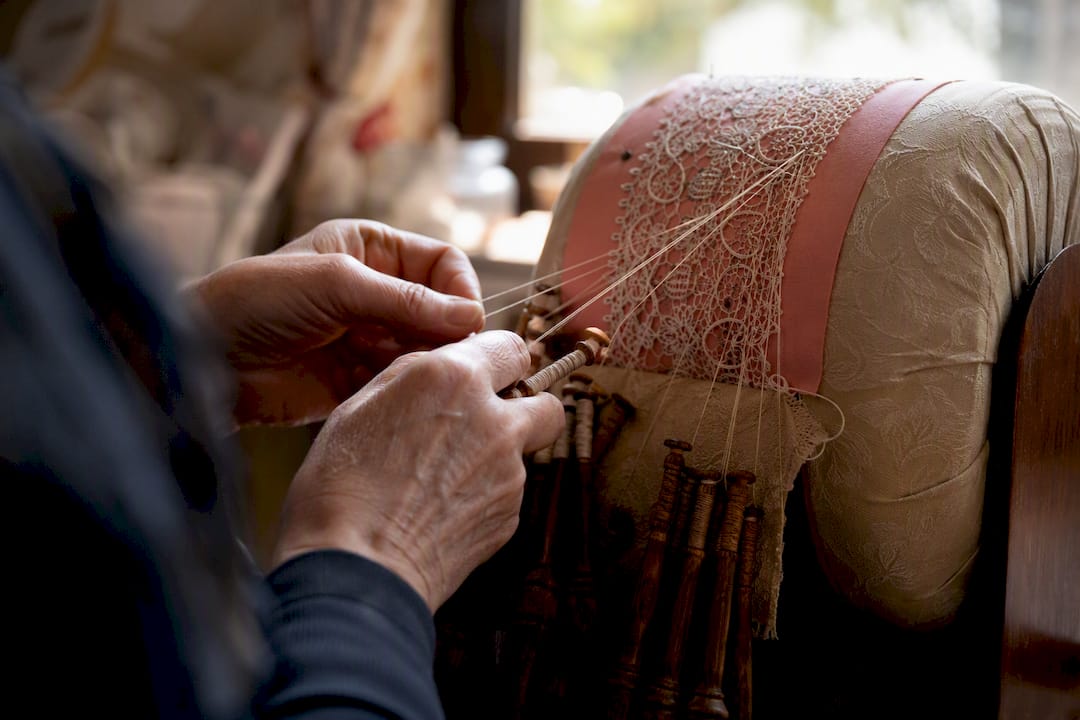
Machine production changed that equation entirely. Leavers machines, dating back to early industrial England and closely tied to the French town of Calais (hence “Dentelle de Calais”), replicate the fine, irregular detail of handmade bobbin lace at a fraction of the time. It’s still slow and mechanically complex compared with modern knitting, which is exactly why Leavers lace commands a price premium and turns up in premium and bridal ranges rather than everyday multipacks.
Raschel machines work differently again, using a Jacquard-style knitting process that runs far faster and blends easily with elastane and other synthetic yarns. That’s why Raschel dominates the stretch lace market for everyday bras, briefs, and bodysuits.
- Needle/bobbin lace: handmade, slow, now mostly a bridal specialty item
- Leavers: machine-made, antique technology, fine detail, premium price
- Raschel: machine-made, modern, stretchy, fast, everyday price point
Two more terms get confused constantly. Schiffli isn’t lace at all. It’s an embroidery technique that stitches motifs onto a tulle base, giving a lace-like look without the open, structural net construction real lace relies on. Guipure sits at the opposite extreme, a heavy lace where the motifs themselves are joined by bars rather than sitting on a net, which is why it holds its shape without any backing fabric.
Lace type profiles: Chantilly, Leavers, Guipure and more
Knowing the name on a swing tag only helps if you know what that name actually promises in terms of feel, durability, and price. Here’s what each type delivers once it’s on your body.
-
Chantilly is worked as a floating floral or scroll pattern on a fine hexagonal net, traditionally in black or ivory. It reads as romantic and delicate, which is exactly why bridal ranges lean on it so heavily, and it commands a higher price than knitted lace because of the density of detail in the pattern.
-
Guipure, defined as a heavy, large-patterned decorative lace with no net background, feels substantial and holds its shape on its own. That structural quality makes it a natural for appliqué, cut-out panels, and pieces designed to make a visual statement rather than disappear under clothing.
-
Raschel (stretch lace) is knit rather than woven, built to move with your body. It’s the toughest of the group in daily wear, handles regular washing without much fuss, and sits at the most accessible price point of any lace on this list.
-
Schiffli embroidery creates intricate floral or geometric motifs on tulle without the true lace construction underneath. It looks convincingly lace-like from arm’s length and costs less to produce, which is why it turns up so often on mid-range trims and appliqué details.
-
Eyelash lace gets its name from the tiny scalloped loops along one edge, giving a soft, slightly fringed finish. It’s almost always used as a trim rather than an all-over fabric, adding a romantic edge to bra cups and hemlines.
-
Venetian and Cluny are older regional styles, heavier and more geometric than Chantilly, occasionally revived in statement corsetry and vintage-inspired capsules.
Different lace types also send different signals to the eye. Chantilly reads as romantic and bridal, Guipure projects confidence and impact, and Raschel with a geometric print skews contemporary and youthful, which is worth remembering if you’re choosing lace to match a mood rather than just an outfit.
Pro Tip: If you love the look of Leavers or Chantilly but not the price, check the garment description for “lace trim” or “appliqué” rather than “all-over lace” — designers often place premium lace only where it shows, keeping the cost down without sacrificing the visual impact.
Lace forms and edges: what all-over, trims, flounce and galloon mean for fit and cost
The name of a lace only tells half the story. How it’s cut and applied changes both the price tag and how the finished piece fits.
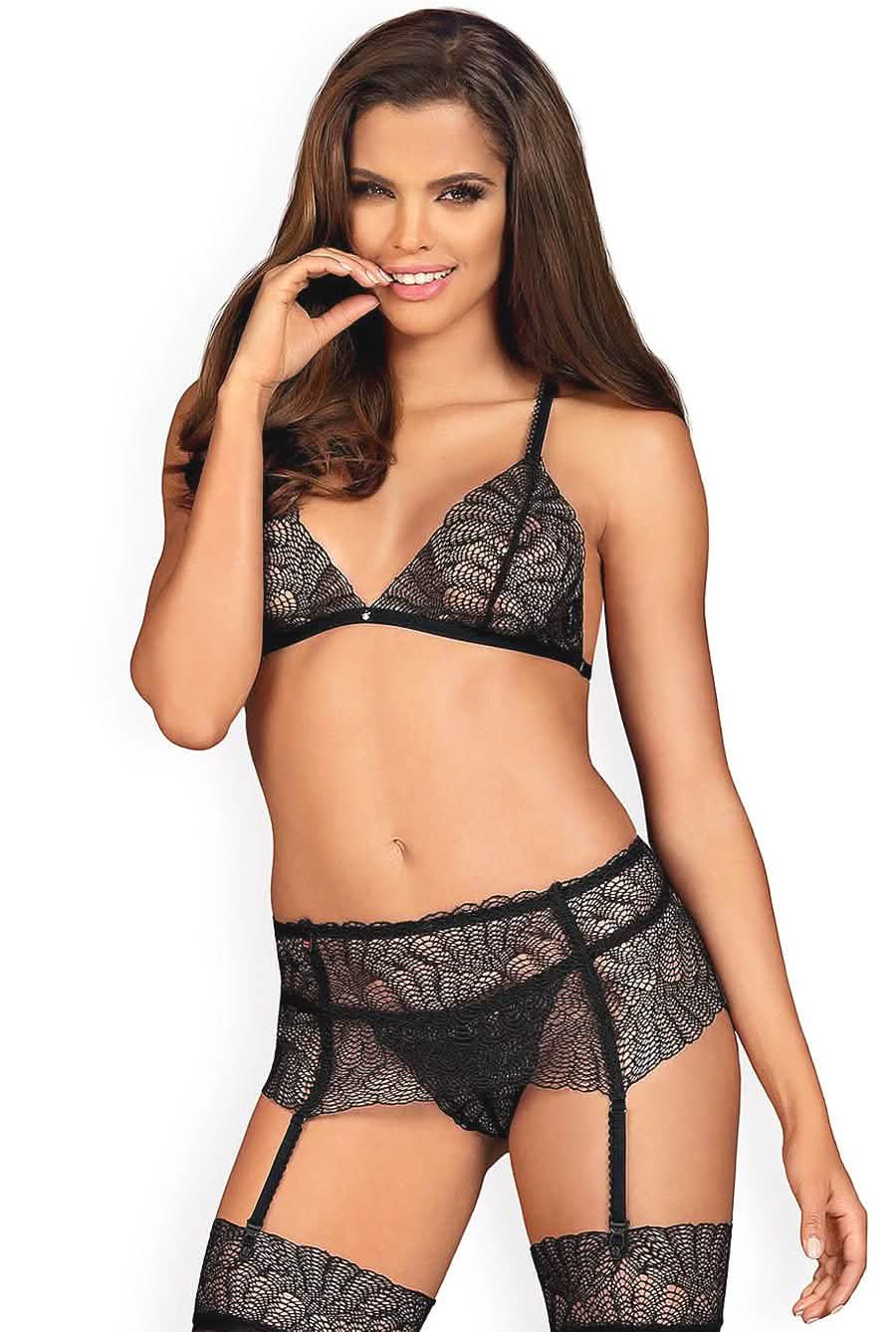
All-over lace covers the entire garment panel, giving a consistent texture from top to bottom, but it also produces the most fabric waste during cutting since pattern pieces rarely line up perfectly with the lace repeat. Trims are narrow strips used along edges, hems, and straps, a cheaper and more efficient way to get a lace look without covering the whole garment.
Flounce lace has a scalloped or shaped edge on one side, designed specifically for hemlines and necklines where that soft border shows. Galloon, by contrast, has matching scalloped edges on both sides, which lets a maker cut two symmetrical pieces from the same width of fabric and cuts down on offcuts significantly.
- All-over: full coverage, most waste, highest material cost
- Trim: edge use only, most efficient, lowest cost
- Flounce: one scalloped edge, built for hemlines
- Galloon: scalloped both edges, reduces waste through symmetrical cutting
- Appliqué: individual motifs stitched onto a base fabric, adding labour cost but concentrating luxury lace where it’s seen most
How to choose the right lace for you: a quick checklist
Matching lace to purpose saves you from buyer’s regret, whether that’s a scratchy trim against sensitive skin or a delicate Leavers piece that can’t survive a washing machine.
- Check for stretch. If you want ease of movement and all-day wear, look for Raschel or another stretch-knit lace rather than a rigid Leavers or Chantilly panel.
- Check for lining. Sheer lace worn against bare skin should sit over a lining at the bust and gusset for comfort and coverage, particularly with open Guipure motifs.
- Match lace to occasion. Raschel suits daily wear and budget; Chantilly and Leavers suit bridal and special occasions; Guipure suits statement pieces you want noticed.
- Set your budget expectations. Leavers and Chantilly sit at the top of the price range because of their production complexity; Schiffli and Raschel sit lower.
- Plan for care. Delicate laces need hand washing in cool water and flat drying; stretch laces tolerate a gentle machine cycle in a garment bag.
Pro Tip: Never wring lace lingerie to dry it. Press the water out gently between two towels instead, then lay it flat, this keeps floating threads and scalloped edges from distorting.
Lingerie Seduction’s lace lineup: real examples across every type
Lingerie Seduction builds its range around the same production logic covered above, pairing the right lace with the right garment rather than defaulting to one type across the board.
- The Sexy Black Lace & Microknit Sleepwear Set pairs stretch lace trim with microknit fabric for everyday comfort.
- The Luxury Sheer Mesh & Lace Women’s Babydoll Set layers eyelash-edged lace over sheer mesh for a romantic, occasion-ready look.
- The Luxe Black Lace Cami Lingerie Set uses an all-over lace construction across the full cami panel.
- The Luxe Black & Nude Lace Corset Lingerie applies heavier, structured lace motifs suited to a corset’s shape-holding demands.
Brand signal: Lingerie Seduction curates its collection around comfort and body positivity, tailoring cut and lace weight to enhance natural curves rather than forcing one silhouette. Free shipping applies on orders over $100, with hassle-free returns if a lace texture or fit isn’t right for you.
What the swing tag doesn’t tell you
Most buying guides treat lace like a single fabric with different patterns stamped on it. That’s the biggest misconception in this whole category. Chantilly and Raschel aren’t variations on a theme, they’re built by entirely different machines for entirely different jobs, and that difference shows up the first time you wash the piece or wear it for twelve hours straight.
The conventional advice, “buy what looks nice,” skips the part that actually affects your experience: whether the lace stretches with you, whether it survives a normal wash cycle, and whether the price reflects genuine production complexity or just brand markup. A $40 Raschel bra and a $180 Leavers set can look similarly detailed in a product photo. They will not feel or last the same.
If you take one thing from this, prioritise matching lace to occasion before matching it to pattern. Save Guipure and Leavers for pieces you’ll treat with care and wear less often. Let Raschel carry your everyday rotation. That’s not a compromise, it’s just buying lace for what it actually does.
Shop lace lingerie matched to how you actually live
Lingerie Seduction is built around exactly the choice this article walks through: matching the right lace to the right occasion, rather than guessing from a product photo. Where a lot of online lingerie shopping means squinting at a single image and hoping the lace feels the way it looks, our range is organised so you can shop by comfort level and occasion first, pattern second.
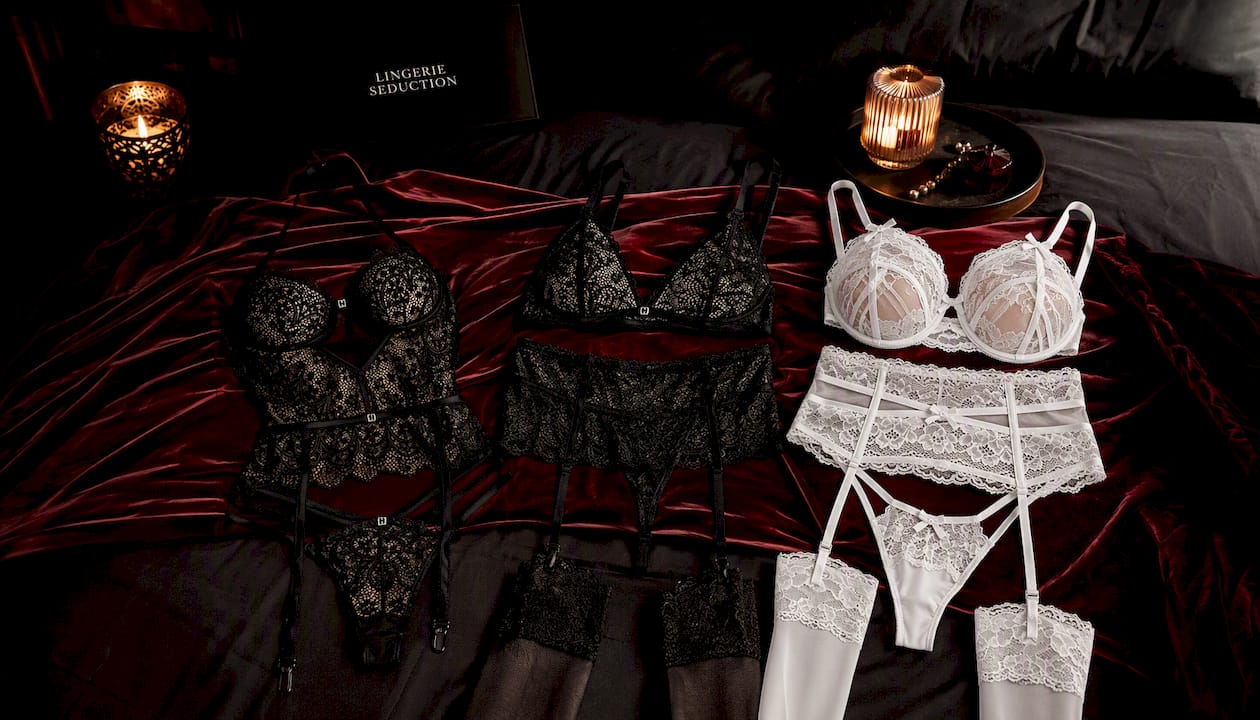
That means everyday Raschel-based pieces like the Sexy Black Lace & Microknit Sleepwear Set sitting alongside statement pieces like the Luxury Black Sheer Lace Top Stockings and structured sets like the Sheer Black Mesh Underwire Chemise Set, each chosen for how the lace performs, not just how it photographs. Free shipping applies on orders over $100, and returns are hassle-free if the fit or feel isn’t right once it arrives.
Browse the full lace lingerie range and check sizing before you buy, or head straight to a piece that matches the occasion you’re shopping for today.
Sources
- Guipure - Wikipedia
- The Language of Lace: From Chantilly to Leavers, How Different Lace Types Express Style in Premium Lingerie Design?
- Lace lingerie: types and construction - Wondermapped
FAQ
What are the main types of lace used in lingerie?
The main types are Chantilly, Leavers, Guipure, Raschel (stretch), Schiffli (embroidered), and eyelash, each suited to different levels of comfort, durability, and occasion.
What does guipure lace mean?
Guipure is a heavy, large-patterned lace where the motifs connect by bars rather than sitting on a net background, which is why it holds its structure and works well in appliqué or statement pieces.
What is stretch lace, and how is it different from Chantilly or Leavers?
Stretch lace, usually Raschel, is knit with elastane so it moves with the body, while Chantilly and Leavers are finer, less flexible laces built for detail rather than stretch.
What are lace undergarments called?
Lace undergarments cover a wide range of styles, including bras, briefs, teddies, babydolls, bodysuits, corsets, and chemises, with the lace type varying by garment and occasion.
Is Leavers lace better than Raschel lace?
Neither is strictly better, they serve different purposes. Leavers suits fine detail and luxury bridal pieces, while Raschel suits everyday comfort, stretch, and easier care.


