

How lingerie fabrics are made: a complete guide
Lingerie fabric is defined as an engineered textile blend designed to balance stretch, breathability, and shape retention against the skin. Unlike standard apparel fabrics, lingerie textiles must meet strict performance criteria including moisture-wicking rate, stretch recovery, and tensile strength. Industry standards such as Oeko-Tex Standard 100 certification and ASTM D2594 testing protocols set the benchmark for what qualifies as a quality lingerie material. Understanding how lingerie fabrics are made gives you a clearer picture of why certain pieces hold their shape, feel comfortable all day, and last through repeated washing. This guide covers the fibres, blending ratios, construction methods, and quality tests that define the best lingerie fabrics on the market.
What fibres are used in lingerie fabrics?
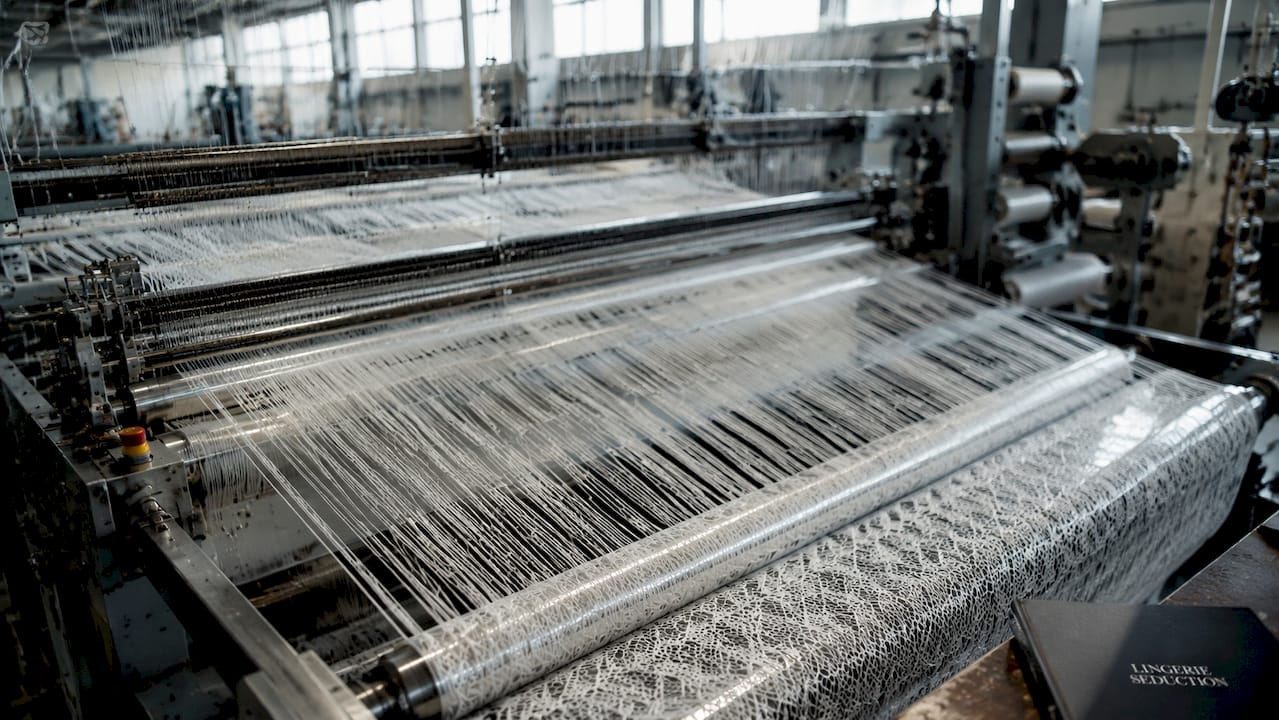
Lingerie fabrics begin with fibre selection, and the choice of fibre determines everything from breathability to longevity. Manufacturers draw from both natural and synthetic sources, often blending the two to achieve specific performance targets.
Natural fibres: cotton and silk
Organic cotton is the most widely used natural fibre in lingerie production. As of Q2 2026, 92% of global lingerie cotton supply is Oeko-Tex Standard 100 certified organic, chosen for its low chemical sensitisation risk. Cotton delivers a moisture-wicking rate of 850–920 g/m²/24h, which suits everyday wear in moderate climates. Its main limitation is shape recovery. Cotton loses elasticity after roughly 12 washes, making it unsuitable for structured pieces like underwired bras without a synthetic blend.
Silk is used in premium and bridal lingerie for its natural lustre and smooth hand feel. A minimum of 22 momme weight is the industry standard for durable silk in lingerie production. Below that weight, silk tears easily under tension and degrades quickly with washing.
Synthetic fibres: nylon, polyester, and elastane
Nylon is the dominant synthetic fibre in performance lingerie. Nylon-spandex blends deliver a WVTR of 720–800 g/m²/24h and superior shape memory compared to cotton. That combination makes nylon the preferred base for bra cups, wings, and briefs that need to hold their form through movement and washing.
Polyester-spandex blends are cheaper to produce but perform noticeably worse. Their WVTR sits at 640–710 g/m²/24h, and they carry a higher pilling risk. Polyester is not recommended for warm-climate daily wear or high-sweat applications.
Elastane, sold under brand names including Lycra® and Roica™, provides the stretch component in most lingerie blends. The 18–22% elastane range is industry-accepted for high-tension bra supports. Without adequate elastane, a bra loses its ability to return to shape after stretching.
Specialty fibres: lyocell and modal
Bamboo-derived lyocell is the standout specialty fibre in modern lingerie production. It achieves a moisture-wicking rate of 1,100–1,250 g/m²/24h, outperforming both cotton and nylon. Lyocell also shows a 99.2% reduction in Staphylococcus aureus after 24 hours under AATCC TM100 testing, making it genuinely antimicrobial. Modal, another wood-pulp fibre, holds its shape twice as long as cotton under ASTM D2594 stress tests. Both fibres require blending with elastane to prevent structural weakness in finished garments.
| Fibre | WVTR (g/m²/24h) | Stretch recovery | Best use |
|---|---|---|---|
| Organic cotton | 850–920 | Low after 12 washes | Briefs, linings |
| Lyocell | 1,100–1,250 | Moderate (needs elastane) | Everyday and sensitive skin |
| Modal | Similar to lyocell | High with elastane | Soft cups, briefs |
| Nylon-elastane | 720–800 | High | Bra cups, wings, bodysuits |
| Polyester-elastane | 640–710 | Moderate | Budget basics |
How blending and construction techniques shape the fabric
Selecting the right fibres is only the first step. The way those fibres are blended and constructed into fabric determines the final garment’s performance.
Blending ratios and what they mean
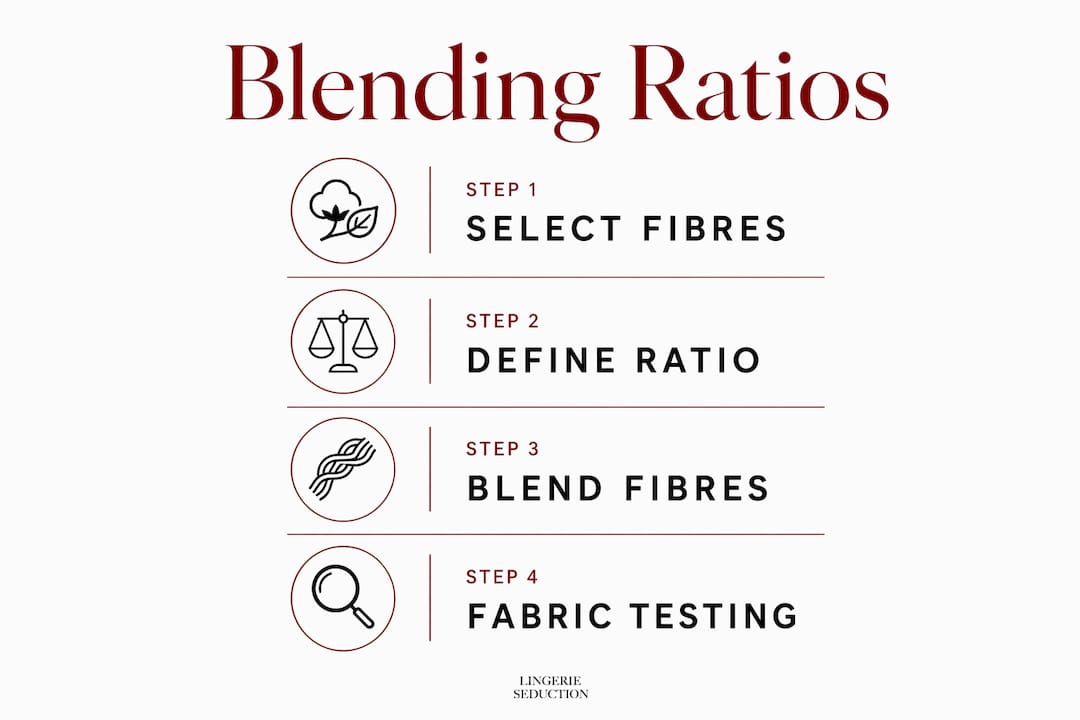
Blending ratios are precise formulas, not guesses. A 90/10 nylon-elastane blend suits everyday briefs and soft bralettes where moderate stretch is enough. For shapewear and structured bras, a 78/22 nylon-elastane blend achieves 98% stretch recovery after 50 industrial washes under ISO 5077 testing. The 90/10 blend reaches only 82% recovery under the same conditions. That 16-point gap in recovery directly affects how long a garment holds its shape in real use.
Lace is a special case. Performance lace requires 12–18% elastane to maintain both stretch and breathability. Drop below 10% and the lace sags. Push above 20% and breathability drops significantly. Lace with at least 40% void space offers better airflow, which matters for comfort in warmer conditions.
Fabric construction methods
Lingerie fabrics are built using several distinct construction techniques, each suited to different garment parts.
- Tricot knit: A warp-knit structure used for smooth cup linings and brief panels. Tricot offers consistent stretch in one direction and resists runs, making it reliable for high-wear areas.
- Raschel knit: Produced on Raschel machines, this construction creates open, lace-like structures with defined patterns. Factories also use Jacquardtronic machines to produce intricate lace with controlled tensile strength meeting ISO 13934 standards.
- Microfibre knit: True microfibre is defined as filaments under 1 denier. Microfibre fabric absorbs 30% more moisture than standard nylon, which is why it appears in premium everyday lingerie and sleepwear.
- Satin weave: A woven structure that creates a smooth, reflective surface. Satin is not a fibre but a weave pattern, typically applied to silk or polyester. It suits sleepwear and bridal pieces where drape and appearance take priority over stretch.
Pro Tip: Always check the fabric composition label against the construction type. A garment labelled “satin” may be polyester-woven satin, which performs very differently from silk satin. The weave tells you the look; the fibre tells you the performance.
How are lingerie fabrics tested and certified?
Fabric testing is the step that separates genuine quality from marketing language. Manufacturers use standardised tests to verify that a fabric performs as claimed before it reaches production.
Key certifications
Oeko-Tex Standard 100 certification confirms that a fabric has been tested for harmful substances including pesticides, heavy metals, and formaldehyde. For lingerie worn directly against the skin, this certification is the most relevant safety benchmark available. Fabrics carrying this certification have passed testing across more than 100 individual substances.
Performance testing standards
- ISO 5077 governs dimensional change after washing. Fabrics must maintain their stated dimensions after repeated industrial wash cycles. This test directly predicts how a garment will behave after home washing.
- ASTM D2594 measures stretch and recovery in knitted fabrics. Modal fabrics consistently outperform cotton under this test, holding shape twice as long.
- ASTM D4964 applies continuous pulling force to measure stretch recovery. Fabrics must maintain at least 95% stretch recovery after 50 stretches to meet quality standards. A garment that fails this test will bag and distort with regular wear.
- AATCC TM100 tests antimicrobial performance. Bamboo lyocell passes this test with a 99.2% bacterial reduction rate, a result that synthetic fibres do not match.
- ISO 13934 sets tensile strength requirements for lace and knit fabrics in mass production. A minimum tensile strength of 28 N/cm with low pilling is the accepted quality threshold.
The phrase “buttery soft” appears on many fabric descriptions but carries no technical meaning. True quality is verified through tensile strength and low pilling, not tactile marketing language. A fabric can feel soft and still fail stretch recovery testing within 10 washes.
Lingerie fabric types compared: strengths, weaknesses, and best uses
Understanding individual fibres is useful. Knowing how they compare across real garment applications is more useful.
Cotton excels in breathability and skin safety but loses shape quickly without a synthetic blend. It suits brief panels and lining layers where stretch is not critical. Lyocell and modal sit in the middle ground. They offer better moisture management than cotton and better breathability than nylon, but they need elastane to perform structurally. The eyelash lace microknit bridal sleepwear at Lingerie Seduction demonstrates how microknit and lace can be combined to achieve both comfort and structure in a single garment.
Nylon-elastane blends are the workhorse of performance lingerie. They handle moisture, hold shape, and survive repeated washing better than any natural fibre alone. The trade-off is breathability. Nylon does not match lyocell or cotton for airflow, which matters in warm Australian conditions. A stretch lace underwire slip that uses a high-performance nylon-elastane blend will outlast a cotton equivalent in shape retention by a significant margin.
| Fabric | Breathability | Stretch recovery | Durability | Best garment use |
|---|---|---|---|---|
| Organic cotton | High | Low | Moderate | Brief panels, linings |
| Lyocell/modal | High | Moderate | Good with elastane | Everyday briefs, soft cups |
| Nylon-elastane (90/10) | Moderate | High (82%) | Very good | Bralettes, briefs |
| Nylon-elastane (78/22) | Moderate | Very high (98%) | Excellent | Shapewear, underwired bras |
| Polyester-elastane | Low | Moderate | Fair | Budget basics |
| Performance lace | High (if 40%+ void) | High (12–18% elastane) | Good | Decorative panels, overlays |
Satin weave fabrics, whether silk or polyester, are not suited to high-stretch applications. They work best in sleepwear, slips, and bridal pieces where drape and visual appeal matter more than recovery. Care is also a factor. Silk satin requires hand washing or delicate machine cycles, while polyester satin tolerates standard machine washing.
Key takeaways
Lingerie fabric quality is determined by fibre choice, blending ratio, construction method, and verified testing against standards like ISO 5077, ASTM D2594, and Oeko-Tex Standard 100.
| Point | Details |
|---|---|
| Fibre choice drives performance | Lyocell wicks moisture best; nylon-elastane leads on shape recovery and durability. |
| Blending ratios are precise | A 78/22 nylon-elastane blend achieves 98% recovery; a 90/10 blend reaches only 82%. |
| Construction method matters | Tricot, Raschel, and microfibre knits each suit different garment parts and performance needs. |
| Certifications verify safety | Oeko-Tex Standard 100 confirms a fabric is free from harmful substances across 100+ tested chemicals. |
| Marketing language is not a standard | Terms like “buttery soft” carry no technical meaning; tensile strength and pilling tests do. |
What working with lingerie fabrics has taught us
The most common misconception we see is that softness equals quality. A fabric can feel luxurious in your hand and still fail after 15 washes. The fabrics that genuinely perform are the ones that have passed stretch recovery and tensile strength testing, not the ones with the most appealing product descriptions.
Sustainability is changing fabric sourcing in a real way. The shift toward Oeko-Tex certified organic cotton and bamboo lyocell is not just a marketing trend. These materials carry verified safety and performance data. Consumers who read lingerie fabric content online are better placed to ask the right questions before buying.
The other thing worth saying plainly: synthetic fibres are not inferior. High-performance nylon-spandex blends outperform natural fibres on shape memory and moisture management in most lingerie applications. The idea that “natural is always better” does not hold up against the test data. The best lingerie fabrics are usually blends, because no single fibre does everything well.
Care habits also affect longevity more than most shoppers realise. A 78/22 nylon-elastane garment washed in hot water or tumble-dried will degrade faster than a cotton brief washed correctly. The fabric specification only tells you the ceiling. How you care for the garment determines whether you reach it.
— Lingerie Seduction
Premium fabrics at Lingerie Seduction
Lingerie Seduction stocks pieces built around the fabric principles covered in this guide. The collection includes lace sets, microknit sleepwear, and satin-finish pieces that reflect real fabric engineering rather than surface-level styling.
The red lace bodysuit uses performance lace construction with elastane blending for shape retention. The black lace 3 piece luxury set combines Raschel-style lace with microknit panels for both breathability and structure. Free shipping applies to orders over $100, and hassle-free returns are available across the full range. Browse the complete collection at Lingerie Seduction to find pieces that match the fabric standards outlined here.
FAQ
What is the most breathable fabric for lingerie?
Bamboo-derived lyocell is the most breathable lingerie fabric, with a moisture-wicking rate of 1,100–1,250 g/m²/24h. It also carries antimicrobial properties verified under AATCC TM100 testing.
What does Oeko-Tex Standard 100 mean for lingerie?
Oeko-Tex Standard 100 certifies that a fabric has been tested for more than 100 harmful substances, including pesticides and heavy metals. It is the most relevant safety certification for fabrics worn directly against the skin.
How is elastane percentage chosen for lingerie fabrics?
Elastane percentage depends on the garment’s function. Performance lace uses 12–18% elastane for balanced stretch and breathability, while high-tension bra supports require 18–22% elastane to maintain shape under load.
Why does nylon-elastane blend ratio matter?
A 78/22 nylon-elastane blend achieves 98% stretch recovery after 50 industrial washes, compared to 82% for a 90/10 blend. The higher elastane content is what separates long-lasting shapewear from everyday basics.
What is satin in lingerie?
Satin is a weave pattern, not a fibre. It creates a smooth, reflective surface and is applied to silk or polyester. Silk satin suits bridal and premium sleepwear; polyester satin is more durable and machine-washable but less breathable.


