

What is a hook and eye closure and where do you use one?
A hook-and-eye closure is a small metal hook paired with a matching eye loop that fastens two edges of fabric together. It’s discreet, strong for its size, and doesn’t need a buttonhole or zipper track to work. You’ll find it holding bra bands together, sitting at the top of a zipper to take pressure off the teeth, closing waistbands, and running down the back of a corset in multiple rows.
Common jobs for a hook-and-eye closure:
- Bra bands (usually two or three rows for adjustment)
- Top-of-zipper reinforcement on skirts and trousers
- Waistband closures on tailored garments
- Corsetry and bustiers, often in multiple pairs down a busk or back panel
- Cape, coat and cardigan neck closures
Key Takeaways
A well-placed hook and eye closure depends on exact measurements, adequate thread passes, and hardware matched to fabric weight and wash frequency.
| Point | Details |
|---|---|
| Placement precision matters most | Recess hooks 1/8 inch from lapped edges; project eyes 1/16 inch on abutting edges. |
| Use waxed thread and six-plus passes | Anchor stitches properly and pass thread through each hole at least six times for durability. |
| Match hardware to the job | Small sizes suit lingerie and delicate fabric; larger, corrosion-resistant metals suit coats and frequent washing. |
| Choose tape for multi-hook rows | Hook-and-eye tape saves time on bras and corsets; individual sets suit single closures like zip tops. |
| Lingerie Seduction builds in discreet closures | Structured pieces like the corset lingerie and chemise sets use closures designed to hold under daily wear. |
Table of Contents
- Where and why you’d choose a hook and eye bra closure
- Types and sizes: choosing the right hook and eye fastener
- How do you buy the right hook and eye closure?
- How to sew a hook and eye closure step by step
- No-sew hook and eye options and quick fixes
- Why Lingerie Seduction pays close attention to closures
- The history behind the humble hook and eye
- Hook and eye vs zippers, buttons and snaps
- Fixing common hook and eye problems
- Keeping your hook and eye closures working longer
- What actually matters when you’re working with hook and eye closures
- Shop garments built with discreet, durable closures
- Sources
- FAQ
Where and why you’d choose a hook and eye bra closure
Tailors reach for a hook and eye when a garment needs a closure that disappears. Bra bands are the obvious example, but the same logic applies to the top inch of a fitted skirt zipper, where a hook takes the sideways pull that would otherwise strain the zip pull and teeth over time. Waistbands on trousers use it for the same reason. A button would show, a zip alone can’t hold lateral tension, but a hook and eye sits flat and does the job invisibly.
Benefits worth knowing:
- Low profile under fabric, so it won’t print through knits or fitted lace
- Relieves stress from the top of a zipper, extending the zipper’s working life
- Supports multi-row adjustment on bras and corsets without adding bulk
- Cheap and fast to attach compared with buttonholes
There’s a real trade off here. A hook and eye offers only one fixed closure point rather than the sliding adjustment of a zip, and unless you choose a covered or decorative hook deliberately, it’s functional rather than a design feature. That’s the trade you’re making: strength and discretion over flexibility.
Types and sizes: choosing the right hook and eye fastener
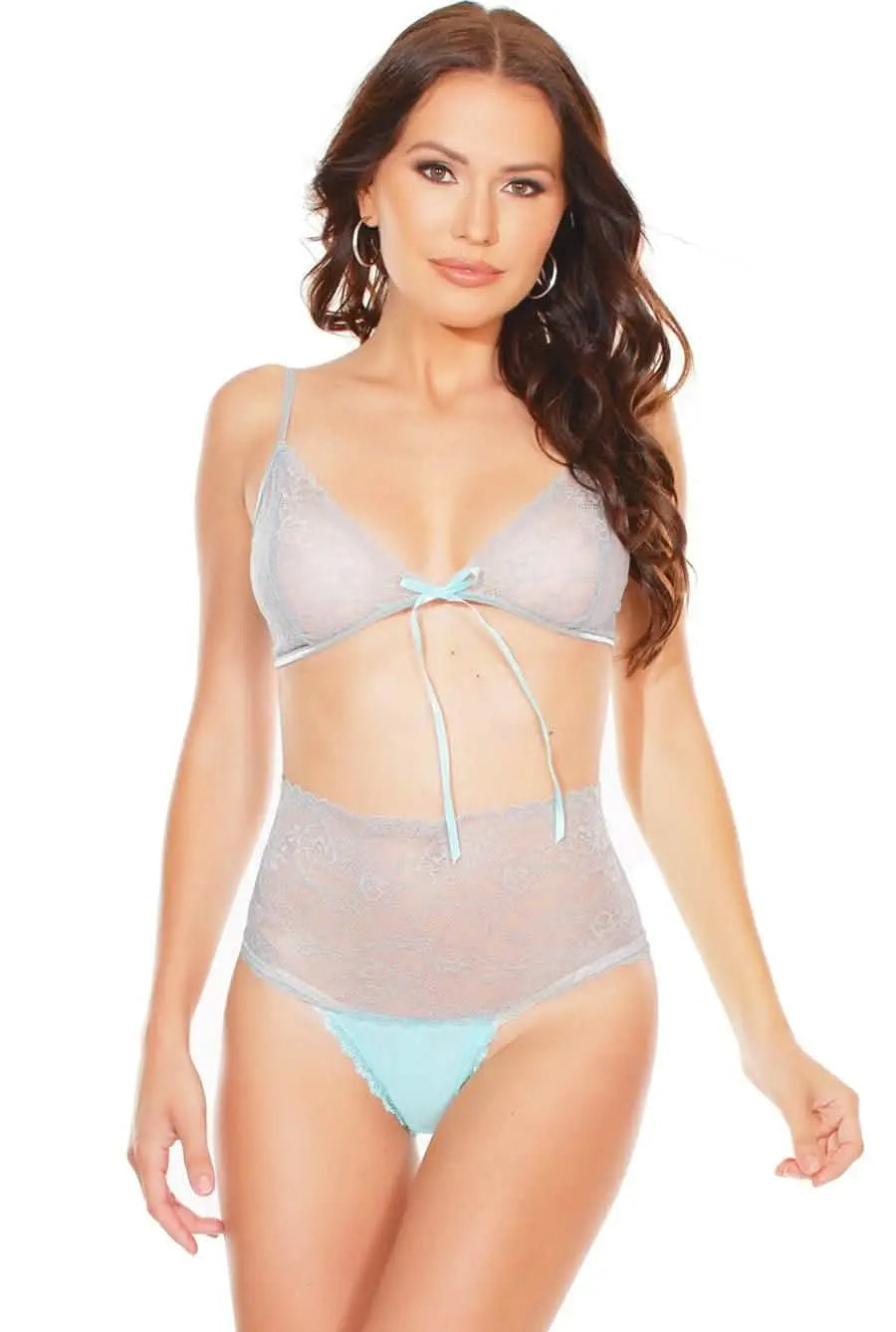
Hook-and-eye hardware comes in a size range roughly matched to fabric weight. Small sizes (often labelled 0 to 2) suit lingerie, delicate blouses and fine wovens. Mid sizes handle skirts, dresses and everyday garment closures. Larger sizes, sometimes with a covered or decorative finish, are built for coats, heavy wool and structured outerwear where the pull on the closure is greater.
Beyond size, you’re choosing between formats:
- Individual hook-and-eye sets – bought loose, sewn one at a time, best for single closures like the top of a zip
- Hook-and-eye tape – a continuous strip with hooks pre-set at intervals, common in bras and corsets where multiple rows are needed fast
- Thread-loop or buttonhole eyes – a stitched loop instead of a metal eye, giving a neater, lower-bulk finish on delicate fabric
- Covered or decorative hooks – larger metal hooks wrapped in fabric or thread for coats and tailored pieces where the closure might show
Hook-and-eye tape typically runs on a silk or cotton base, with the metal components made from stainless steel, nylon-coated wire or brass. Stainless steel and nylon-coated wire resist corrosion better, which matters if the garment gets washed often or worn against skin.
How do you buy the right hook and eye closure?
Buying hook-and-eye hardware comes down to matching the fastener to the fabric and the job, not just grabbing whatever’s on the shelf at the haberdashery.
- Match size to fabric weight and expected stress. A fine lace bra cup needs a small, low-profile hook; a wool coat needs a larger one that won’t bend under load.
- Choose the eye style by seam type. A metal eye suits a lapped seam with visible bulk allowance; a buttonhole loop or thread chain eye suits a delicate or sheer fabric where you don’t want metal showing through.
- Check the finish for corrosion resistance. If the garment will be washed often, worn against skin for long periods, or used for swimwear, stainless steel or nylon-coated wire outperforms plain brass.
- Buy tape for multi-hook applications, individual sets for single points. A bra band or corset back needs tape; a single skirt-top closure just needs one hook-and-eye set.
Pro Tip: Buy one size up in strength if you’re between two options; a slightly heavier hook and eye is barely visible but noticeably more durable under daily wear.
How to sew a hook and eye closure step by step
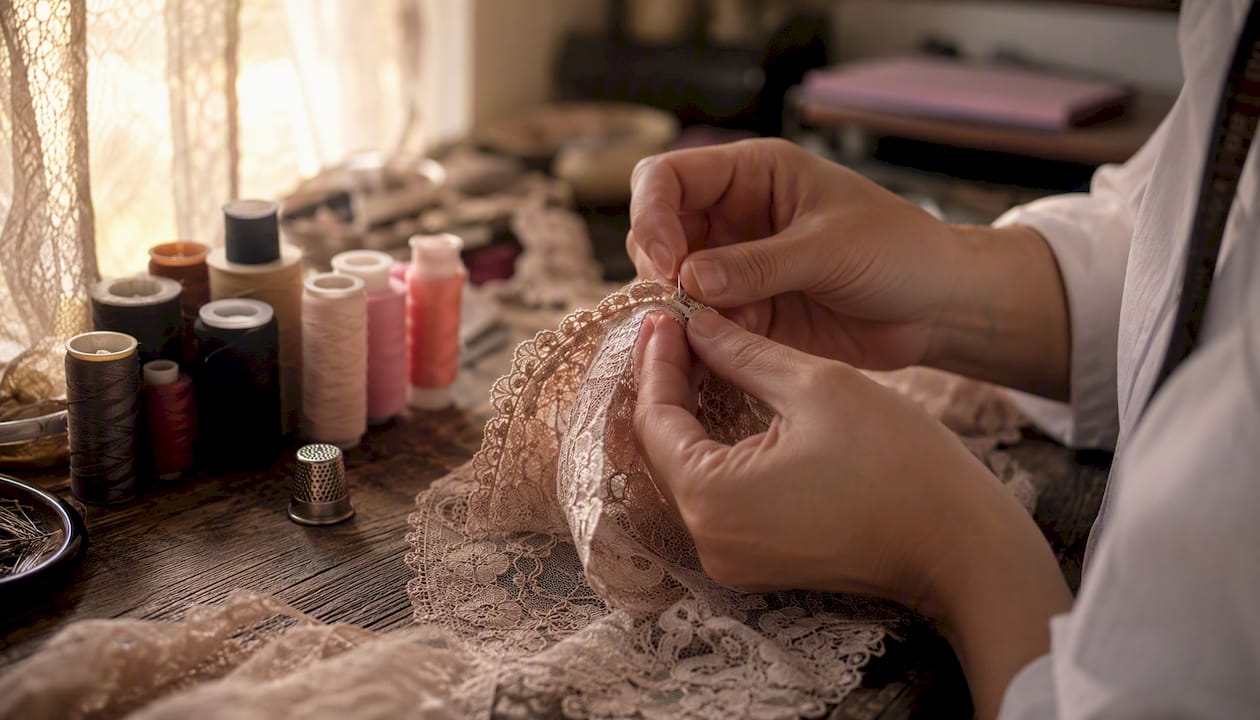
Sewing a hook and eye properly comes down to placement, thread choice, and stitch count. Get those three right and the closure will outlast the garment.
Tools and thread. Use a strong, waxed thread rather than regular sewing thread. It resists fraying as the hook flexes against it, and a fine, sharp hand-sewing needle gives you clean control around the small metal loops.
Placement for lapped edges (one edge overlapping another, like a waistband):
- Position the hook on the wrong side of the overlap, recessed about 1/8 inch from the raw edge so the curved tip doesn’t poke through when fastened.
- Mark the eye position on the underlap so the two edges sit flush when closed.
Placement for abutting edges (two edges meeting rather than overlapping, common on bra bands):
- Position the eye so it projects roughly 1/16 inch past the fabric edge, giving the hook room to catch without pulling the fabric taut.
Sewing the hook:
- Anchor your thread with two small backstitches under where the hook will sit, hidden from view.
- Whip-stitch through each of the hook’s holes and around the neck of the hook where it meets the fabric.
- Aim for at least six thread passes through each hole before moving to the next, and finish with a few passes around the hook’s throat to stop it lifting.
Sewing the eye (and alternatives):
- A metal eye gets the same whip-stitch treatment through both loops, anchored the same way.
- A buttonhole loop eye or thread chain eye is stitched instead of using metal. This gives a lower-bulk finish that suits delicate fabric and can outperform a small metal eye in fitted garments where fabric movement is constant.
Pro Tip: If a hook has pulled loose but the fabric underneath is still sound, resew it. If the fabric has torn around the stitching holes, reinforce with a small patch of interfacing on the wrong side before resewing, or move the closure slightly to fresh fabric.
No-sew hook and eye options and quick fixes
Pronged, no-sew hook-and-eye closures exist for exactly the situations you’d expect: a quick fix when you don’t have a needle and thread handy, or a fast repair on the go. These attach by pushing metal prongs through the fabric and bending them flat on the reverse side, holding through friction and the bend of the prong rather than stitching.
They work fine for light, short-term use, but they’re not a permanent fix for a closure under regular strain, like a bra band worn daily. For that, a proper sewn repair is worth the ten minutes.
Quick fixes worth knowing:
- Safety pin on the inside of a waistband as a same-day stopgap
- Fashion tape across the gap for a flat, invisible hold under clothing
- No-sew pronged hook-and-eye kits for a slightly sturdier temporary fix than tape
Why Lingerie Seduction pays close attention to closures
Fit lives and dies on the small details, and a closure is one of the smallest details that matters most. Lingerie Seduction offers free shipping on orders over $100 and hassle-free returns, which means a closure has to hold up in the real world, not just on a hanger.
A hook-and-eye that sits flush, doesn’t dig in, and stays fastened through a full day of wear is the difference between a piece that gets worn again and one that goes to the back of the drawer.
Choosing closures for fit and finish means checking recess depth against the fabric weight, testing metal against skin sensitivity, and matching hook size to how many rows a band needs for a range of adjustment. That’s the same logic covered in the sewing steps above, applied at scale across a curated range.
The history behind the humble hook and eye
The hook-and-eye closure isn’t a modern invention dressed up in new packaging. It’s been in use for centuries, long before the zipper or the snap fastener existed as options for garment closures. Early versions were hand-forged, one hook and one eye at a time, which made them a small luxury on their own before industrial production caught up.
That changed with the rise of English metalworking towns in the 19th century. Redditch, in Worcestershire, became a centre for machine-manufactured hooks and eyes, turning what had been a slow handcraft into something producible at scale and affordable for everyday clothing. Specialised shapes emerged from this period too. The Delong hump, a distinctively curved hook design, was patented in the 19th century and became recognisable enough that some sewers still refer to hook-and-eye shapes by similar descriptive names today.
What’s notable is how little the core design has changed since. A hook-and-eye from a Victorian corset and one on a bra band bought this year work on the same mechanical principle: a curved metal hook catching a loop under tension. Fashion moved on dramatically over a century and a half, but this particular piece of hardware solved its problem so completely that there’s been no reason to redesign it from scratch. Refinements have come in materials and manufacturing precision, not in the basic mechanism.
Hook and eye vs zippers, buttons and snaps
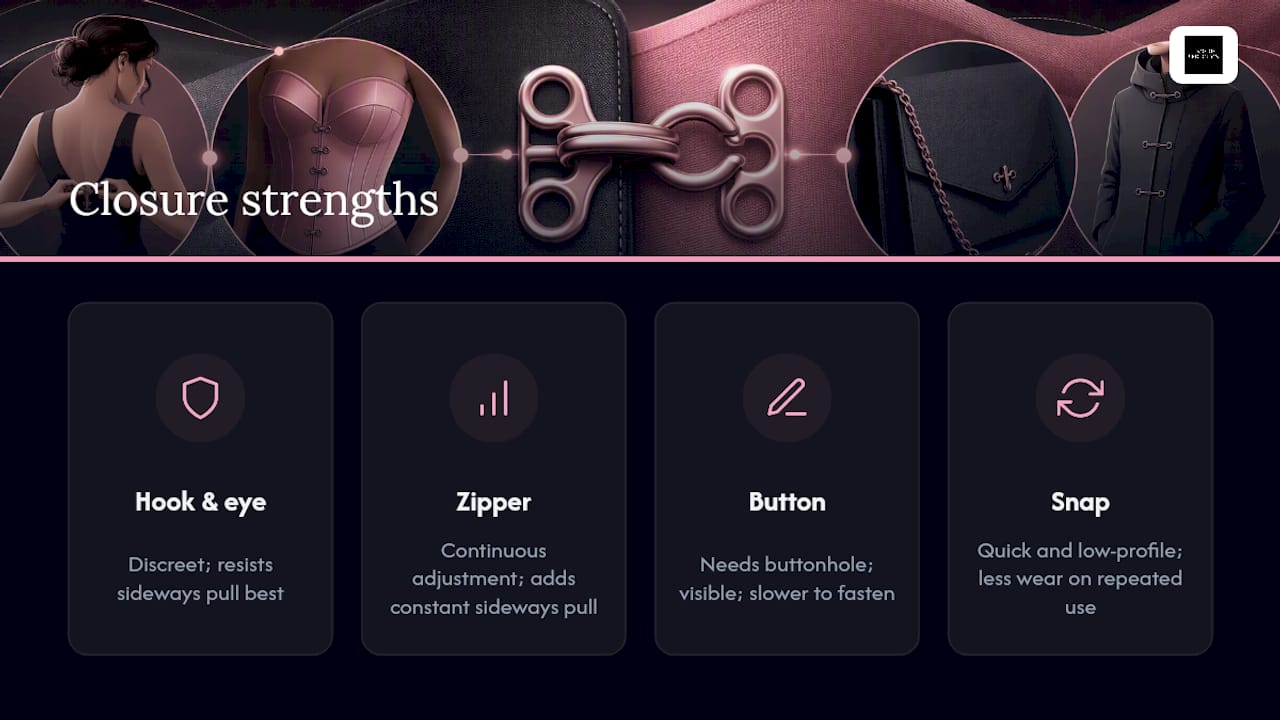
Every closure type trades something for something else, and the hook and eye’s trade is worth understanding clearly before you default to it out of habit.
Against a zipper, the hook and eye wins on discretion and on relieving stress. A zip alone at a waistband takes constant sideways pull every time you sit or bend, which is exactly why so many skirts and trousers pair a zip with a hook and eye at the top. But a zipper offers continuous adjustment along its length; a hook and eye is fixed at one point.
Against a button, the hook and eye wins on speed and on invisibility. Buttons need a buttonhole, which takes more fabric preparation and shows on the outside unless deliberately styled as a feature. A hook and eye can disappear entirely inside a waistband or under an overlap. What it loses is flexibility. You can’t loosen a hook and eye by half an inch the way you can move to a different setting; it’s on or off.
Against a snap fastener, the comparison is closer. Both are quick to close and low profile. Snaps generally handle repeated opening and closing with less wear, since there’s no bending metal involved, which makes them common on children’s clothing. Hooks and eyes tend to hold a heavier lateral load better, which is why corsetry and bra bands favour them over snaps almost universally. Neither is objectively superior. The right choice depends on whether the garment needs to resist sideways pull (hook and eye) or just needs a fast, low-stress closure (snap).
Fixing common hook and eye problems
The most frequent complaint with hook-and-eye closures is the hook popping open under movement, and it’s almost always a placement or tension issue rather than a fault with the hardware itself. If the eye sits too far from the hook, there’s slack in the closure that lets it work loose with normal body movement. Moving the eye closer, even by a millimetre or two, often solves it completely.
A second common issue is the hook bending or losing its shape after repeated use. This points to a hardware quality problem rather than a technique one. Lower-grade brass hooks flex more readily than stainless steel or nylon-coated wire options, so if a closure keeps deforming, the fix is upgrading the hardware, not resewing the same hook again.
Fabric tearing around the stitching holes shows up on lighter fabrics carrying more strain than they’re built for, typically on bra bands or fitted corsetry where the closure takes load with every breath and movement. A small square of interfacing sewn on the wrong side, underneath where the hook and eye attach, reinforces the fabric without adding visible bulk. This is worth doing preventatively on delicate fabric, not just as a repair after the fact.
A hook that’s come completely loose, thread and all, is usually just a matter of resewing it with more thread passes than the original attachment had. If the fabric underneath still looks intact, six or more passes through each hole, anchored properly, generally holds far longer than whatever came before it.
Keeping your hook and eye closures working longer
A hook-and-eye closure lasts as long as its weakest point, which is usually the thread holding it, not the metal itself. Waxed thread resists the friction and flexing that wears through ordinary sewing thread over months of daily fastening and unfastening, so it’s worth the small extra cost on any closure you’ll use regularly.
Washing matters more than most people assume. Metal hooks and eyes, particularly brass ones, can tarnish or develop light surface rust if left damp after washing, especially on garments like swimwear or activewear that get wet often. Laying garments flat to dry rather than leaving them balled up in a wash basket reduces this considerably, and it protects the surrounding fabric from rust staining too.
Check closures periodically for early signs of wear: a hook that’s started to straighten slightly, thread that’s fraying at the anchor point, or an eye that’s stretched wider than it should be. Catching these early means a five-minute resew instead of a full replacement.
Store garments with multiple hook-and-eye rows, like bras and corsets, fastened rather than loose. This keeps the metal in its natural shape and stops hooks from snagging on other fabric in a drawer, which is one of the more common causes of bent hardware that has nothing to do with wear during actual use.
What actually matters when you’re working with hook and eye closures
Most sewing advice treats hook-and-eye placement as an afterthought, something you rush through after the real construction is done. That’s backwards. The placement measurements matter more than the brand of hook you buy, and getting the 1/8 inch recess or the 1/16 inch projection wrong causes more failures than cheap hardware ever does.
The conventional wisdom oversells metal quality and undersells thread technique. A premium stainless steel hook sewn with six thread passes and proper anchoring will outlast a cheap brass hook every time, but a premium hook sewn carelessly fails just as fast as a cheap one. If you’re prioritising anything when you sit down to attach a closure, prioritise the stitching, not the shopping.
The other thing worth saying plainly: a thread-loop or buttonhole eye is underused on delicate garments. Sewers default to metal eyes out of habit, when a stitched loop often gives a cleaner result on fine lace or sheer fabric, with less risk of the metal showing through or catching on the fibres.
— Lingerie Seduction
Shop garments built with discreet, durable closures
If reading through placement measurements and stitch counts has you thinking about the closures on your own lingerie drawer, it’s worth looking at how those details show up in finished pieces. Lingerie Seduction builds discreet fastenings into structured garments like the Luxe Black & Nude Lace Corset Lingerie, where multiple closure rows need to sit flat and hold real tension without showing through the lace.
The same attention applies across the range. The Sheer Mesh Underwire Chemise Set pairs structured support with a finish that stays invisible under fitted outerwear, and the Luxury Sheer Mesh & Lace Women’s Babydoll Set shows how a lighter garment can still use a secure closure without adding bulk. If you sew or repair your own lingerie, the European white & microknit lace bustier set is worth a look purely as a reference for how multi-row hook-and-eye tape sits against a structured cup. For a broader comparison of closure styles, front-closure bras from Maronko Fashion take a different approach entirely, swapping the back row for a single front clasp.
Free shipping applies on orders over $100, and returns are hassle-free if the fit isn’t right. Browse the full lingerie collection to see the finishing details up close before you buy.
Sources
- Hook-and-eye closure — Wikipedia
- Place and sew hooks and eyes correctly — Threads
- Types of hook-and-eye closures — The Spruce Crafts
FAQ
What is a hook and eye closure?
A hook and eye closure is a small metal hook and matching eye loop used to fasten two fabric edges together, commonly found on bras, zipper tops, waistbands and corsetry.
How does a hook and eye closure work?
The curved hook catches inside the eye loop and holds under tension; sewn versions rely on thread anchoring the hook and eye to the fabric, while no-sew versions use bent metal prongs.
Are hook and eye closures strong?
Yes, when sewn correctly with waxed thread and at least six thread passes per hole, a hook and eye holds significant lateral stress, which is why it’s standard on bra bands and corsetry rather than buttons.
What are the different types of hook and eye closures?
The main types are individual metal hook-and-eye sets, continuous hook-and-eye tape for multi-row garments, thread-loop or buttonhole eyes for a neater finish, and no-sew pronged versions for quick fixes.
Should I sew or buy tape for a bra band closure?
Hook-and-eye tape is generally the better choice for multi-row bra bands since it saves sewing time and keeps spacing even, while individual sets suit single closure points like a skirt’s zipper top.


