


Bridal robe ideas for a stylish wedding morning
The best bridal robe ideas for getting-ready photos are satin, lace, kimono, sheer/tulle, cotton/waffle, and plush styles. Each suits a different wedding vibe, budget, and comfort need. The Knot notes that bridal robes serve practical and photographic roles, from getting-ready sessions through to honeymoon wear, so picking the right fabric matters beyond just the morning.
Quick-jump shortlist:
- Satin — sleek photos, easy care
- Lace — romantic, editorial looks
- Kimono — prints, destination and beach weddings
- Sheer/tulle — editorial and luxe portraits
- Cotton/waffle — cosy winter mornings, most rewearable
- Plush — spa vibe, cold-weather prep
Key takeaways
The most photo-friendly and practical bridal robe is a front-opening style in a washable fabric, ordered at least four weeks before the wedding.
| Point | Details |
|---|---|
| Choose front-opening styles | Wrap and tie robes protect hair and makeup — nothing needs to go over the head. |
| Match length to formality | Short for beach and casual; floor-length for luxe and formal weddings. |
| Prioritise washable fabrics | Cotton and washable satin are more likely to be reworn and easier to care for across a bridal party. |
| Coordinate bridesmaids with ombré or complementary palettes | Same-family colours create cohesion without forcing one shade on every skin tone. |
| Lingerie Seduction for Australian orders | Fast local dispatch, free shipping over $100, and hassle-free returns on bridal robes and lingerie sets. |
Table of Contents
- What are the best bridal robe styles for your wedding morning?
- How do length and fit affect comfort and your getting-ready photos?
- How do you choose colours, monograms, and matching bridesmaid robes?
- How do you style a robe for getting-ready photos?
- Which fabrics are easiest to care for and will you wear the robe again?
- Which robe style suits your wedding vibe?
- Curated Lingerie Seduction picks available in Australia
- Sizing and inclusive options
- Budget considerations for bridal robes
- When should you order your bridal robe?
- The most practical bridal robe choice is often the least obvious one
- Bridal robes from Lingerie Seduction, ready for fast Australian dispatch
- Sources
- FAQ
What are the best bridal robe styles for your wedding morning?
WeddingWire’s editorial roundups consistently name lace, satin, and silk as the top style picks, with cotton and waffle robes recommended for comfort and rewearability. Here is what each style actually delivers.
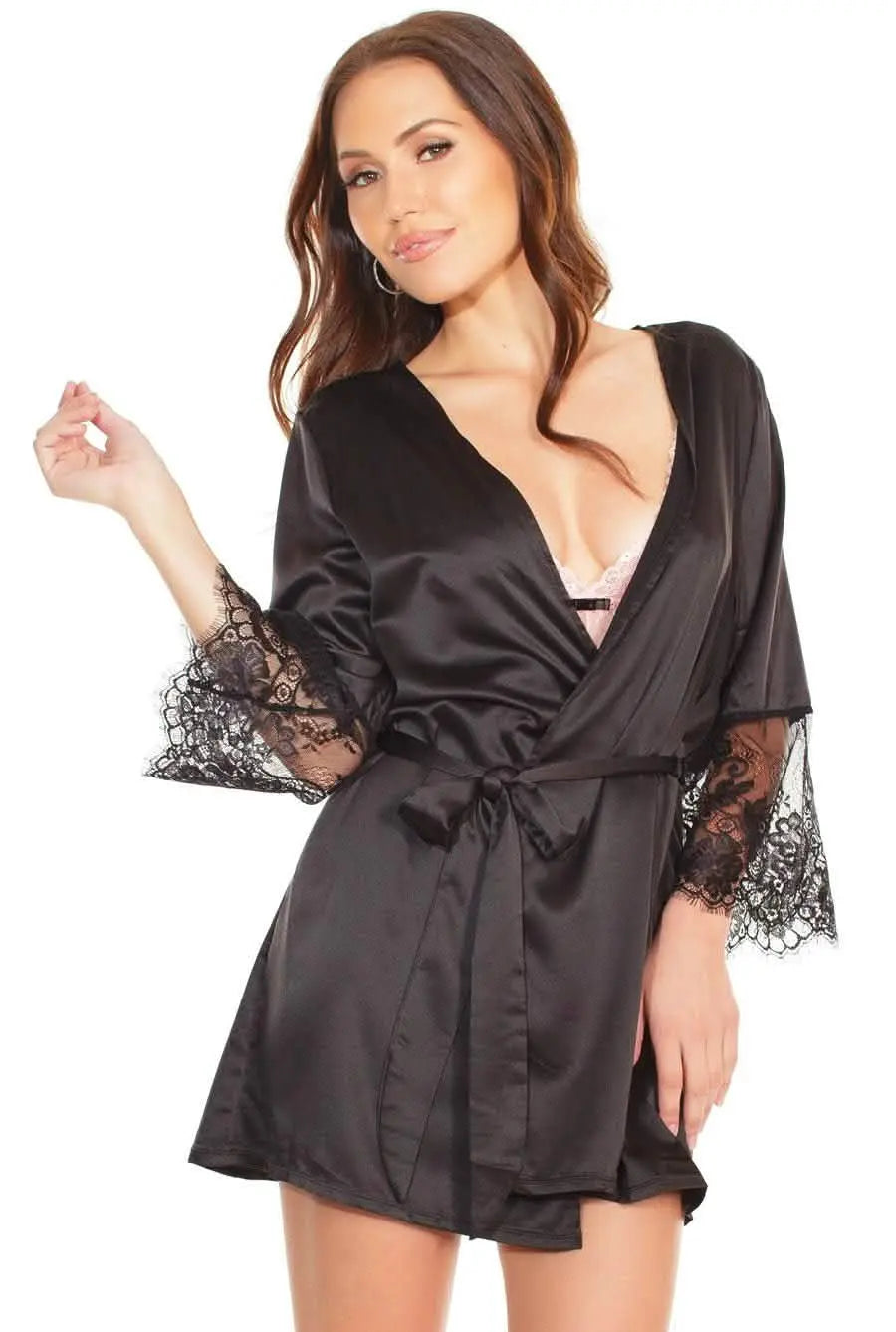
- Satin/silk — a smooth, light-reflecting fabric that photographs cleanly in both bright and moody light. Wear a slip or bridal lingerie underneath for coverage during photos.
- Lace — romantic and detailed, lace robes add texture to portraits. A sheer white lace cover-up robe over a white bra set reads beautifully on camera.
- Kimono — loose, printed, and easy to remove without touching hair. Best for beach, destination, or boho weddings where a relaxed silhouette suits the setting.
- Sheer/tulle — high-impact for editorial shots but offers little coverage; pair with a fitted slip or cami set underneath.
- Cotton/waffle — the most practical choice for rewearability. Soft enough for a full morning of hair and makeup, and machine-washable after the day.
- Plush — thick, spa-style robes work well for winter weddings or cold-morning prep. Less photogenic than satin but far warmer.
Pro Tip: Pick a style you will actually wear again. Cotton and silk-based robes score highest for post-wedding use as loungewear or honeymoon wear, making them the most practical gift for bridesmaids too.
How do length and fit affect comfort and your getting-ready photos?
The direct answer: choose a wrap or front-opening robe. Pulling anything over the head after hair and makeup are done risks ruining both. Front-opening and wrap designs are the standard recommendation from wedding planners for exactly this reason.
Short (knee-length): Works well in warm weather and for brides who want mobility. Photographs well seated or standing, and shows off footwear in flat-lay shots.
Midi (below knee to calf): A versatile middle ground. Flattering on most body types and suits both casual and semi-formal getting-ready settings.
Floor-length: The most formal option, best for luxe or ballroom weddings. Photographs dramatically but can be cumbersome during a long morning of prep.
Fit details worth checking before you order:
- Wide sleeves allow a hairdresser easy access without removing the robe
- Tie closures are faster to open than buttons when the photographer wants a quick shot
- Check that the neckline sits flat when seated, not gaping open
- If you plan to wear a statement necklace, try the robe with it on to confirm coverage
Pro Tip: When ordering for a bridal party, consider bridal hair protection needs. Brides wearing extensions or intricate updos need extra-wide sleeves and a loose back panel so the robe slips off cleanly.
How do you choose colours, monograms, and matching bridesmaid robes?
Choose a palette that suits your wedding vibe and skin tones first, then personalise sparingly. Over-embroidered robes with large text can distract from faces in photos.
Colour guidance:
- White and ivory read cleanly in bright natural light
- Blush and dusty rose are flattering across a range of skin tones
- Black robes photograph well in moody, low-light settings
- “Something blue” robes work as a subtle nod to tradition without committing to a full blue palette
For bridesmaid coordination, ombré or same-family colour strategies create visual cohesion while flattering different skin tones. Identical robes in one shade are the simplest option; ombré (e.g. blush through to dusty rose) gives variety without looking mismatched.
Monogramming dos and don’ts:
- Use first names, not surnames. Wedding planners advise embroidering first names to avoid awkwardness if a bridesmaid later changes her surname.
- Keep text on the back or chest pocket, not across the full back panel
- Choose a thread colour that contrasts enough to read in photos (white thread on white satin disappears)
- Avoid adding the wedding date to bridesmaid robes — it limits rewearability
How do you style a robe for getting-ready photos?
Start with the right robe design. Wrap and front-tie styles are easiest to remove without disturbing hair, which is the single most practical consideration for a getting-ready shoot.
Photographer-friendly checklist:
- Choose light neutrals (white, ivory, blush) if you want the focus on faces and florals
- Avoid busy prints for group shots — they pull the eye away from expressions
- Wear a matching bra and underwear set underneath so the robe can be opened for portraits
- Keep jewellery simple during prep; add statement pieces just before the shoot
- Coordinate robe colours across the bridal party so group shots look intentional
For solo bridal portraits, a floor-length lace or satin robe with a loose tie creates a classic editorial look. For group shots, matching short robes in a neutral palette keep the composition clean.
Pro Tip: Coordinate the robe-removal moment with your hair and makeup timetable. The photographer usually wants robe shots early, before the dress goes on. Brief your stylist so they know when to pause for photos.
Which fabrics are easiest to care for and will you wear the robe again?
Silk and satin look luxe but differ in care. Cotton and waffle are more likely to be worn again after the wedding.
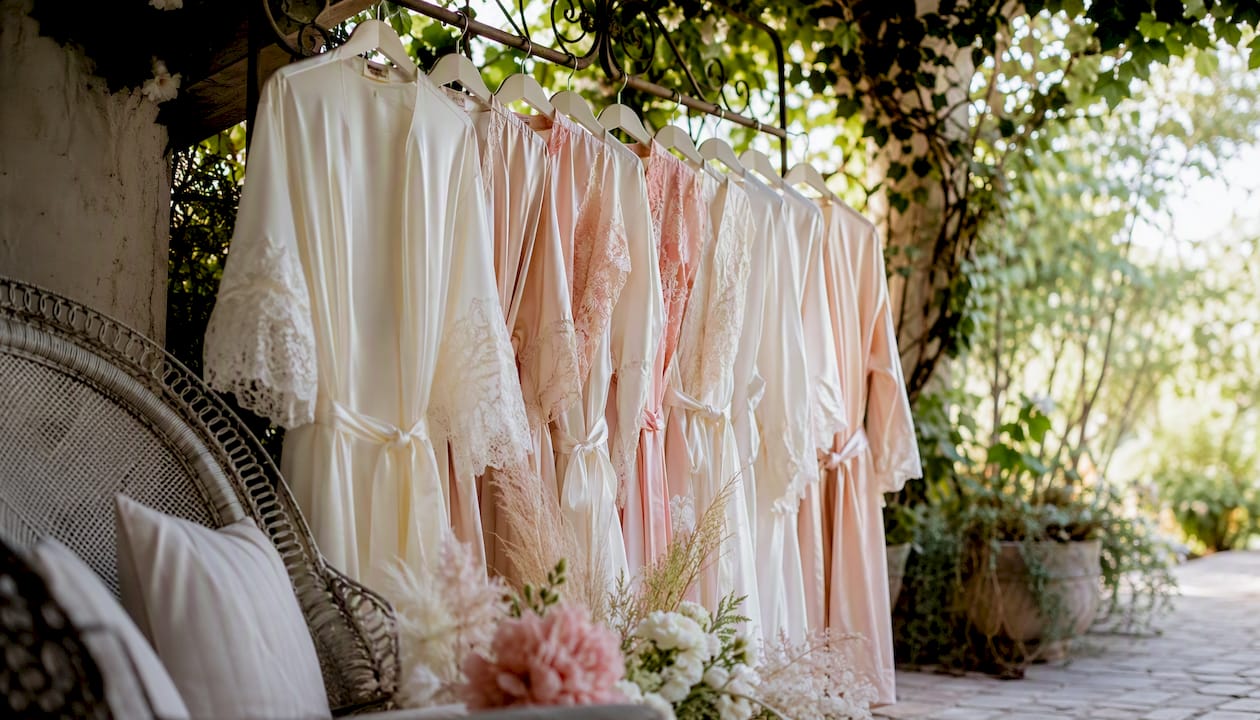
Silk (particularly mulberry silk) is dry-clean only in most cases and requires careful storage. It photographs beautifully and feels cool against the skin, but the care commitment is real. Washable satin, by contrast, is often machine-washable on a delicate cycle, making it a practical choice for a large bridal party where multiple robes need laundering after the event.
Cotton and waffle robes are almost always machine-washable and hold up well over time. They double as everyday loungewear or honeymoon cover-ups, which is why bridal experts note that cotton and silk-based pieces score highest for post-wedding rewearability.
Quick fabric-care checklist:
- Check the care label before ordering, not after
- Delicate lace trims may need hand-washing even on a machine-washable robe
- Custom embroidery should be turned inside out before washing to protect stitching
- Factor in lead time for custom orders — embroidered robes from overseas suppliers can take 3–6 weeks
Pro Tip: When buying robes for a large bridal party, order a swatch or a single sample first. Colours can vary between screen and fabric, and care requirements differ between suppliers even for the same fabric description.
For more on fabric choices and fit for the wedding day, the bridal lingerie guide at Lingerie Seduction covers sizing and comfort in detail.
Which robe style suits your wedding vibe?
Choose robes that echo your venue’s textures and temperature needs. A plush robe at a beach wedding looks out of place; a sheer kimono at a winter mountain ceremony is impractical.
- Beach wedding: Light kimono or cotton robe in white, ivory, or a soft print. Breathable fabric is non-negotiable in Australian summer heat. Short or midi length for ease of movement on sand.
- Boho wedding: Crochet-trim or lace robes in ivory, dusty rose, or terracotta. Loose sleeves and natural textures suit the aesthetic. Floor-length works well for outdoor ceremonies.
- Luxe/formal wedding: Mulberry silk or long lace robes in white or champagne. Floor-length with a clean silhouette. Pairs well with a matching slip or cami set underneath.
- Winter wedding: Plush or velvet robes, or a robe-and-pyjama set for warmth during a long morning. Deep tones (burgundy, navy, forest green) photograph well in winter light.
- Minimalist wedding: Clean satin in white or ivory with simple piping or a single monogram. No lace, no print. The soft satin long-sleeve robe in a neutral tone is a strong option for this aesthetic.
Curated Lingerie Seduction picks available in Australia
These are client-curated picks available for fast Australian dispatch, with free shipping on orders over $100. All pieces are available through Lingerie Seduction, with hassle-free returns and discreet packaging.
- Luxury Black Sheer Lace Lingerie Set — best for brides who want a non-white bridal night option. The sheer lace detail photographs well under a dark or neutral robe. Suits a size-inclusive range; check the size guide for layered fit over a slip.
- Luxe Black & Nude Lace Corset Lingerie — a strong choice for in-suite portraits after the ceremony. The nude base with black lace overlay reads elegantly in low-light photography.
- Luxury Nude & Black Babydoll Lingerie Set — pairs naturally with a sheer or lace robe for getting-ready photos. The babydoll silhouette suits most body types and works as honeymoon wear.
- Sexy Black Lace & Microknit Sleepwear Set — for brides who prefer a sleepwear set over a robe. The microknit fabric is comfortable for a long morning and the lace trim adds a bridal feel without being overly formal.
- Luxury Sheer Mesh & Lace Women’s Babydoll Set — sheer mesh with lace detailing, suited to editorial getting-ready shots. Wear under a satin or silk robe for a layered look.
- Luxe Black Lace Cami Lingerie Set — a cami-and-brief set that works under any robe style. Clean lines and lace trim make it versatile for both getting-ready photos and the wedding night.
For sizing, order one size up if you plan to layer a slip or cami set underneath the robe. Local dispatch means most orders arrive within standard Australian delivery timeframes.
Sizing and inclusive options
Most bridal robes are cut generously, but fit still varies between styles. Wrap robes are the most forgiving because the tie adjusts to the body rather than relying on fixed sizing. Kimono and open-front styles also accommodate a range of body types without needing precise sizing.
For plus-size brides and bridesmaids, look for robes listed with extended sizing (typically up to size 22–24 AU) and check that the belt or tie is long enough to wrap comfortably. Lingerie Seduction stocks a range of sizes across its bridal and sleepwear range, and the wedding lingerie trends guide includes notes on fit for different body types.
When ordering for a mixed bridal party, collect measurements rather than relying on dress sizes, as sizing varies between fabric types. A size 14 in satin may fit differently from a size 14 in cotton waffle.
Budget considerations for bridal robes
Price ranges vary significantly by fabric and personalisation. As a general guide:
- Budget ($30–$70 AU): Washable satin or polyester robes. Widely available, easy to care for, and practical for large bridal parties.
- Mid-range ($70–$150 AU): Better-quality satin, cotton waffle, or lace-trim robes. Often machine-washable and more rewearable.
- Premium ($150–$300+ AU): Mulberry silk, custom embroidery, or designer lace. Dry-clean only in most cases. Best suited to the bride rather than the full party.
Editorial roundups note that readers expect both affordable satin picks and pricier washable-silk options in the same guide, so there is no single “right” price point. The practical rule: spend more on the bride’s robe and keep bridesmaid robes in the mid-range where rewearability and washability matter most.
When should you order your bridal robe?
Order timing depends on whether the robe is off-the-shelf or custom-embroidered.
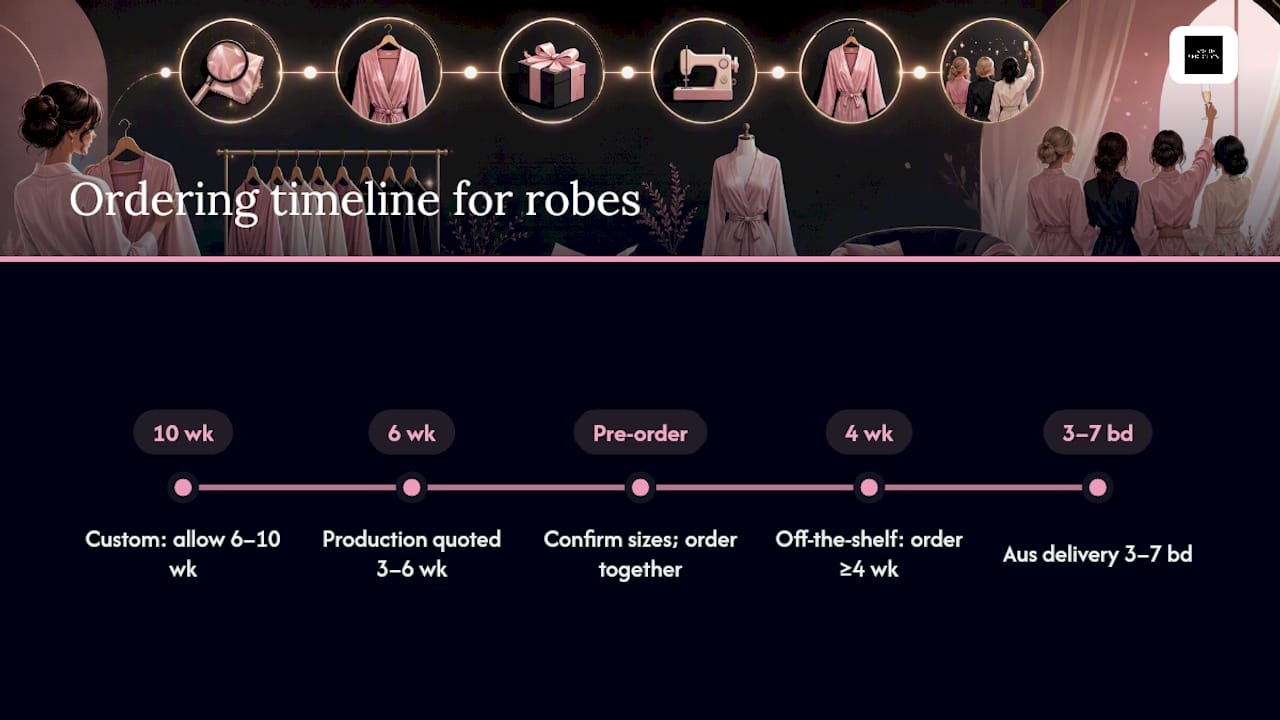
Off-the-shelf robes: Order at least 4 weeks before the wedding to allow for delivery, any exchanges, and a trial run with your getting-ready outfit. For Australian orders from local stock, standard delivery is typically 3–7 business days.
Custom-embroidered robes: Allow 6–10 weeks minimum. Embroidery suppliers, particularly those based overseas, often quote 3–6 weeks for production alone before shipping. For Australian brides, ordering from local dispatch options reduces the risk of delays.
For a bridal party of six or more: Order all robes at the same time from the same supplier to avoid dye-lot variations in colour. Confirm sizing with each bridesmaid before placing the order, not after.
The most practical bridal robe choice is often the least obvious one
The robe that photographs best is not always the one that makes the morning easiest. Heavily embroidered silk robes look stunning in flat-lay shots but can be stressful to manage across a bridal party of six, especially when half the group needs dry-cleaning and the other half forgot their measurements.
The most consistent feedback from wedding planning is that rewearability wins. A cotton or washable satin robe that a bridesmaid actually wears on a Sunday morning three months later is a better gift than a silk piece that sits in a drawer. That logic applies to the bride’s robe too. Lingerie Seduction’s curated bridal range is built around this principle: quality fabrics, inclusive sizing, and pieces that work beyond the wedding morning, available with fast local dispatch and hassle-free returns.
Bridal robes from Lingerie Seduction, ready for fast Australian dispatch
Lingerie Seduction’s bridal range covers robes, sleepwear sets, and lingerie for the wedding morning and night, all available from Australian stock with free shipping on orders over $100.
The Luxury Sheer Mesh & Lace Babydoll Set and Luxe Black Lace Cami Lingerie Set are two of the most popular picks for brides who want a cohesive getting-ready and bridal-night look. Both are available in a range of sizes, ship discreetly, and come with hassle-free returns if the fit is not right. Browse the full bridal and sleepwear range at Lingerie Seduction and use the size guide to confirm fit before ordering.
Sources
- Find a Bridal Robe for Getting Ready, the Honeymoon and Beyond
- 33 on-trend bridal robes for a chic start to your big day
- Prep your squad in style with these chic and comfy bridesmaid robes
- Bridesmaid robe ideas for the wedding morning
FAQ
What colour robe should the bride wear?
White, ivory, and blush are the most popular choices and photograph well in most lighting conditions. Black is a strong option for moody or editorial shoots, and “something blue” robes work as a subtle nod to tradition.
What are the four things a bride should have?
The traditional bridal checklist is something old, something new, something borrowed, and something blue. A bridal robe is often the “something new,” chosen to wear during the getting-ready session and kept as a keepsake.
What can you wear instead of a bridal robe?
A matching pyjama set, a satin slip dress, or a kimono-style cover-up all work as alternatives. Sleepwear sets like the Sexy Black Lace & Microknit Sleepwear Set from Lingerie Seduction are a practical option that doubles as bridal-night wear.
What are the current bridal robe trends?
Lace and sheer robes remain strong for editorial looks, while cotton waffle and plush styles are growing in popularity for their comfort and rewearability. Personalised embroidery and matching bridal-party sets are consistent favourites for getting-ready photos.
When should you order a bridal robe?
Order off-the-shelf robes at least four weeks before the wedding. For custom-embroidered styles, allow 6–10 weeks to account for production and delivery time.


