

Bodystocking: Plain English Meaning, 5 Fabrics and Real Styling Tips
A bodystocking is a one-piece, skin-tight garment that covers the torso and legs, and sometimes the arms, in a single continuous piece of fabric. It’s typically made from sheer nylon, lace, fishnet, or opaque stretch knits, and it functions as lingerie, performance wear, or a styling base layer depending on the fabric and cut. Think of it as a full-body sibling to stockings, built to skim the whole body rather than just the legs.
TL;DR:
- Bodystockings are made from sheer nylon, lace, fishnet, or opaque stretch knits, with fabric choice influencing whether they appear as lingerie, stagewear, or fashion layering.
- They are distinct from unitards and leotards, as bodystockings are usually sheer or decorative, covering the torso and sometimes arms, unlike the sturdier or performance-focused alternatives.
- Proper sizing relies on stretch and fabric weight rather than exact measurements, and they should be eased on gradually to avoid runs or snags.
- They are most commonly worn by performers, lingerie enthusiasts, and fashion-forward individuals, with style and fit depending on the occasion and personal comfort.
- Key differences in fabric and purpose, such as lightweight sheer for intimacy or opaque for layering, help determine the appropriate bodystocking for each use case.
Table of Contents
- What is a bodystocking made from, and what styles exist?
- How is a bodystocking different from a unitard, leotard, or tights?
- Who wears a bodystocking, and when?
- How do you size and put on a bodystocking?
- What are some example sentences using “bodystocking”?
- How Lingerie Seduction approaches bodystockings and related pieces
- Tasteful styling and choosing the right piece
- Browse related pieces at Lingerie Seduction
- Sources
- FAQ
What is a bodystocking made from, and what styles exist?
The fabric determines whether a bodystocking reads as lingerie, stagewear, or fashion layering. Sheer nylon gives that classic stocking-like sheen and is the most common base for lingerie versions. Lace adds texture and pattern without full coverage, fishnet is deliberately open-weave for a bolder look, and opaque knits (often lycra-blended) cover fully and can double as a base layer under clothing.
Style variations matter just as much as fabric. A bodystocking can come with long sleeves, no sleeves at all, a plunging or high neckline, and open crotch panels for practicality or design. Some are designed to peek out, layered under sheer outerwear or paired with a blazer for a going-out look. Others sit closer to a foundation garment, worn under clothes for smoothing or warmth.
Common variations include:
- Sheer nylon bodystockings, closest to traditional pantyhose in feel and finish
- Lace versions with floral or geometric patterns for a dressier lingerie look
- Fishnet styles with wide or narrow diamond weaves
- Opaque knit bodystockings built for coverage and warmth rather than reveal
- Crotchless or open-cup designs, common in intimate wear
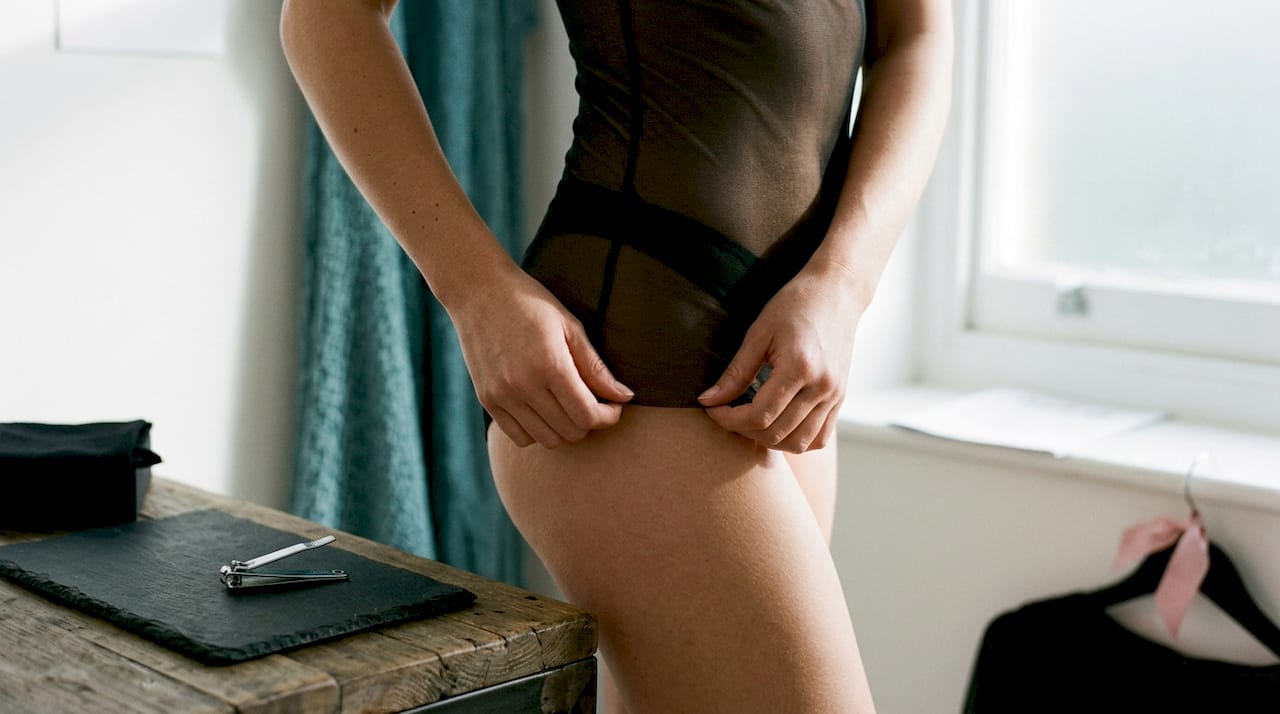
A sheer mesh and lace bodysuit shows how these fabric choices translate into a wearable piece rather than just a swatch on a chart.
How is a bodystocking different from a unitard, leotard, or tights?
The confusion is understandable. All four garments cling to the body, but they’re built for different jobs.
- Unitard: sturdier fabric, designed as outerwear or activewear, made to withstand movement in gymnastics, dance training, or fitness.
- Leotard: covers the torso only, cut high at the leg, and exists almost exclusively as a performance or practice garment for dance and gymnastics.
- Tights or pantyhose: focused on the legs and lower body, stopping at the waist.
- Bodystocking: continues the stocking concept up the torso and sometimes over the arms, and is far more likely to be sheer, decorative, or intimate rather than functional.
Wikipedia’s entry on the bodystocking draws this same line: a unitard is worn as an outfit in its own right, while a bodystocking sits closer to lingerie or costume, with fabric and purpose doing most of the distinguishing.
Pro Tip: If you’re unsure which garment you’re looking at, check the fabric weight first. Sturdy and matte usually means unitard or leotard; sheer and light usually means bodystocking.
Who wears a bodystocking, and when?
Three groups reach for a bodystocking most often, each for a different reason.
- Performers: dancers and stage acts use bodystockings, often opaque or nude-toned, as a seamless base under costumes.
- Lingerie wearers: sheer, lace, or fishnet versions are worn as intimate wear, either alone or layered under other pieces for a foundation with visual impact.
- Fashion-forward dressers: opaque bodystockings get styled as base layers under blazers or slip dresses, turning a foundation piece into part of the outfit.
Cambridge Dictionary’s definition of sexy body stocking specifically notes dancers as common wearers, which lines up with how often the garment shows up backstage rather than just in a lingerie drawer. Context and fabric together signal intent. A nude opaque piece under a costume reads as functional; a fishnet piece styled as outerwear reads as a statement.
How do you size and put on a bodystocking?
Bodystockings rely on stretch, not strict sizing charts. Nylon and lycra blends mean most brands offer a narrower size range than regular clothing, so fit comes down to how much stretch and coverage you want rather than matching a specific number.
Putting one on follows roughly the same logic as pulling on a pair of pantyhose, just extended over more of the body:
- Gather the fabric at the ankles or feet before starting, the same way you would with stockings.
- Guide one leg through at a time, easing the fabric up gradually rather than yanking it.
- Once both legs are covered, work the torso section up over the hips and waist.
- Slide your arms through last if the style includes sleeves, then adjust the neckline.
- Smooth out any twists in the fabric before wearing it under or over other clothing.
Some styles are built to layer over a bra and underwear for support and coverage; sheer or open designs may be worn alone. If you’re between sizes, sizing up usually preserves the fabric better than forcing a snug fit.
Pro Tip: Trim rough or long nails before dressing, and avoid rings that can snag lace or fishnet, since a single pull can run the whole piece.
What are some example sentences using “bodystocking”?
Seeing the word in context makes the meaning stick faster than any definition alone.
- “She wore a black lace bodystocking under a sheer robe for the shoot.”
- “The dancer’s opaque bodystocking gave a seamless line under her costume.”
- “He styled the fishnet bodystocking as outerwear, paired with a blazer and boots.”
The word also appears as body stocking (two words) in most dictionaries, while bodystocking (one word) is the more common spelling in fashion and retail writing. The plural is bodystockings. It’s pronounced roughly as “body” plus “stocking,” with no unusual emphasis.
How Lingerie Seduction approaches bodystockings and related pieces
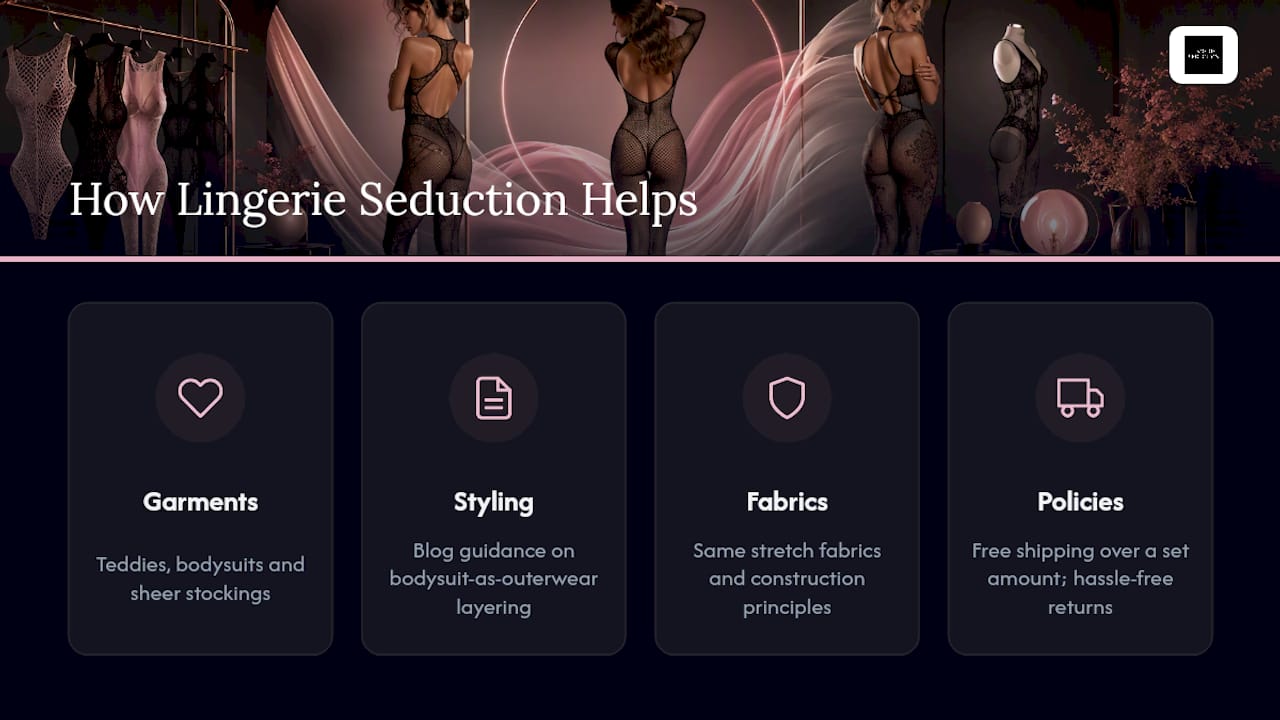
Lingerie Seduction stocks garments that sit in the same family as bodystockings, including teddies and bodysuits and sheer hosiery pieces such as plain sheer black stockings, which use the same stretch fabrics and construction principles covered above.
The styling advice in this piece draws on how those categories are actually worn, including guidance from the blog post on styling bodysuit lingerie as outerwear, which covers the same layering logic used with opaque bodystockings.
On the practical side, the store offers free shipping on orders over a specified amount, and returns are hassle-free if a size or style doesn’t work out once you’ve tried it on at home.
Tasteful styling and choosing the right piece
A bodystocking works best when fit and occasion match. Sheer lace suits an intimate setting; opaque styles suit layering under clothes for a bolder daytime or evening look. Comfort matters more than trend here: a piece that pulls or bags in the wrong spots undercuts the whole look, no matter how flattering the fabric. Coverage is a personal call, not a fixed rule, and confidence comes from picking a style you’d actually feel comfortable moving in. Product pages are the fastest way to compare cuts and fabrics side by side before deciding.
— Lingerie Seduction
Browse related pieces at Lingerie Seduction
Lingerie Seduction is the place to shop the styles this article has walked through, without hunting across scattered retailers for the right fabric or cut. The Pink & Black Fishnet Lace Chemise Set shows fishnet and lace working together in one piece, the kind of combination described in the materials section above. The Pink & Black Open Cup Bra Crotchless Lingerie demonstrates the open-panel design choices covered earlier, and the Pink Sheer Mesh & Lace Babydoll Lingerie Set gives another look at how sheer mesh and lace pair up in a wearable, ready-to-order piece.

Each product page lists fabric, sizing notes, and care details so you’re not guessing before you buy. Shipping and returns policies are designed to support customers if the fit isn’t quite right. For more options in the same family, browse crotchless lingerie, babydolls and chemises, or the full lingerie sets range. Start with the Pink & Black Fishnet Lace Chemise Set if you want the closest match to the fishnet and lace styles covered throughout this piece.
Sources
The definitions in this article draw on Cambridge Dictionary, which notes bodystockings as a thin, tight-fitting garment often worn by dancers, and Collins English Dictionary, which describes it as a close-fitting one-piece garment covering most of the body. Wikipedia and Wiktionary round out the word’s construction and etymology.
FAQ
What is another word for bodystocking?
The most common alternative is “body stocking,” written as two words, which is the form most dictionaries use. Some retailers and stylists also use “body suit” loosely, though a bodysuit technically covers less of the leg than a true bodystocking.
How do you put on a bodystocking?
Gather the fabric at the feet first, then ease each leg through before working the torso section up over your hips, similar to putting on pantyhose. Slide your arms through last if the style has sleeves, then smooth out any twists before wearing it.
What does “stocking” mean for a girl?
In clothing terms, a stocking is a close-fitting garment that covers the leg, traditionally held up separately at the thigh rather than attached to underwear. A bodystocking extends that same stocking-style fabric up over the torso and sometimes the arms, rather than stopping at the leg.
What’s the difference between tights and body stockings?
Tights and pantyhose cover the legs and lower body up to the waist, while a bodystocking continues that coverage over the torso and sometimes the arms in one continuous piece. Tights are largely functional or fashion legwear; bodystockings lean more toward lingerie, performance wear, or statement styling.


